AI identification & appraisal estimate

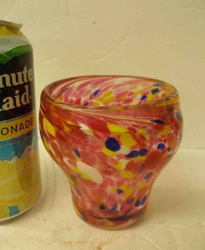
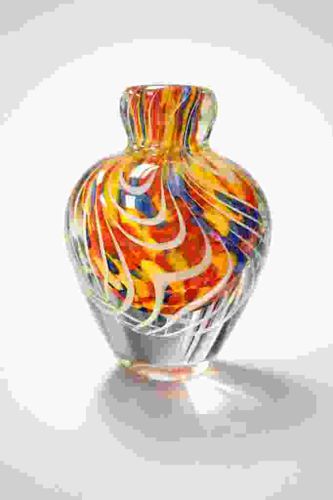
Murano Style Art Glass Miniature Vase

This name is the AI's identification of the item — it may be incorrect.

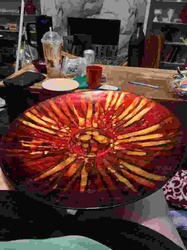
Submitted photo of Murano Style Art Glass Miniature Vase
Photo submitted by the user — not generated by AI

User's notes

is this a bud vase or a perfume bottle

These notes were written by the person who submitted this item. Appraiser.AI has not verified them, and the AI's identification and estimate may rely on them.

AI Estimated Value

Not an official valuation

$125.00 - $175.00

AI estimate as of March 14, 2026 · verify with a professional before acting

AI-Generated · Verify before acting

Everything on this page is generated by AI for informational purposes only. AI can make mistakes — the AI may misidentify items or misattribute them (artist, maker, brand, designer, origin, era). This is not an official valuation and should not be used for insurance, sale, tax, estate, legal, or lending purposes — or any decision requiring a certified appraisal. It is not an authoritative claim about any person, brand, or rights holder — do not share or rely on it as a factual statement about a third party. Always consult qualified professionals before making financial decisions.

This analysis also relies on unverified notes provided by the user, which may be incomplete or inaccurate and could affect the result.

Read the full disclaimer

AI Item Analysis

This is a hand-blown art glass vessel, likely intended as a decorative bud vase or miniature urn, though it lacks the stopper required to be categorized as a perfume bottle. The piece features a vibrant 'festoone' or combed pattern, characterized by multicolored internal glass swirls in hues of bright orange, crimson red, cobalt blue, and golden yellow. These colors are encased in a thick layer of clear crystal glass. A secondary pattern of opaque white 'latticino' or feather-like threads is applied over the colorful core, creating a sense of movement across the bulbous body. The form consists of a rounded, ovoid shoulder tapering down to a narrow, weighted clear glass base, and a short, flared neck with a polished straight-cut rim. The construction suggests a mid-to-late 20th-century origin, consistent with Italian Murano techniques or contemporary studio glass. The craftsmanship is evidenced by the symmetry of the vessel and the controlled depth of the internal decorations. While no maker's mark is visible in the provided image, the heavy clear base is typical of glass artists like those found on the island of Murano. The condition appears to be excellent with no visible chips, cracks, or surface dulling, and the base displays a high level of clarity without significant shelf wear.
AI Appraisal Report

Based on my visual examination, this piece is best classified as a miniature bud vase or decorative vessel. While the form mimics a scent bottle, the lack of an internal ground neck for a stopper confirms it was designed as a stand-alone art object. The piece displays hallmarks of mid-to-late 20th-century Murano 'Festoone' techniques, specifically 'Scavo' or 'A Reazioni Polichrome' styles where heavy layering of minerals and glass powders creates the vibrant internal color palette. The condition is excellent, showing high clarity in the thick sommerso-style base and no evident surface scratching. The current market for unsigned Murano-style studio glass remains steady but competitive. This item competes with known makers like Fratelli Toso or Vetreria Arte, but without a signature or original foil label, it is valued as 'attributed to Murano.' Comparables for unsigned miniatures of this quality typically sell within the $100 to $200 range at boutique auctions. The high level of control in the 'latticino' feathering adds toward the higher end of the estimate, as does the vibrant color retention. Critically, a definitive attribution to a specific maestro or furnace remains impossible through digital images alone. For full authentication and potential value increase, an in-person inspection is required to check for a micro-etched signature or a 'pontil' mark on the base, which would reveal the specific tool use of a master glassblower. Provenance documentation or original purchase receipts from Venice would also be necessary to elevate this beyond a 'style' piece to a documented work of art.

Keep exploring

More art glass / decorative collectibles appraisals

Get your items appraised

Instant AI-powered appraisal estimates from a photo

Browse More Appraisals