AI estimate as of October 16, 2025 · verify with a professional before acting
AI-Generated · Verify before acting
Everything on this page is generated by AI for informational purposes only. AI can make mistakes — the AI may misidentify items or misattribute them (artist, maker, brand, designer, origin, era). This is not an official valuation and should not be used for insurance, sale, tax, estate, legal, or lending purposes — or any decision requiring a certified appraisal. It is not an authoritative claim about any person, brand, or rights holder — do not share or rely on it as a factual statement about a third party. Always consult qualified professionals before making financial decisions.
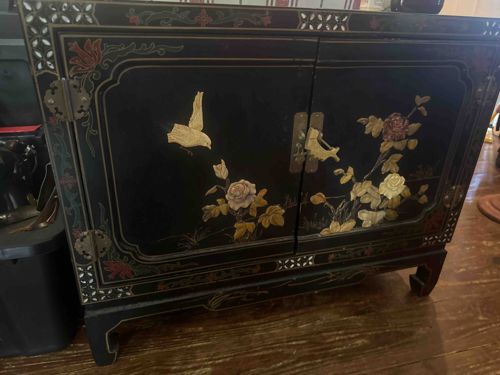
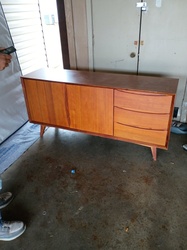
This is a rectangular cabinet, likely a sideboard or console, featuring a dark, possibly black, lacquered finish. The primary decoration consists of intricate mother-of-pearl (or possibly abalone shell) inlay, depicting a naturalistic scene with birds and flowering branches. The birds, appearing to be doves or similar avian species, are rendered in light-colored shell, with one in flight towards the top-left and another perched or descending near the center. The floral elements, including what appear to be roses and other blossoms, are also executed in various shades of shell, some with pale yellow or cream tones, and others with hints of pinkish-red, suggesting subtle coloring within the shell or on the lacquer. The branches and leaves are outlined and detailed with painted or engraved lines, adding depth to the inlay. The cabinet features two central doors, each adorned with a section of the continuous inlay scene. The hardware appears to be brass or bronze, with decorative escutcheons around the functional pull handles, which are also shaped in an ornamental fashion, resembling stylized birds or creatures. Around the main panel of the doors and along the top and bottom edges of the cabinet, there are decorative borders. These borders incorporate smaller, geometric mother-of-pearl inlays, such as criss-cross patterns, and additional painted floral or scroll motifs in muted colors like red and green. The cabinet stands on short, stylized legs, possibly in a traditional Asian furniture form. Visible condition issues include some wear to the lacquer finish, especially along edges and corners, revealing lighter wood beneath in some areas. There may also be slight discoloration or minor chipping observed in some of the inlay pieces, consistent with age and use. The overall construction appears solid, indicating a hand-crafted piece, likely from East Asia, possibly China or Vietnam. The style suggests an antique or vintage piece, potentially from the early to mid-20th century, or a more contemporary piece produced in a traditional style. The quality of the inlay and the detailed painting are indicators of skilled craftsmanship.
AI Appraisal Report
Upon visual examination of the provided images, this black lacquer cabinet with mother-of-pearl inlay presents as a decorative and well-crafted piece, likely originating from East Asia (China or Vietnam) and dating to the mid-to-late 20th century. The quality of the inlay work, depicting a detailed avian and floral scene, is indicative of skilled hand-craftsmanship. The use of varied shell colors and painted details adds depth and visual appeal.
The condition appears fair to good for its age. I note some wear and chipping to the lacquer finish, particularly along the edges and corners, as is common with vintage pieces. The brass or bronze hardware appears original and complements the overall aesthetic. The primary value drivers for this cabinet are its decorative quality and craftsmanship. The market for this style of furniture is relatively stable, with consistent demand for visually appealing pieces that can serve as accent furniture. Comparable mid-century lacquered cabinets with similar mother-of-pearl inlay have recently sold in the $500 to $1,000 range, depending on condition and intricacy.
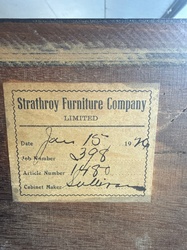
It is crucial to note the limitations of this appraisal. Without physical inspection, I cannot definitively authenticate the materials (e.g., confirm the type of wood, lacquer, or shell) or the age. A full authentication would require in-person examination to assess the construction techniques, look for maker's marks, and evaluate the patina and wear patterns more closely. Provenance documentation would significantly impact value if it could trace the piece to a specific workshop or an earlier period. Therefore, this valuation is based on the assumption that it is a 20th-century decorative import with no significant provenance.