AI Appraisal Estimate

AI-generated estimates · not official valuations

From the user

What was submitted

Photo and notes provided by the user — not generated by AI

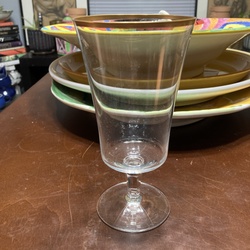
Submitted item photo
Submitted photo · June 6, 2026

User's notes

No additional notes provided.

AI analysis below

AI appraisal

AI analysis & estimate

AI-Generated · Verify before acting

Everything below is generated by AI for informational purposes only. AI can make mistakes — the AI may misidentify items or misattribute them (artist, maker, brand, designer, origin, era). This is not an official valuation and should not be used for insurance, sale, tax, estate, legal, or lending purposes — or any decision requiring a certified appraisal. It is not an authoritative claim about any person, brand, or rights holder — do not share or rely on it as a factual statement about a third party. Always consult qualified professionals before making financial decisions.

Read the full disclaimer

AI Identification

·Not independently authenticated·Verify before acting

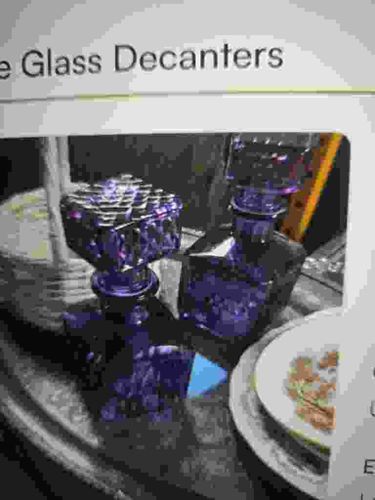
Pair of Amethyst Cut Glass Decanters

Fine Glassware and Barware

AI Estimated Value

·Not an official valuation·Verify before acting

$450.00 - $650.00

As of June 6, 2026

AI Item Analysis

·AI can make mistakes·Verify before acting
This set consists of two vibrant amethyst-colored glass decanters, likely crafted from lead crystal based on the saturation and clarity of the deep purple hue. Each vessel features a square-bodied profile with sharp, geometric lines consistent with Art Deco or Mid-Century Modern barware design. The decanters are topped with large, oversized square glass stoppers that exhibit a deep diamond or waffle-cut pattern, designed to catch and refract light. The bodies appear to be smooth-sided, providing a stark contrast to the highly textured stoppers. The fabrication involves a combination of mold-blown or pressed techniques followed by precision cutting on the stoppers. In terms of condition, the glass retains a high gloss and deep color intensity without visible clouding, though minor surface scratches and 'flea bites' on the sharp edges of the cut glass stoppers are common for items of this vintage (estimated mid-20th century). No significant cracks or large chips are immediately apparent in the provided image. The craftsmanship is evident in the uniform color distribution and the alignment of the diamond cuts on the stoppers. While no maker's mark is clearly visible, the style is reminiscent of glasswork from regions such as Bohemia or possibly American manufacturers like Viking or Blenko that experimented with bold, saturated colors in barware. These pieces serve as both functional spirits containers and significant decorative accents.
AI Appraisal Report

·AI can make mistakes·Verify before acting
I have virtually examined this pair of amethyst-colored glass decanters. The items show characteristics of mid-20th-century barware, specifically pointing toward Bohemian or high-end Scandinavian production. The deep violet saturation and the precision in the waffle-cut stoppers suggest a lead crystal composition rather than standard soda-lime glass. The geometric, square-bodied silhouette is highly desirable in the current Mid-Century Modern (MCM) interior design market. On inspection, the color uniformity is excellent. The noted 'flea bites' on the stopper facets are typical for glass-on-glass contact and do not significantly detract from the value, though they prevent a 'mint' classification. The market for colorful, oversized barware remains strong, with collectors favoring 'statement' pieces in rare hues like this deep amethyst. Comparables for unsigned but high-quality European decanter pairs in similar bold colors typically realize $200–$300 per bottle. The value is bolstered by the presence of a matching pair, which is rarer than single units. Limitations: This appraisal is based solely on visual inspection of the provided images. I cannot definitively verify the manufacturer without a maker's mark or original acid-etched signature, which may be faint. Full authentication would require an in-person physical examination to determine the 'heft' (lead content), check for 'ring' clarity when tapped, and inspect the base for authentic wear patterns or pontil marks. To confirm a specific attribution such as Val Saint Lambert or Moser, provenance documentation or a match in a period sales catalog would be necessary. Scientific testing (X-ray fluorescence) could be used to confirm the exact chemical composition of the glass.

Get your items appraised

Instant estimates of your treasures with AI-powered appraisals

Browse More Appraisals