AI Appraisal Estimate

AI-generated estimates · not official valuations

From the user

What was submitted

Photo and notes provided by the user — not generated by AI

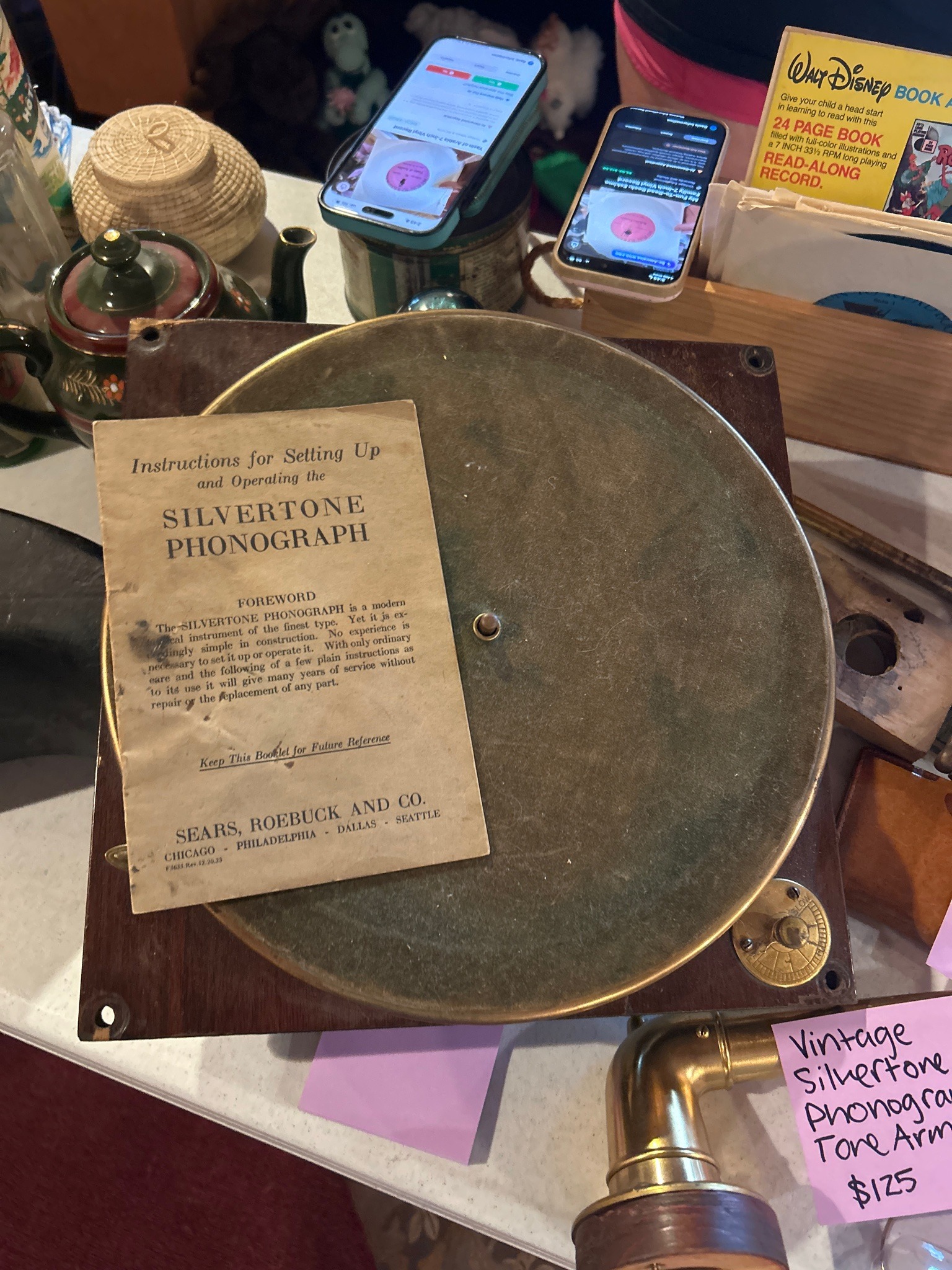
Submitted item photo
Submitted photo · May 17, 2026

User's notes

No additional notes provided.

AI analysis below

AI appraisal

AI analysis & estimate

AI-Generated · Verify before acting

Everything below is generated by AI for informational purposes only. AI can make mistakes — the AI may misidentify items or misattribute them (artist, maker, brand, designer, origin, era). This is not an official valuation and should not be used for insurance, sale, tax, estate, legal, or lending purposes — or any decision requiring a certified appraisal. It is not an authoritative claim about any person, brand, or rights holder — do not share or rely on it as a factual statement about a third party. Always consult qualified professionals before making financial decisions.

Read the full disclaimer

AI Identification

·Not independently authenticated·Verify before acting

Vintage Silvertone Phonograph by Sears, Roebuck and Co.

Antique Audio and Musical Instruments

AI Estimated Value

·Not an official valuation·Verify before acting

$150 - $250

As of May 17, 2026

AI Item Analysis

·AI can make mistakes·Verify before acting
This is a vintage Silvertone brand phonograph assembly, specifically the turntable platter and motor board unit manufactured for Sears, Roebuck and Co. The item features a circular rotating platter covered in a worn, olive-drab or faded green felt or flocking material, which shows significant accumulation of dust and age-related thinning. The platter is mounted on a dark, square wooden base board with rounded corners, exhibiting visible wear particularly at the edges where the finish has chipped. A notable mechanical feature is the brass-toned speed control regulator located in the bottom right corner, marked with 'Fast' and 'Slow' indicators. The metal components show a heavy aged patina and surface oxidation typical of early 20th-century mechanical audio equipment, likely dating to the 1920s or 1930s based on the included instruction manual. The manual itself is a paper pamphlet with the title 'Instructions for Setting Up and Operating the SILVERTONE PHONOGRAPH' and lists Sears, Roebuck and Co. distribution cities like Chicago, Philadelphia, Dallas, and Seattle. The paper is yellowed with foxing and localized staining. A brass-toned tone arm is also visible in the periphery, suggesting this is a group of components from a larger cabinet-style phonograph. Overall condition is fair, reflecting its age with significant surface wear but appearing largely intact for restoration purposes.
AI Appraisal Report

·AI can make mistakes·Verify before acting
I have examined the provided images of this Silvertone phonograph assembly, which appears to be a mid-1910s to 1920s internal mechanical unit originally housed in a Sears, Roebuck and Co. cabinet. The unit consists of the turntable platter with its original (though heavily worn) green felt, the motor board, and a brass-toned speed regulator and tone arm. The presence of the original 'Instructions for Setting Up' pamphlet is a significant value adding factor for collectors of early Sears ephemera. The patina and oxidation on the metal components suggests an authentic age; however, the lack of the original cabinetry significantly impacts the market value, as the piece is now considered a 'parts' or 'restoration' unit rather than a complete furniture piece. Currently, the market for early 20th-century phonographs is stable but selective, with high demand for machines in working order and lower interest in loose components like this assembly. The fair condition, characterized by felt thinning and wooden base chipping, necessitates approximately $100-$300 in professional restoration to be fully functional. Limitations: This appraisal is based solely on visual inspection of the images. I cannot determine if the internal spring motor is functional, if the governor is balanced, or if the mainspring has snapped. A physical inspection would be required to verify mechanical integrity and the presence of any non-original replacement parts. Authenticity of the manual is assumed based on paper foxing, but fiber testing would be required to rule out modern reproductions.

Get your items appraised

Instant estimates of your treasures with AI-powered appraisals

Browse More Appraisals