AI identification & appraisal estimate

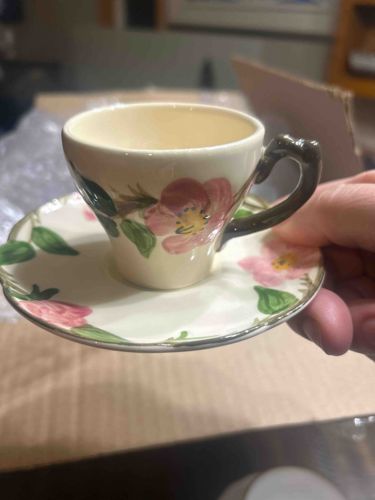
Roseville Pottery Clematis Pattern Demitasse Cup and Saucer

Submitted photo of Roseville Pottery Clematis Pattern Demitasse Cup and Saucer
Photo submitted by the user — not generated by AI

User's notes

CJ USA

These notes were written by the person who submitted this item. Appraiser.AI has not verified them, and the AI's identification and estimate may rely on them.

AI Estimated Value

Not an official valuation

$60 - $100

AI estimate as of November 28, 2025 · verify with a professional before acting

AI-Generated · Verify before acting

Everything on this page is generated by AI for informational purposes only. AI can make mistakes — the AI may misidentify items or misattribute them (artist, maker, brand, designer, origin, era). This is not an official valuation and should not be used for insurance, sale, tax, estate, legal, or lending purposes — or any decision requiring a certified appraisal. It is not an authoritative claim about any person, brand, or rights holder — do not share or rely on it as a factual statement about a third party. Always consult qualified professionals before making financial decisions.

This analysis also relies on unverified notes provided by the user, which may be incomplete or inaccurate and could affect the result.

Read the full disclaimer

AI Item Analysis

This item is a demitasse cup and accompanying saucer, likely manufactured by Roseville Pottery, featuring their 'Clematis' pattern. The pieces are crafted from ceramic, exhibiting a creamy ivory or pale yellow base glaze. The cup and saucer are adorned with hand-painted floral motifs of pink clematis flowers with yellow centers, accompanied by green leaves and brown stems. The design is characteristic of art pottery from the mid-20th century. The cup has a delicate, tapered form with a distinctive dark brown or black, branch-like handle that curls gracefully and is an integral part of the floral theme. The saucer is circular with a subtly scalloped or wavy edge, and both pieces feature a silver or platinum-colored trim around their rims, which shows some visible wear and tarnishing, indicating its age and use. The hand-painted decoration appears vibrant with some slight irregularities inherent to hand-applied artistry. No major chips or cracks are visible in the provided images, though there is general surface wear consistent with age and handling. The glaze has a slight sheen but is not overly glossy. The overall craftsmanship suggests a mass-produced yet artfully decorated item from a reputable pottery manufacturer. The 'CJ USA' context likely refers to the country of origin.
AI Appraisal Report

Based on my visual examination of the provided image, this Roseville Pottery Clematis Pattern Demitasse Cup and Saucer appears to be a genuine example of the pattern, consistent with mid-20th-century art pottery. The creamy base glaze, hand-painted pink clematis flowers with yellow centers, green leaves, and brown stems, along with the distinctive branch-like handle, are all characteristic identifiers. The 'CJ USA' marking is likely a typo or misreading, and typically Roseville marks are more distinct, often impressed or ink-stamped 'Roseville USA'. The condition appears good, with no major chips or cracks visible, which is positive. However, I note the visible wear and tarnishing on the silver/platinum trim, consistent with age and handling. This is a common finding and slightly reduces the top-end value. The slight irregularities in the hand-painted decoration are expected and add to its artisanal charm. Market conditions for Roseville Pottery, while stable, have seen fluctuations. The Demitasse size in the Clematis pattern is not exceptionally rare but is a desirable form. Demand remains steady among collectors of American art pottery. Factors impacting value include the visible trim wear and the lack of a clear Roseville mark in the description, which somewhat limits the value without physical verification. To fully authenticate and confirm the value, an in-person examination would be crucial. I would need to visually inspect the bottom of the pieces for the definitive Roseville mark (e.g., impressed 'Roseville U.S.A.' or foil label remnants), assess the integrity of the glaze and any subtle crazing not visible in images, and thoroughly check for hairline cracks or repairs. Provenance documentation, though unlikely for an item of this type, would also be beneficial.

Keep exploring

More ceramics appraisals

Get your items appraised

Instant AI-powered appraisal estimates from a photo

Browse More Appraisals