AI estimate as of December 16, 2025 · verify with a professional before acting
AI-Generated · Verify before acting
Everything on this page is generated by AI for informational purposes only. AI can make mistakes — the AI may misidentify items or misattribute them (artist, maker, brand, designer, origin, era). This is not an official valuation and should not be used for insurance, sale, tax, estate, legal, or lending purposes — or any decision requiring a certified appraisal. It is not an authoritative claim about any person, brand, or rights holder — do not share or rely on it as a factual statement about a third party. Always consult qualified professionals before making financial decisions.
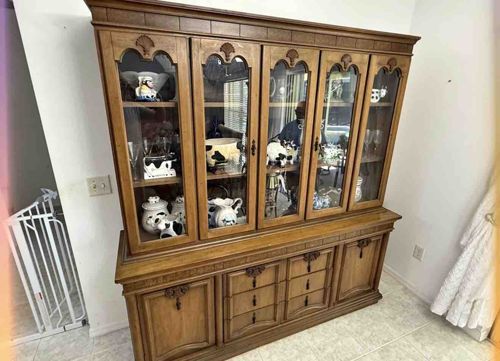
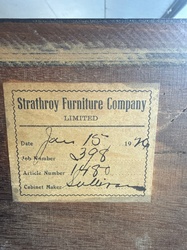
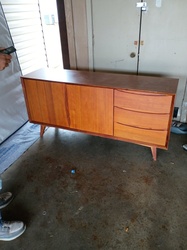
This is a two-piece china cabinet, also known as a hutch, exhibiting a traditional or possibly French Provincial style. The item is constructed primarily from wood, likely a a medium-toned hardwood such as oak or maple, with a visible grain throughout. The finish appears to be a natural or stained medium brown, showing some areas of natural patina and potentially minor surface wear consistent with age and use. The upper hutch section features four glass-fronted doors, each with a distinctive arched top and carved wooden tracery in a gothic or Gothic Revival style, resembling a trefoil arch or cresting. These glass panels allow for visibility of the contents within, which include various decorative ceramic cow-themed items, indicating its intended use for displaying dinnerware or collectibles. The interior of the hutch appears to have multiple shelves, though the exact number and material (wood or glass) are not fully discernible. The base of the hutch section immediately above the buffet features a decorative carved molding. The lower buffet section consists of two flanking cabinet doors and a central bank of drawers. The drawer fronts and cabinet doors all feature applied decorative carving, possibly made from wood composite or carved wood, in the form of ornate escutcheons or pulls with dangling elements, enhancing the traditional aesthetic. The overall construction appears solid, with visible joinery and a quality of craftsmanship suitable for a mass-produced or semi-custom furniture piece from the mid-to-late 20th century. No specific manufacturer's marks or signatures are visible in the provided images. The item shows some minor dust and general signs of use, but no significant damage like large gouges, cracks, or missing pieces are overtly apparent. The condition seems good given its likely age, suggesting it has been well-maintained. The color uniformity suggests an original finish.
AI Appraisal Report
This two-piece China Cabinet/Hutch, exhibiting a traditional or French Provincial style, appears to be constructed from a medium-toned hardwood. Visually, the finish is consistent and suggests an original application, with minor surface wear and patina indicative of its likely age from the mid-to-late 20th century. The intricate carved wooden tracery on the arched glass doors of the hutch adds significant character, while the applied decorative carving on the buffet's doors and drawers enhances its traditional aesthetic. The overall condition appears good; I do not observe any significant damage such as large gouges, cracks, or missing elements, beyond expected minor dust and general signs of use. This suggests it has been well-maintained.
From a market perspective, traditional china cabinets, while functional, generally face moderate demand unless they are exceptional antique pieces or from highly coveted manufacturers. This piece is likely a mass-produced or semi-custom item. Comparables in the secondary market, including online marketplaces and local furniture consignment, typically range from $400 to $900 depending on condition, style, and local market trends. The decorative elements and good apparent condition place this item at the higher end of that range for a traditional, non-bespoke piece. Rarity is not a significant factor here; similar styles were widely produced.
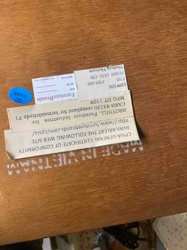
Factors impacting value include its good aesthetic condition, the detailed carving, and its dual functionality as both display and storage. Limitations in authenticity verification from an image alone are considerable. I cannot confirm the exact wood type, construction methods (e.g., dovetail joinery), internal drawer materials, or the presence of any manufacturer's marks. An in-person examination would allow me to inspect joinery, assess material quality, check for structural integrity issues, and look for any hidden damage or repairs, which could alter this appraisal.