AI estimate as of August 13, 2025 · verify with a professional before acting
AI-Generated · Verify before acting
Everything on this page is generated by AI for informational purposes only. AI can make mistakes — the AI may misidentify items or misattribute them (artist, maker, brand, designer, origin, era). This is not an official valuation and should not be used for insurance, sale, tax, estate, legal, or lending purposes — or any decision requiring a certified appraisal. It is not an authoritative claim about any person, brand, or rights holder — do not share or rely on it as a factual statement about a third party. Always consult qualified professionals before making financial decisions.
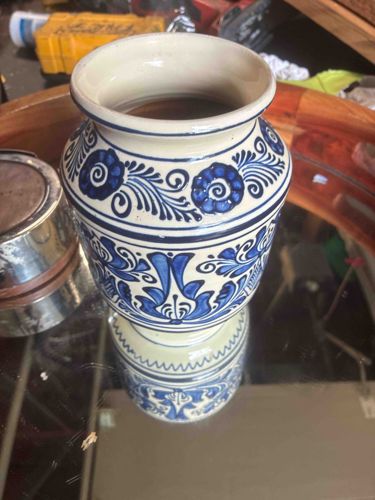
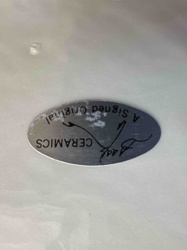
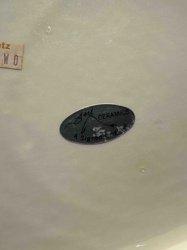
This item is a ceramic vase, likely earthenware or stoneware, featuring a distinctive hand-painted blue and white decorative motif. Physically, it is a squat, rounded vase with a flared rim, a constricted neck, and a wider body that tapers slightly towards the base. The primary color of the ceramic visible through the glaze is an off-white or cream, serving as the canvas for the cobalt blue decorations. The upper portion of the vase, just below the rim, displays a band of stylized floral or foliate patterns, characterized by swirling elements and bold blue 'eye' or 'rosette' shapes. Below this, the main body of the vase is adorned with larger, more abstract botanical designs, featuring broad blue leaves and organic shapes. The painting appears to be freehand, showing slight variations that denote artisanal craftsmanship rather than machine printing. There are thin blue lines accentuating the rim and possibly the base, though the very bottom is not clearly visible. The glaze is glossy, reflecting light, and appears to be in good condition with no immediately apparent chips, cracks, or significant crazing. The reflection of the vase on the surface it rests upon, likely a mirrored or highly polished surface, shows the continuity of the design. The style suggests it could be a piece of traditional folk art, possibly Mexican Talavera, Portuguese Azulejo-inspired pottery, or Delftware-style, though without maker's marks, pinpointing the exact origin is difficult. The craftsmanship seems of good quality, with vibrant colors and a consistent, albeit hand-drawn, pattern application. Given the traditional design, it likely dates from the mid-20th century to contemporary, perhaps 1950s onwards.
AI Appraisal Report
Based on my visual examination of the provided image, this blue and white hand-painted ceramic vase appears to be in excellent condition. The glaze is glossy and exhibits no immediate signs of chips, cracks, or significant crazing, which is crucial for ceramic value. Its hand-painted nature, evident in the slight variations and freehand application, suggests artisanal craftsmanship rather than mass production, enhancing its appeal. The style is evocative of traditional folk art pottery, possibly Mexican Talavera, Portuguese ceramics, or even a nod to Delftware, though a definitive origin without maker's marks or further documentation is impossible from an image alone. This is a common limitation when appraising ceramics visually; an in-person examination would allow me to check for marks, feel the texture, assess the true weight, and detect any subtle repairs or hairline cracks not visible in the photo. Provenance documentation, such as purchase receipts or family history, would significantly aid in authenticating its origin and age more precisely. Given its traditional aesthetic, I would estimate its age to be mid-20th century to contemporary. Demand for decorative folk art ceramics remains steady, particularly for well-preserved, aesthetically pleasing pieces like this one. While not exceedingly rare, its good condition and attractive design contribute positively to its marketability. The lack of specific artist attribution or historical significance, which often elevates value considerably, prevents it from reaching higher appraisal tiers. Its value is primarily driven by its decorative appeal and condition.