AI estimate as of August 11, 2025 · verify with a professional before acting
AI-Generated · Verify before acting
Everything on this page is generated by AI for informational purposes only. AI can make mistakes — the AI may misidentify items or misattribute them (artist, maker, brand, designer, origin, era). This is not an official valuation and should not be used for insurance, sale, tax, estate, legal, or lending purposes — or any decision requiring a certified appraisal. It is not an authoritative claim about any person, brand, or rights holder — do not share or rely on it as a factual statement about a third party. Always consult qualified professionals before making financial decisions.
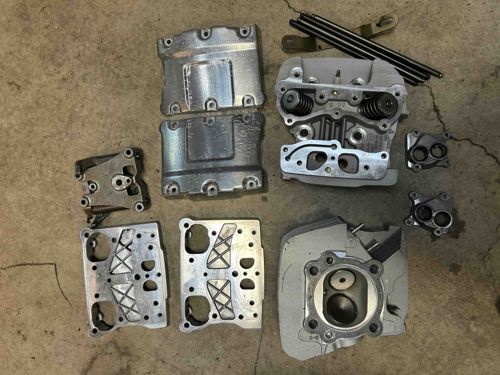
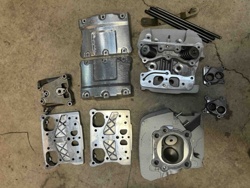
This collection of items consists of various disassembled engine components, likely for a motorcycle or a small engine. The primary materials appear to be cast aluminum or an aluminum alloy, given their light gray color and cast finishes. There are two prominent, larger rectangular covers, possibly valve covers or cam covers, each with multiple bolt holes along the perimeter and a somewhat textured, unfinished surface. Another irregularly shaped cast aluminum piece features an intricate pattern of drilled holes and an open recess, suggesting it might be a component of a cooling system or an oil passage. Alongside these are two flat, rectangular plates with complex cutouts and internal cross-bracing, possibly mounting plates or structural elements, showcasing precision machining with visible tool marks. Two cylinder heads are also present; one is partially assembled with valve springs and appears to have an intake manifold gasket surface visible, while the other shows the combustion chamber and valve seats more clearly. The cylinder heads exhibit typical casting marks and machined surfaces for sealing. Additionally, there are two smaller, more compact components, each with two circular openings, which might be rocker boxes or smaller covers. A set of four long, cylindrical pushrods, likely made of steel, are also visible, indicating an overhead valve (OHV) engine design. The overall condition suggests used parts, with some visible grease residue, minor scuffs, and a general patina consistent with engine mileage. There are no obvious signs of severe damage like cracks or major deformities, but the parts are clearly removed from an active engine, not new stock. The meticulous design of several components points to good quality engineering, typical of reputable engine manufacturers. No discernible maker's marks or part numbers are visible in the provided image, making specific identification by brand difficult without more detailed inspection.
AI Appraisal Report
Upon examining the provided image of these disassembled motorcycle/small engine components, I assess their condition as used, consistent with components removed from an active engine. The presence of grease residue, minor scuffs, and a general patina indicates mileage, but crucially, I observe no obvious signs of severe damage such as cracks or major deformities. The meticulous design, particularly of the cast aluminum covers and the two cylinder heads (one partially assembled), suggests good quality engineering, typical of reputable manufacturers. The presence of four long steel pushrods indicates an overhead valve (OHV) design. Authenticity is challenging to definitively verify from images alone. While the components appear genuine as engine parts, specific manufacturer authenticity or model identification would require in-person examination to locate and inspect potential maker's marks, part numbers, or unique casting identifiers. Provenance documentation, such as service records or original purchase receipts, would further aid in establishing the components' history and origin.
Market conditions for used disassembled engine components are highly variable, largely dependent on the specific make, model, and rarity of the engine they originate from. Without discernible identification marks, these parts are currently generic. Comparables typically range from specialty used parts dealers to online auctions. Demand would be highest for desirable, high-performance, or rare engine types. As depicted, with no specific identification, the rarity is unknown. Factors significantly impacting value include the lack of identifiable marks, which limits their market to those who can specifically identify them or need generic engine components. Without knowing the exact engine application, their overall market appeal is diminished. For full authentication, I would need a physical inspection to check for stamps, part numbers, and to conduct hands-on wear assessment. Scientific testing, such as material analysis, could confirm alloy composition if necessary, but is unlikely for appraisal unless damage or specific performance claims are made.