AI estimate as of October 11, 2025 · verify with a professional before acting
AI-Generated · Verify before acting
Everything on this page is generated by AI for informational purposes only. AI can make mistakes — the AI may misidentify items or misattribute them (artist, maker, brand, designer, origin, era). This is not an official valuation and should not be used for insurance, sale, tax, estate, legal, or lending purposes — or any decision requiring a certified appraisal. It is not an authoritative claim about any person, brand, or rights holder — do not share or rely on it as a factual statement about a third party. Always consult qualified professionals before making financial decisions.
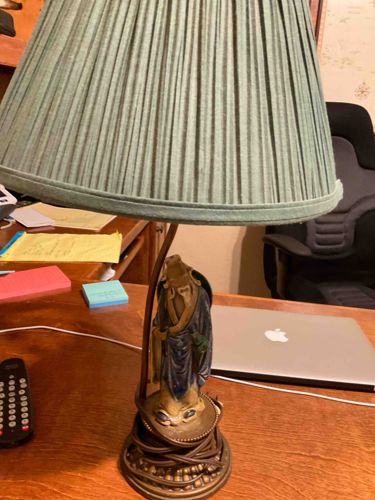
This item is a vintage table lamp featuring a figural base in an Asian-inspired style, topped with a pleated fabric lampshade. The base is constructed from what appears to be a composite material or ceramic, painted and glazed to resemble an elder or deity figure, possibly a scholar or sage, identifiable by the beard and traditional attire. The figure's robes are rendered in blue and a yellowish-tan color, with details suggesting a sense of age and wisdom. The figure is mounted on a decorative circular base, which seems to be made of a bronzed or antiqued brass-finished metal, featuring an ornate, possibly floral or scrolled, relief pattern around its circumference. The electrical cord, wrapped around the base, is a braided cloth-covered type, consistent with older wiring, indicating a potentially earlier manufacturing period. The lampshade is a conical or bell-shaped form, made of pleated fabric, likely silk or a synthetic imitation, in a muted sage green or light teal color. The pleats are fine and evenly spaced, giving the shade a textured appearance and diffusing light softly. The fabric shows some signs of age, including possible dust accumulation and slight discoloration, consistent with a vintage item. The overall condition suggests use over time, with a visible patina on the metal base and general wear expected from an older lamp. There are no clear manufacturer's marks visible in the image, but the style of the figure and the lampshade suggest a mid-20th century origin, possibly from the 1940s to 1960s. The craftsmanship of the figural element appears to be of moderate quality, with hand-painted details. The lamp as a whole exudes a classic, somewhat exotic, aesthetic.
AI Appraisal Report
This vintage table lamp, featuring an Asian-inspired figural base and a pleated shade, appears to be in good vintage condition, consistent with its likely age. The figural base, seemingly composite or ceramic, depicts an elder or sage, well-painted with good detail for its presumed production quality. The pleated fabric shade shows expected signs of age, including potential dust and slight discoloration, which are common for vintage textiles. The braided cloth-covered cord points to an earlier manufacturing period, likely mid-20th century (1940s-1960s). The ornate metal base also shows appropriate patina.
Authenticity of the period style is good based on visual cues; however, definitive authentication of materials and exact age would require an in-person examination. Specifically, closer inspection of the base material and glaze, as well as the shade fabric, would be beneficial. Provenance documentation, though not available, would also aid in confirming its history. Market demand for figural lamps of this style is niche but steady. Comparables suggest lamps of this era and style, especially without clear maker's marks, fall into a moderate vintage decor category. Factors impacting value include the lamp's functional condition (which cannot be fully assessed visually), the intactness of the shade, and the overall aesthetic appeal. Without clear manufacturer's marks or a distinguished artist, its value is primarily decorative and collectible. The condition appears to be original and unrestored, which can be desirable for some collectors. Flaws such as cracks, chips, or significant damage to the shade would reduce value. I cannot assess functionality (wiring safety) or internal components from images alone.