AI identification & appraisal estimate

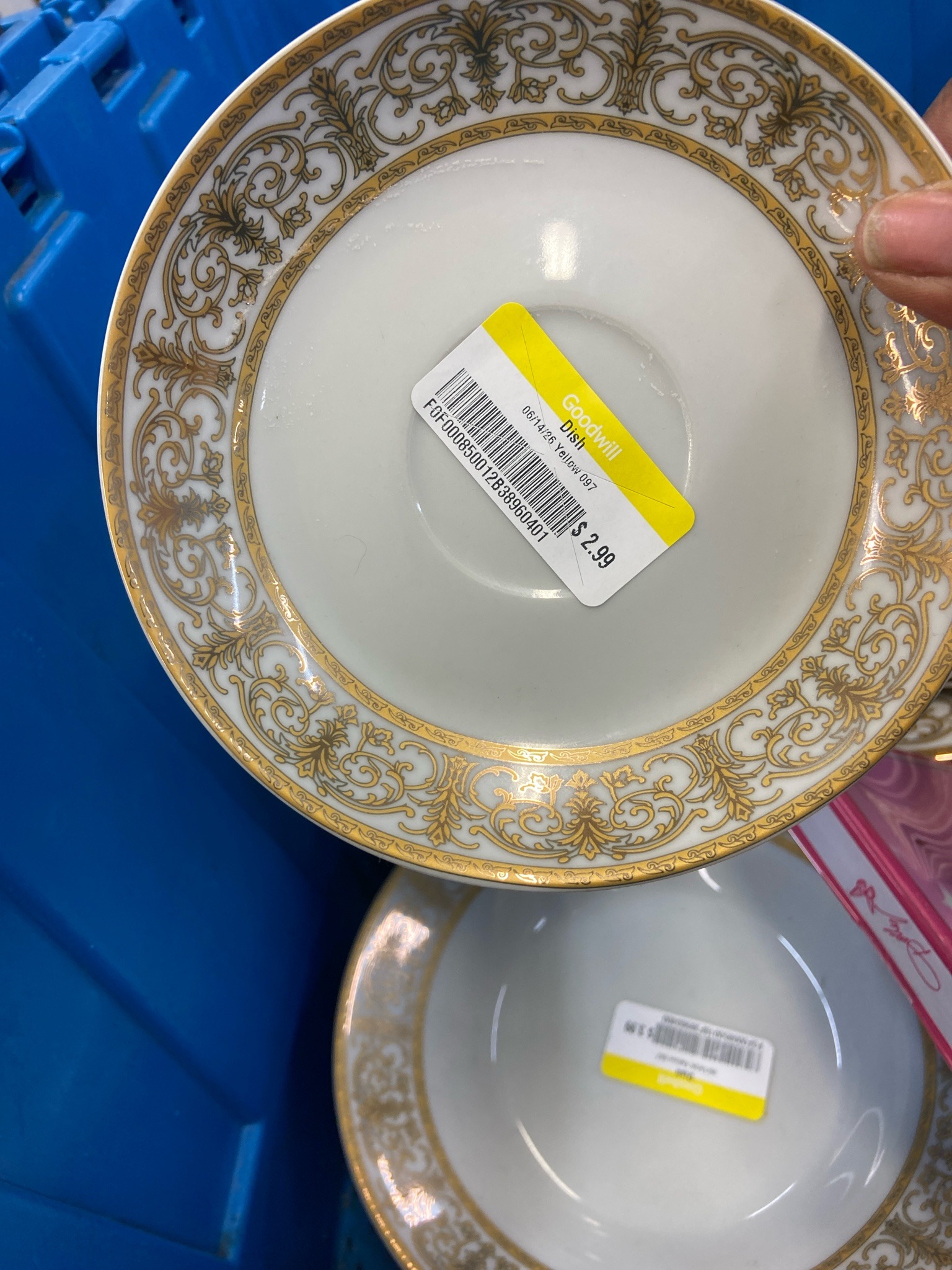
Porcelain saucer with gilded scrollwork border

This name is the AI's identification of the item — it may be incorrect.

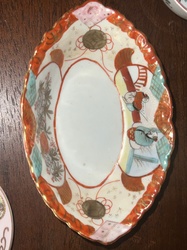
Submitted photo of Porcelain saucer with gilded scrollwork border
Photo submitted by the user — not generated by AI

User's notes

Royal Vienna china

These notes were written by the person who submitted this item. Appraiser.AI has not verified them, and the AI's identification and estimate may rely on them.

AI Estimated Value

Not an official valuation

$40.00 - $80.00

AI estimate as of June 14, 2026 · verify with a professional before acting

AI-Generated · Verify before acting

Everything on this page is generated by AI for informational purposes only. AI can make mistakes — the AI may misidentify items or misattribute them (artist, maker, brand, designer, origin, era). This is not an official valuation and should not be used for insurance, sale, tax, estate, legal, or lending purposes — or any decision requiring a certified appraisal. It is not an authoritative claim about any person, brand, or rights holder — do not share or rely on it as a factual statement about a third party. Always consult qualified professionals before making financial decisions.

This analysis also relies on unverified notes provided by the user, which may be incomplete or inaccurate and could affect the result.

Read the full disclaimer

AI Item Analysis

This item is a porcelain saucer featuring a white glazed surface with an ornate gold-toned filigree or scrollwork border. The decorative band consists of intricate acanthus leaf motifs and scrolling vine patterns, which appear to be applied as a metallic gilding or transfer. The saucer has a shallow central well designed to hold a teacup and a slightly raised rim. The user-supplied context identifies this as 'Royal Vienna china,' but it bears no visible maker's mark, beehive stamp, or signature in the provided image to verify this attribution. Stylistically, the ornate gilding is consistent with 19th or 20th-century European porcelain aesthetics, though the level of detail could be indicative of various manufacturers mimicking the Neoclassical style. A yellow 'Goodwill' price sticker is affixed to the center of the well, partially obscuring the glaze. The condition appears to be fair to good, with no obvious chips or cracks visible on the upper surface, though the gilding shows some potential light surface wear. Physical inspection is required to determine the material composition, exact manufacturing origin, and to verify the user-submitted brand claim.
AI Appraisal Report

Based on my visual analysis of the provided image, this porcelain saucer features a neoclassical aesthetic characterized by an ornate gilded scrollwork border. Per the user's submission, the item is attributed to Royal Vienna; however, I cannot confirm this identification as there are no visible maker's marks or the characteristic beehive stamp present in the photo. The yellow sticker in the center further obscures potential markings or glaze details. While the gilding is consistent with 19th or 20th-century European craftsmanship, it could also represent a later reproduction or an item produced in the style of Royal Vienna by another manufacturer. My value estimate assumes the attribution is correct and the piece is in good condition despite the visible sticker residue and minor surface wear. In the general market, porcelain pieces of this type are valued based on the prestige of the maker and the complexity of the gilding. If this piece were verified as vintage Royal Vienna through an in-person inspection of the base and porcelain paste, it would sit at the higher end of the provided range. If it is determined to be a later 'in the style of' reproduction or from a less prestigious factory, the value would likely fall below $20.00. To reach a more certain conclusion, I would need to physically examine the underside for marks, assess the translucency and weight of the porcelain, and remove any adhesive to inspect the underlying glaze. Market demand for single saucers is generally lower than for complete tea services, though they remain collectible as replacement pieces or decorative objects.

Keep exploring

More porcelain and ceramics appraisals

Get your items appraised

Instant AI-powered appraisal estimates from a photo

Browse More Appraisals