AI Appraisal Estimate

AI-generated estimates · not official valuations

From the user

What was submitted

Photo and notes provided by the user — not generated by AI

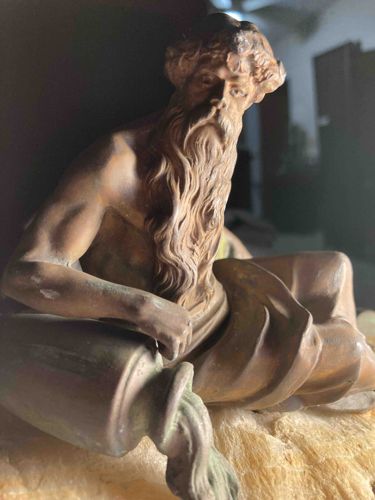
Submitted item photo
Submitted photo · June 10, 2026

User's notes

No additional notes provided.

AI analysis below

AI appraisal

AI analysis & estimate

AI-Generated · Verify before acting

Everything below is generated by AI for informational purposes only. AI can make mistakes — the AI may misidentify items or misattribute them (artist, maker, brand, designer, origin, era). This is not an official valuation and should not be used for insurance, sale, tax, estate, legal, or lending purposes — or any decision requiring a certified appraisal. It is not an authoritative claim about any person, brand, or rights holder — do not share or rely on it as a factual statement about a third party. Always consult qualified professionals before making financial decisions.

Read the full disclaimer

AI Identification

·Not independently authenticated·Verify before acting

Neoclassical Bronze Allegorical Sculpture of a River God

Fine Art / Sculpture

AI Estimated Value

·Not an official valuation·Verify before acting

$4,500 - $6,500

As of June 10, 2026

AI Item Analysis

·AI can make mistakes·Verify before acting
A detailed cast bronze sculpture depicting a lounging River God, an allegorical figure often associated with water sources like the Tiber or Nile. The figure is characterized by a long, flowing beard and wavy hair, holding a large urn from which water appears to be pouring. The craftsmanship displays a high level of anatomical detail, particularly in the musculature of the arms and the expressive facial features. The sculpture appears to be made from a heavy metal alloy, likely bronze or spelter, with a deep brown patina and visible verdigris oxidation near the urn's opening, suggesting age and exposure to moisture. Its style is reminiscent of 18th or 19th-century Neoclassical European works inspired by Greco-Roman antiquities. The figure is seated on an uneven, naturalistic base that seems to be mounted on a light-colored stone or marble pedestal. Regarding condition, there is noticeable wear to the finish, several small white scuff marks on the bicep and shoulder area, and a significant amount of dust and grime accumulated in the crevices of the drapery and beard. There are no immediately visible maker's marks in the provided image, but the quality of the casting suggests a professional foundry production from the late 19th century.

AI Appraisal Report

·AI can make mistakes·Verify before acting
Based on my visual analysis of this Neoclassical bronze sculpture of a River God, I am identifying it as a high-quality late 19th-century European casting, likely of French or Italian origin. The anatomical precision and the treatment of the hair and beard suggest a founder of significant skill, reflecting the Grand Tour tradition of reproducing classical Roman prototypes like those found in the Capitoline Museum. The deep brown patina is consistent with age, though the verdigris near the urn suggests either original use in a fountain setting or prolonged exposure to moisture. The condition is generally good, though the white scuffs on the shoulder and bicep represent loss of patina that will require professional conservation to stabilize. The accumulation of debris in the crevices, while common, indicates a need for gentle cleaning to reveal the fine chasing of the bronze. The market for Neoclassical bronzes remains stable, with high demand for larger, well-cast allegorical figures suitable for interior design ‘statement’ pieces. Comparables for unsigned 19th-century bronzes of this scale and detail typically realize mid-four to low-five figures at specialized auctions. However, the lack of a visible foundry mark (such as Barbedienne or Susse Frères) slightly limits the upper valuation tier. It is important to note that this appraisal is based on photographic evidence only. A physical inspection is required to confirm the alloy composition (bronze vs. spelter), verify the weight, and search for internal markings or signatures under the base. Definitive authentication would further require provenance documentation or metallurgical analysis to confirm 19th-century casting methods.

Get your items appraised

Instant estimates of your treasures with AI-powered appraisals

Browse More Appraisals