AI identification & appraisal estimate

United States Native American/Sacagawea Dollar Coin

This name is the AI's identification of the item — it may be incorrect.

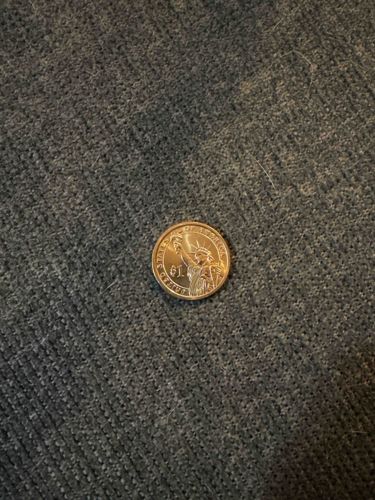
Submitted photo of United States Native American/Sacagawea Dollar Coin
Photo submitted by the user — not generated by AI

AI Estimated Value

Not an official valuation

$1.00 - $1.50

AI estimate as of December 12, 2025 · verify with a professional before acting

AI-Generated · Verify before acting

Everything on this page is generated by AI for informational purposes only. AI can make mistakes — the AI may misidentify items or misattribute them (artist, maker, brand, designer, origin, era). This is not an official valuation and should not be used for insurance, sale, tax, estate, legal, or lending purposes — or any decision requiring a certified appraisal. It is not an authoritative claim about any person, brand, or rights holder — do not share or rely on it as a factual statement about a third party. Always consult qualified professionals before making financial decisions.

Read the full disclaimer

AI Item Analysis

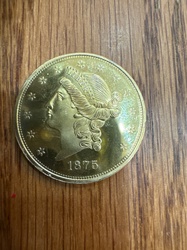
The item is a circular, metallic coin, appearing to be a United States Native American or Sacagawea dollar coin, distinguishable by its golden-bronze color. The obverse side, which is visible in the image, features a central effigy of a Native American figure, likely Sacagawea, with a child on her back. The design includes 'LIBERTY' prominently arcing above the figures. The year '2001' is clearly visible to the left of the figure, indicating its minting year. The coin exhibits a reeded edge, though not clearly visible from this angle. The material appears to be a manganese-brass clad, characteristic of these dollar coins, giving it its distinctive golden hue. The surface shows some minor signs of circulation wear, including subtle abrasions and a slight loss of original luster, suggesting it has been in active use but is still in relatively good condition. There are no significant scratches, dents, or other forms of damage visible that would drastically diminish its aesthetic or numismatic value. The craftsmanship is consistent with modern U.S. coinage, featuring fine details in the engraving. The coin is resting on a dark grey, knitted fabric surface, which provides a textural contrast to the smooth metallic surface of the coin. Its dimensions are standard for a U.S. dollar coin, approximately 26.5 mm in diameter.
AI Appraisal Report

I have examined the provided image of what appears to be a 2001 United States Native American/Sacagawea Dollar Coin. Based on the visual evidence, the coin exhibits the characteristic golden-bronze color and design elements typical of this series, including the central effigy of Sacagawea with a child and the 'LIBERTY' inscription. The visible year '2001' confirms its minting date. The material's appearance is consistent with the manganese-brass clad composition of these coins. From a condition standpoint, I assess it to be in 'About Uncirculated' (AU) to 'Extremely Fine' (EF) condition. There are minor signs of circulation wear, including subtle abrasions and a slight loss of original luster, primarily in the fields and high points of the design, which is common for coins that have seen some limited use. No significant scratches, dents, or other damage that would drastically diminish its aesthetic or numismatic value are evident. Market conditions for common date Sacagawea dollars, such as the 2001 issue, are generally robust at face value. While this particular coin is in good circulated condition, it is not a rare date or variety. The demand largely comes from collectors filling sets, but the supply of such coins is high. Factors significantly impacting value are primarily its common date and the lack of any discernible errors or exceptional qualities. Therefore, its numismatic premium above face value is minimal. My primary limitation in this appraisal is the reliance solely on images. Without a physical in-hand examination, I cannot definitively verify edge details, precise weight, or detect subtle surface characteristics that might indicate counterfeiting or specific mint errors. A full authentication would require direct inspection, and potentially microscopic analysis, to confirm authenticity beyond visual appearance and precisely grade its condition for a more accurate valuation.

Keep exploring

More coinage appraisals

Get your items appraised

Instant AI-powered appraisal estimates from a photo

Browse More Appraisals