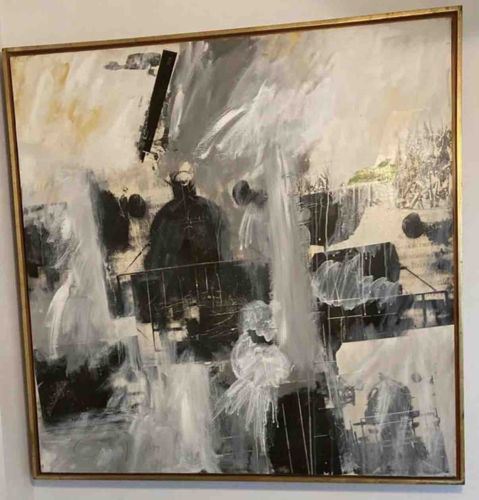
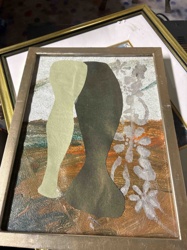
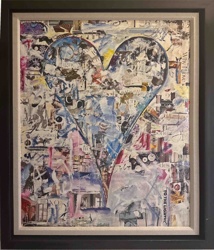
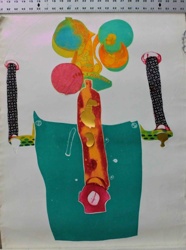
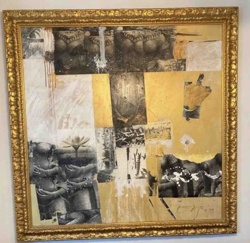
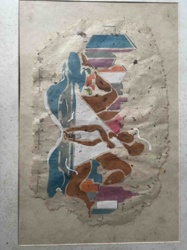
Framed Mixed media collage art by Otto Stupakoff, 50”x50”, Cambodia imagery, painted in 1999
These notes were written by the person who submitted this item. Appraiser.AI has not verified them, and the AI's identification and estimate may rely on them.
AI Estimated Value
Not an official valuation
$4,000-6,000
AI estimate as of August 23, 2025 · verify with a professional before acting
AI-Generated · Verify before acting
Everything on this page is generated by AI for informational purposes only. AI can make mistakes — the AI may misidentify items or misattribute them (artist, maker, brand, designer, origin, era). This is not an official valuation and should not be used for insurance, sale, tax, estate, legal, or lending purposes — or any decision requiring a certified appraisal. It is not an authoritative claim about any person, brand, or rights holder — do not share or rely on it as a factual statement about a third party. Always consult qualified professionals before making financial decisions.
This analysis also relies on unverified notes provided by the user, which may be incomplete or inaccurate and could affect the result.
This is a framed mixed media collage artwork titled "Cambodia Imagery" created by Otto Stupakoff in 1999. The piece measures 50 inches by 50 inches, suggesting a substantial presence. Its primary color palette consists of various shades of black, white, and grey, with subtle underlying hints of yellow or sepia tones, especially visible in the upper left and upper right quadrants, and a touch of green in the mid-right. The artwork combines elements of painting, characterized by broad, expressive brushstrokes and drips of white and grey paint, with collage elements, particularly textual fragments that resemble aged documents or maps, visible beneath the painted layers. These textual elements appear to be in a foreign script, possibly contributing to the 'Cambodia imagery' theme. The composition is abstract, featuring indistinct dark shapes that could be interpreted as figures or architectural forms, overlaid with dynamic, sweeping white brushstrokes that add movement and depth. A prominent vertical black rectangular element is present in the upper-left, and a horizontal grid-like structure runs across the lower portion of the central dark form. The visible condition suggests the artwork is well-preserved, with no obvious major damage, tears, or significant discoloration beyond its intended aged aesthetic. The quality of craftsmanship is high, indicative of a professional artist, with a focus on textural interplay and a dramatic, monochromatic effect accented by subtle color. The artwork is housed in a simple, elegant gold-toned frame, which complements the piece without detracting from its impact. The abstract nature combined with discernible collage elements creates a complex, thought-provoking visual experience.
AI Appraisal Report
I have examined the provided image of Otto Stupakoff’s 1999 mixed media collage, 'Cambodia Imagery.' At 50"x50", its large scale contributes significantly to its presence and value. The condition appears excellent, with no visible damage beyond the artist’s intended aged aesthetic, suggesting careful handling over the years. The subtle shifts from black/white/grey to hints of yellow/sepia/green showcase sophisticated layering and brushwork, typical of a professional artist. The integration of textual fragments as collage elements beneath the paint layers adds depth and directly ties into the 'Cambodia Imagery' theme, enhancing its narrative appeal.
Market conditions for contemporary mixed media art, especially from established but not globally renowned artists like Stupakoff, remain stable. Prices are largely driven by scale, complexity, and thematic resonance. Comparables for pieces of this size and medium by artists with a similar exhibition history tend to fall within the mid-range for contemporary art. The 'Cambodia Imagery' theme, while specific, adds an intriguing historical and cultural layer, potentially attracting collectors interested in global narratives or abstract expression. Demand for unique, large-scale works remains consistent, especially for pieces that blend painting with collage in an expressive manner.
A significant limitation in this appraisal is the lack of physical examination. While the image suggests good condition and authenticity, in-person inspection would allow for definitive verification of the medium's integrity, brushstroke details, and the actual aging of the collage elements. Full authentication would ideally require provenance documentation (e.g., certificate of authenticity, exhibition history, acquisition records) directly from the artist, gallery, or previous owner, as well as forensic analysis of materials if any doubts arose. These factors are crucial for confirming the piece's originality and lineage and would solidify its market standing.