AI estimate as of September 9, 2025 · verify with a professional before acting
AI-Generated · Verify before acting
Everything on this page is generated by AI for informational purposes only. AI can make mistakes — the AI may misidentify items or misattribute them (artist, maker, brand, designer, origin, era). This is not an official valuation and should not be used for insurance, sale, tax, estate, legal, or lending purposes — or any decision requiring a certified appraisal. It is not an authoritative claim about any person, brand, or rights holder — do not share or rely on it as a factual statement about a third party. Always consult qualified professionals before making financial decisions.
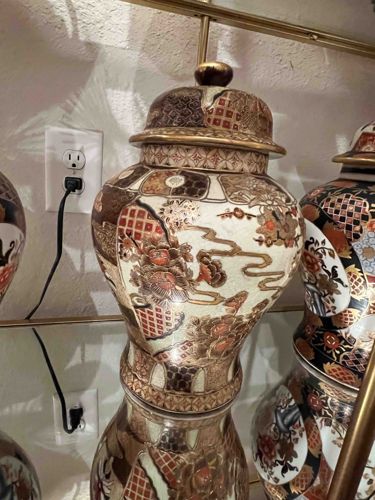
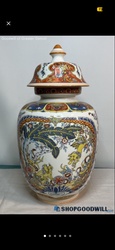
This item is a decorative ginger jar, likely crafted from porcelain or ceramic, showcasing a rich and intricate Imari-style design. The jar features a classic baluster form, tapering from a wider upper body to a narrower base, and is topped with a complementary domed lid, crowned with a small, rounded finial. The primary color palette consists of earthy tones including various shades of brown, muted reds, oranges, and gold, contrasted with areas of creamy white. The surface is adorned with multiple panels or reserves, each containing detailed floral or scenic motifs. Some areas exhibit a geometric, possibly wicker-like, pattern in rust and white. The decorative motifs appear to be hand-painted with fine brushwork, highlighted by significant gilding, particularly visible on the rim of the lid, the neck of the jar, and outlining some of the design elements. The quality of the artistry suggests careful craftsmanship. There are no immediate visible signs of major damage such as chips or cracks on the present accessible view, however, some slight wear to the gilding or paint might be present given its age. The item appears to be in good display condition. The style is indicative of Japanese porcelain, specifically drawing inspiration from the Imari tradition known for its elaborate decoration and use of gold. While an exact manufacturing date is not discernable, the style suggests it could be mid-20th century or later.
AI Appraisal Report
Upon visual examination of the provided image, I assess this Japanese Imari-style ginger jar to be in good display condition. The colors are vibrant, and the intricate hand-painted design, featuring floral and scenic motifs within reserves, appears largely intact. The gilding, a common feature of Imari ware, shows slight wear, particularly on the lid finial and rim, which is consistent with age and typical handling. No major chips, cracks, or repairs are evident from the image. The overall craftsmanship suggests a decorative piece, likely produced in the mid-20th century or possibly later, given the widespread production of Imari-style items for export. While the aesthetic quality is good, the lack of specific artist marks or definitive age indicators from a visual inspection alone suggests it's more of a decorative export piece rather than a rare antique.
In terms of market conditions, decorative Imari-style ginger jars are relatively common. Comparables in the secondary market, such as online auctions and antique malls, typically fall within a modest price range unless they possess exceptional age, provenance, or artistic merit from a renowned kiln or artist. Demand for mass-produced Imari-style items is moderate, as their decorative appeal remains strong, but their rarity is low. Factors impacting value are primarily condition and aesthetic appeal. Given the visible signs of minor wear and without further authentication, this piece would likely appeal to collectors and decorators seeking an attractive, functional decorative item. Limitations in authenticity verification from an image alone are significant. A physical examination would allow me to check for porcelain body quality, glaze imperfections, true gilding quality (mercury vs. electroplated), and any base marks. Provenance documentation, such as collection history or original purchase receipts, would greatly assist in dating and attributing the piece. Scientific testing, like thermoluminescence, could provide a more precise age.