AI Appraisal Estimate

AI-generated estimates · not official valuations

From the user

What was submitted

Photo and notes provided by the user — not generated by AI

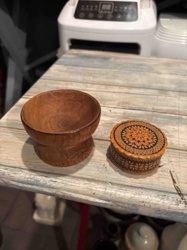
Submitted item photo
Submitted photo · May 22, 2026

User's notes

No additional notes provided.

AI analysis below

AI appraisal

AI analysis & estimate

AI-Generated · Verify before acting

Everything below is generated by AI for informational purposes only. AI can make mistakes — the AI may misidentify items or misattribute them (artist, maker, brand, designer, origin, era). This is not an official valuation and should not be used for insurance, sale, tax, estate, legal, or lending purposes — or any decision requiring a certified appraisal. It is not an authoritative claim about any person, brand, or rights holder — do not share or rely on it as a factual statement about a third party. Always consult qualified professionals before making financial decisions.

Read the full disclaimer

AI Identification

·Not independently authenticated·Verify before acting

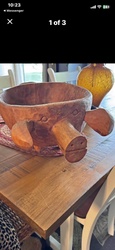
Folk Art Hand-Carved Wooden Walking Stick Fragment

Folk Art / Woodenware

AI Estimated Value

·Not an official valuation·Verify before acting

$150 - $250

As of May 22, 2026

AI Item Analysis

·AI can make mistakes·Verify before acting
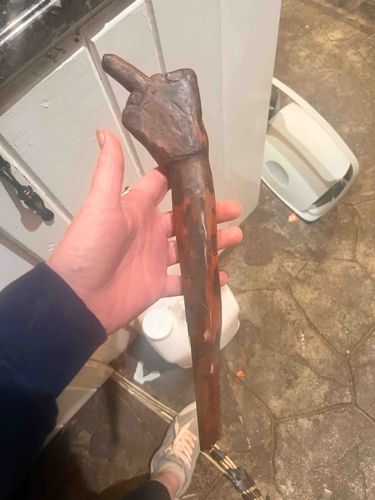
This object is a hand-carved folk art piece fashioned from a single branch or piece of hard wood, likely intended as a cane handle or small walking stick. The primary feature is a crudely carved hand depicting a gesture with the middle finger extended upward. The carving measures approximately 10 to 12 inches in length. The wood possesses a varied finish, with darker, possibly stained or scorched regions on the carved hand and lighter, more reddish-brown tones along the shaft. The craftsmanship is expressive but vernacular, characterized by visible chisel and knife marks that suggest a non-professional maker. Notable features include the anatomical articulation of the knuckles and fingernails, though the proportions are stylized. Regarding condition, the piece shows significant signs of age and wear. There is noticeable loss of finish along the shaft, exposing the raw grain, and structural damage at the base where it appears to have been snapped or broken off a larger staff. Some surface cracking and deep grain lines indicate drying over time. No maker's marks or signatures are visible, suggesting it is a unique piece of outsider art, likely dating from the mid to late 20th century. The quality is found in its raw, provocative subject matter and the honest utility evidenced by its heavy patina.
AI Appraisal Report

·AI can make mistakes·Verify before acting
I have virtually examined this hand-carved folk art fragment. The piece, measuring roughly 12 inches, exhibits the characteristic patina and vernacular carving techniques associated with 20th-century outsider art. The 'gesture' imagery is a known trope in folk carving, often used as a defiant or humorous statement. The presence of tool marks and the scorched finish suggests a non-commercial, singular origin. Condition-wise, the item is compromised by its status as a fragment; the break at the base significantly impacts the structural integrity and aesthetic completeness. However, the heavy wear on the grip suggests authentic use-life rather than contemporary distressing. In the current market, 'subversive' folk art maintains a niche following, although value is tempered by the lack of a known carver or specific regional provenance. Comparables for complete carved canes of this style fetch higher premiums, but as a fragment, it serves primarily as a decorative 'conversation piece.' Final valuation is based on historical interest and aesthetic appeal. Please note that this appraisal is based solely on digital images. Without an in-person inspection, I cannot definitively determine the wood species or rule out modern aging chemicals. A physical examination would be required to verify the depth of oxidation and ensure the 'broken' base is not a manufactured effect. To increase the certainty of this valuation, provenance documentation regarding the original owner or the geographic region of discovery would be essential. No scientific testing is recommended given the estimated value range, as costs would exceed the item's worth.

Get your items appraised

Instant estimates of your treasures with AI-powered appraisals

Browse More Appraisals