AI estimate as of December 9, 2025 · verify with a professional before acting
AI-Generated · Verify before acting
Everything on this page is generated by AI for informational purposes only. AI can make mistakes — the AI may misidentify items or misattribute them (artist, maker, brand, designer, origin, era). This is not an official valuation and should not be used for insurance, sale, tax, estate, legal, or lending purposes — or any decision requiring a certified appraisal. It is not an authoritative claim about any person, brand, or rights holder — do not share or rely on it as a factual statement about a third party. Always consult qualified professionals before making financial decisions.
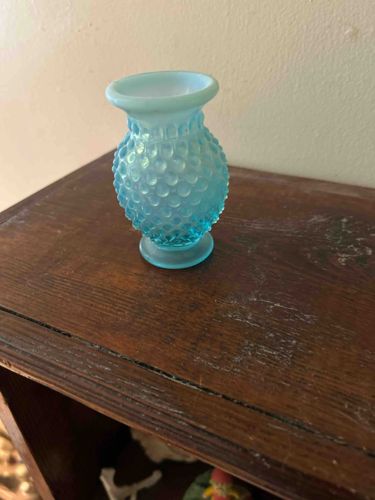
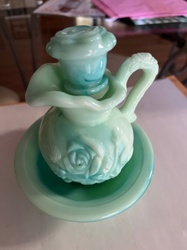
This is a small, decorative vase crafted from what appears to be milk glass, characterized by its opaque, slightly translucent quality. The color is a distinctive teal or light blue-green, providing a soft yet vibrant aesthetic. Its most prominent physical characteristic is the hobnail pattern, which consists of numerous raised, rounded bumps covering the entire exterior surface of the body of the vase, offering a tactile and visually textured appeal. The vase has a classic form with a flared rim at the top, a tapered neck that widens into a bulbous body, and then constricts again into a stable, circular foot. The interior of the vase appears smooth, contrasting with the exterior's textured finish. The overall condition seems good, with no immediately visible chips, cracks, or significant damage from the provided images. The finish appears consistent throughout, without noticeable scratches or repairs. Milk glass items of this style, particularly with hobnail patterns, were popular during the mid-20th century, suggesting an estimated age from the 1940s to 1960s. The craftsmanship indicates a molded glass production process, typical for such items. There are no discernible maker's marks or signatures visible from the provided angles, which is common for many mass-produced milk glass pieces. The size appears to be suitable for holding small floral arrangements or as a standalone decorative piece on a shelf or tabletop. The slight opalescence visible around the rim and the overall hue contributes to its vintage charm.
AI Appraisal Report
Based on my visual examination of the provided image, this Teal Hobnail Milk Glass Vase appears to be in very good overall condition. There are no immediate signs of chips, cracks, or significant damage, and the finish seems consistent. The characteristic hobnail pattern and opaque teal color are indicative of mid-20th century milk glass production, likely dating from the 1940s to 1960s. The classic flared rim, tapered neck, and bulbous body are typical of decorative glassware from this period.
The market for vintage milk glass, particularly hobnail patterns, is stable but not experiencing significant appreciation. Pieces in popular colors like teal or soft blue-green tend to be more desirable than white, but they are not exceptionally rare. Many manufacturers, such as Fenton Art Glass, produced a wide array of hobnail milk glass, making this style relatively common. Demand is primarily driven by collectors of vintage home decor or specific milk glass patterns. Similar hobnail milk glass vases, even in desirable colors, typically retail in the $25 to $45 range, depending on size, specific manufacturer (if identifiable), and exact condition.
Factors impacting value include condition, color desirability, and potential manufacturer identification. The absence of visible maker's marks is common and does not inherently devalue the piece, but a known manufacturer could slightly increase its appeal. My assessment of authenticity is based solely on the visual characteristics aligning with known milk glass production. For full authentication and a more precise valuation, a physical inspection would be crucial to thoroughly check for hairline cracks, chips, manufacturing flaws not visible in images, and potential repairs. Additionally, examination under UV light could help confirm the type of glass and identify any restorations not immediately apparent. Without in-person examination or provenance documentation, I cannot definitively confirm its authenticity or rule out less common reproductions.