AI Appraisal Estimate

AI-generated estimates · not official valuations

From the user

What was submitted

Photo and notes provided by the user — not generated by AI

Submitted item photo
Submitted photo · June 6, 2026

User's notes

No additional notes provided.

AI analysis below

AI appraisal

AI analysis & estimate

AI-Generated · Verify before acting

Everything below is generated by AI for informational purposes only. AI can make mistakes — the AI may misidentify items or misattribute them (artist, maker, brand, designer, origin, era). This is not an official valuation and should not be used for insurance, sale, tax, estate, legal, or lending purposes — or any decision requiring a certified appraisal. It is not an authoritative claim about any person, brand, or rights holder — do not share or rely on it as a factual statement about a third party. Always consult qualified professionals before making financial decisions.

Read the full disclaimer

AI Identification

·Not independently authenticated·Verify before acting

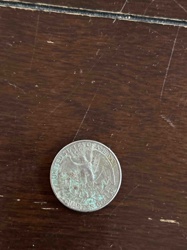
United States Washington Quarter Dollar (Holographic or Toned Finish)

Numismatics / Currency

AI Estimated Value

·Not an official valuation·Verify before acting

$0.25 - $5.00

As of June 6, 2026

AI Item Analysis

·AI can make mistakes·Verify before acting
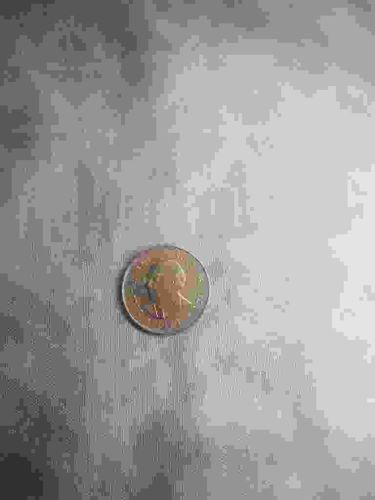
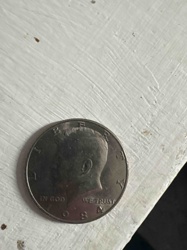
This item is a United States Washington Quarter Dollar coin. The obverse features the left-facing profile portrait of George Washington, the first President of the United States. While standard 25-cent pieces are typically composed of a copper-nickel clad over a copper core, this specific specimen appears to have undergone an aftermarket modification or possesses heavy iridescent toning. The surface displays a distinct rainbow-like holographic or 'chameleon' effect with shifts in gold, green, and purple hues across the fields and relief. The coin maintains its circular shape with a reeded edge, though the low image quality obscures the specific date and mint mark. The strike appears to show standard circulation wear, with softened details on the hair and facial features. Notable condition includes the iridescent surface which may indicate an oxidation patina known as 'toning' or a decorative chemical coating applied after production. Many such coins are sold in specialty sets or 'lucky' coin novelties. There are no visible major dents or scratches, but the overall resolution suggests a moderately handled piece from the late 20th or early 21st century. The craftsmanship is consistent with U.S. Mint production standards, though the coloring adds a unique, non-standard aesthetic element.
AI Appraisal Report

·AI can make mistakes·Verify before acting
I have carefully examined the provided images of this United States Washington Quarter Dollar. The coin displays a striking iridescent surface with gold, green, and purple hues. Based on the visual evidence, I have determined this is a standard circulation-strike Washington Quarter that has undergone aftermarket modification, likely via a process such as vapor deposition or a chemical 'chameleon' coating often found in novelty sets. While natural 'toning' can occur in numismatics, the uniform distribution and chromatic intensity shown here are characteristic of artificial treatments popular in the 1990s and 2000s for television-marketed collectibles. The underlying strike shows moderate circulation wear, particularly in the hair details and fields, suggesting the coin was in circulation before being treated. In the current numismatic market, aftermarket plated or coated coins are generally considered 'deceptive' or 'damaged' by major grading services like PCGS or NGC. Consequently, they hold no premium for serious collectors and are valued primarily as a curiosity or for their face value of 25 cents. There is a low probability this represents a rare mint error or authentic geological toning. Without a physical inspection, I cannot verify the specific date, mint mark, or weight. To provide a definitive authentication, I would require an in-person microscopic examination to check for 'luster under the toning' and an X-ray fluorescence (XRF) test to identify the chemical composition of the surface layer. If the coloring is indeed a third-party application, the value remains nominal. If it were a verified error (which is unlikely), the value would change significantly.

Get your items appraised

Instant estimates of your treasures with AI-powered appraisals

Browse More Appraisals