AI estimate as of November 13, 2025 · verify with a professional before acting
AI-Generated · Verify before acting
Everything on this page is generated by AI for informational purposes only. AI can make mistakes — the AI may misidentify items or misattribute them (artist, maker, brand, designer, origin, era). This is not an official valuation and should not be used for insurance, sale, tax, estate, legal, or lending purposes — or any decision requiring a certified appraisal. It is not an authoritative claim about any person, brand, or rights holder — do not share or rely on it as a factual statement about a third party. Always consult qualified professionals before making financial decisions.
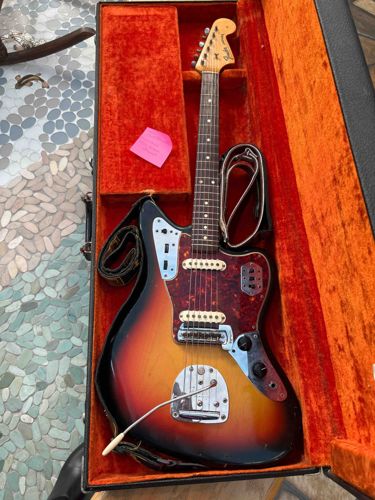
This is a vintage Fender Jaguar electric guitar, identifiable by its distinctive offset body shape, short scale length, and unique control layout. The guitar features a classic three-tone sunburst finish, which transitions from black at the edges to a warmer orange-red and then to yellow-brown in the center. The body appears solid, likely alder or ash, common for Fender guitars of its era. The neck is maple with a rosewood fretboard, characterized by dot inlays, a common feature for Fender guitars from the early to mid-1960s. The headstock bears the 'Fender Jaguiar' logo and six in-line tuning machines. The pickguard is a reddish-brown tortoiseshell pattern, contrasting with the sunburst finish. The guitar is equipped with two single-coil pickups, each with its own switching system on the upper horn, providing a wide array of tonal options. The lower control plate holds the master volume and tone knobs, along with a three-way pickup selector switch for lead circuit. The tremolo system with its distinctive floating vibrato tailpiece and tremolo arm with a white tip is a signature feature of the Jaguar, allowing for subtle pitch modulation. The guitar is housed in what appears to be its original black hardshell case with a vibrant orange or red plush interior, suggesting careful preservation. The overall condition appears good for its age, with only minor wear visible, consistent with a vintage instrument that has been played but well-maintained. The presence of a strap inside the case suggests it has been actively used. No significant damage or repairs are immediately apparent, making this a desirable collector's item or a fine instrument for a musician.
AI Appraisal Report
Upon visual examination of the provided image, I assess this Fender Jaguar electric guitar to be an authentic vintage model, most likely from the early to mid-1960s, given its distinctive features such as the offset body, short scale, dot inlays, and sunburst finish. The overall condition appears to be good for its age, showing minor wear consistent with a played but well-maintained vintage instrument. The presence of the original-style hardshell case further supports its authenticity and preservation.
The market for vintage Fender guitars, particularly Jaguars, is robust. Demand is steady among collectors and musicians seeking period-correct instruments. Rarity, especially for well-preserved examples, contributes significantly to value. Comparables for similar vintage Jaguars in good condition typically fall within the $6,000-$10,000 range, with slight variations based on specific year, originality, and actual playability. Factors impacting this value include the iconic sunburst finish, the apparent good condition, and the presence of the original case.
It is crucial to note the limitations of verifying authenticity from images alone. While visual cues strongly suggest a genuine vintage Fender Jaguar, a definitive authentication would require an in-person examination. This would involve inspecting neck dates, pot codes, pickup stamps, and hardware for originality and consistency with the guitar's presumed era. Furthermore, a physical inspection would allow for a thorough assessment of fret wear, neck straightness, electronic functionality, and any undisclosed repairs or modifications. Provenance documentation, such as original sales receipts or certificates, would also significantly aid in confirming its history and originality. Without these, the appraisal remains largely based on visual characteristics.