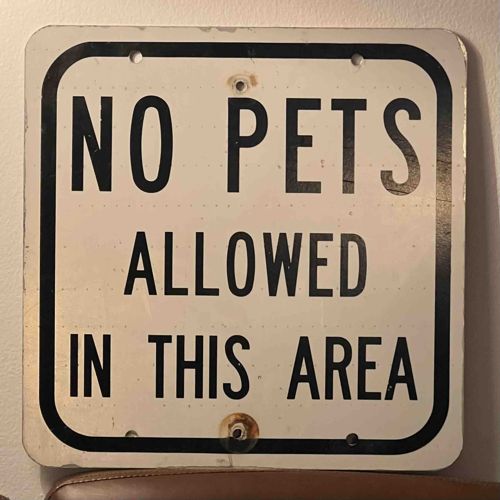
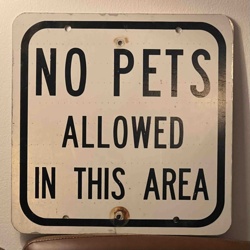
Authentic No Pets Allowed Rest Stop ADOT SIGN FACTORY FOR ASSISTANCE CONTACT THE REGIONAL BIONINO OFFICE MESSAGE: NO PETS ALLOWED IN THIS AREA REQP: 70918 Size: 14 x 14
These notes were written by the person who submitted this item. Appraiser.AI has not verified them, and the AI's identification and estimate may rely on them.
AI Estimated Value
Not an official valuation
$60 - $110
AI estimate as of August 8, 2025 · verify with a professional before acting
AI-Generated · Verify before acting
Everything on this page is generated by AI for informational purposes only. AI can make mistakes — the AI may misidentify items or misattribute them (artist, maker, brand, designer, origin, era). This is not an official valuation and should not be used for insurance, sale, tax, estate, legal, or lending purposes — or any decision requiring a certified appraisal. It is not an authoritative claim about any person, brand, or rights holder — do not share or rely on it as a factual statement about a third party. Always consult qualified professionals before making financial decisions.
This analysis also relies on unverified notes provided by the user, which may be incomplete or inaccurate and could affect the result.
This item is an authentic 'NO PETS ALLOWED IN THIS AREA' sign, likely used in a public area such as a rest stop, specifically indicated as originating from the ADOT (Arizona Department of Transportation) Sign Factory. The sign is square, measuring 14 x 14 inches, consistent with its stated size. It is constructed from a rigid material, most likely aluminum or a similar weather-resistant metal, given its intended outdoor use and the rust visible around the mounting holes. The background is a faded white or off-white, and the text 'NO PETS ALLOWED IN THIS AREA' is rendered in bold, black block capital letters. The sign features a prominent black border with rounded corners, a standard design for official signage.
Visible condition issues include significant wear and tear consistent with outdoor exposure over time. There is noticeable rust around at least two of the four pre-drilled mounting holes, particularly the bottom left one which shows a significant rust halo and some associated corrosion or damage to the sign's surface. The white background exhibits dirt, scuffs, and possibly some minor paint loss or fading, while the black lettering and border also show some scuffs and dullness. The edges of the sign appear scuffed and slightly worn, with some potential minor bending or imperfections. There are no obvious maker's marks or signatures visible on the face of the sign, though the context indicates 'ADOT SIGN FACTORY' and a 'REQP: 70918' number, which could be internal manufacturing or requisition details. The style suggests a utilitarian, industrial design typical of government-issued signage. Its overall quality is indicative of durable, functional craftsmanship built for longevity in public environments, despite its current weathered state. The patina adds to its authenticity and visual history of use.
AI Appraisal Report
Upon examining the provided image and details, I have assessed this Arizona Department of Transportation (ADOT) 'NO PETS ALLOWED IN THIS AREA' sign. The sign, measuring 14x14 inches, appears authentic to its type, consistent with standard government-issued signage in its design, materials (likely aluminum), and utilitarian block lettering. Its condition is fair, exhibiting significant wear and tear from prolonged outdoor exposure. Notable condition issues include rust halos around the mounting holes, surface scuffs, grime, and fading, all of which contribute to a patina that corroborates its history of use.
The market for vintage government and transportation signage is niche but active. Similar authentic road, park, and facility signs from state agencies typically sell in the $50 to $200 range, depending on subject matter, graphic appeal, condition, and rarity. The 'NO PETS ALLOWED' message is common and has a relatively modest decorative appeal compared to more graphic or iconic signs (e.g., route markers or warning signs with symbols). The reference to the 'ADOT SIGN FACTORY' adds a layer of interest for collectors of state-specific memorabilia. The primary value driver is its verified origin and authentic, weathered character.
However, this appraisal is based on digital images alone, which has limitations. Full authentication would require in-person examination to confirm the material composition, construction techniques, and any hidden markings on the reverse. Furthermore, provenance documentation from ADOT, such as decommissioning records or a certificate of authenticity, would be necessary to definitively verify its origin and legitimize its entry into the private market, which would significantly increase its value.