AI estimate as of October 2, 2025 · verify with a professional before acting
AI-Generated · Verify before acting
Everything on this page is generated by AI for informational purposes only. AI can make mistakes — the AI may misidentify items or misattribute them (artist, maker, brand, designer, origin, era). This is not an official valuation and should not be used for insurance, sale, tax, estate, legal, or lending purposes — or any decision requiring a certified appraisal. It is not an authoritative claim about any person, brand, or rights holder — do not share or rely on it as a factual statement about a third party. Always consult qualified professionals before making financial decisions.
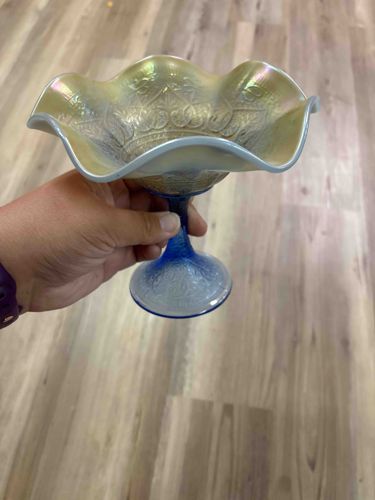
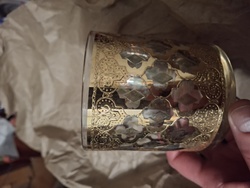
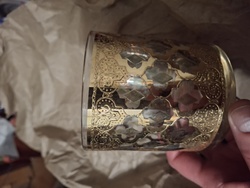
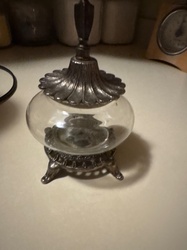
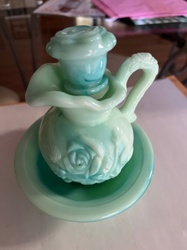
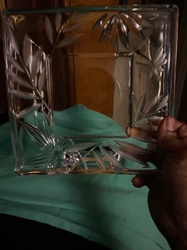
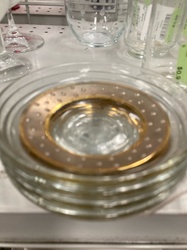
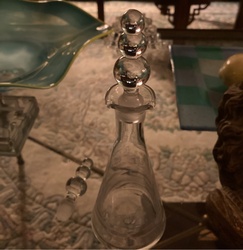
This item is a vintage carnival glass compote, characterized by its stunning iridescent finish and distinctive two-tone coloring. The upper bowl portion exhibits a warm, golden-yellow iridescence with hints of pink and green highlights, typical of 'marigold' carnival glass, that shimmers when light reflects off its surface. The bowl features a deeply ruffled rim, creating a wavy, organic edge. The exterior and interior of the bowl are adorned with an intricate molded floral or vine pattern, which is characteristic of the detailed designs found in early 20th-century carnival glass production. The pattern is clearly visible due to the contrast provided by the iridescence, giving it a three-dimensional effect. The stem and base of the compote transition to a rich, translucent cobalt blue, which gradually lightens or has a mottled, almost frosted-like appearance towards the foot, possibly indicating a 'stretch' or 'ice cream' type finish on the base or a deliberate manufacturing effect to enhance visual appeal. The base also appears to have some sort of molded design, though less distinct than the bowl's pattern due to the darker color and translucency. The construction appears to be a single, molded piece of glass, with no visible seams indicating separate components welded together. There are no obvious chips, cracks, or significant wear visible from the provided images, suggesting it is in good, well-preserved condition for its age. The craftsmanship is indicative of utility glass from the early 20th century, likely between 1900-1930s, a period when carnival glass was highly popular. The quality of the iridescence and the clarity of the molded pattern suggest a better-quality piece within the carnival glass category.
AI Appraisal Report
Based on my visual examination of the Iridescent Blue Carnival Glass Ruffled Compote with Floral Pattern, I assess its condition as good to excellent. The vibrant 'marigold' iridescence with pink and green undertones on the bowl, coupled with the detailed floral pattern, is well-preserved. The transition to the rich cobalt blue stem and base, with its subtle mottling, is characteristic and adds to its appeal. There are no visible chips, cracks, or significant wear, which is crucial for carnival glass. The craftsmanship points to an early 20th-century origin (1900-1930s), a period when such utility glass was popular. The quality of iridescence and clarity of the molded pattern suggest a better-than-average piece within the carnival glass category.
In terms of market conditions, carnival glass has a consistent but niche collector base. Pieces with desirable patterns, strong iridescence, and unusual color combinations, like this blue and marigold example, tend to command higher prices. Comparables for ruffled compotes in good condition, especially two-tone examples, typically range from $100 to $300, depending on the specific pattern and maker (if identifiable). Demand for pieces with compelling visual characteristics like this one remains steady among collectors. Rarity is moderate; while two-tone carnival glass is less common than single-color pieces, it's not exceedingly rare.
Factors significantly impacting value include the excellent condition, the attractive two-tone coloration, and the distinct floral pattern. The ruffled rim further enhances its decorative appeal. Without an in-person examination, it's difficult to verify the manufacturer, which can sometimes influence value (e.g., Fenton, Northwood). A physical inspection would also allow for a more thorough assessment of any minute flaws not visible in images, a better understanding of the true iridescence quality under various lighting conditions, and verification of the glass's integrity through touch. Authentication of the period and specific maker would ideally involve examination of mold lines, base characteristics, and comparison with known patterns in carnival glass catalogs.