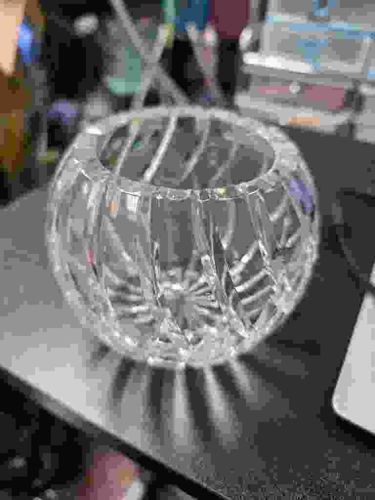
Cut Crystal Rose Bowl
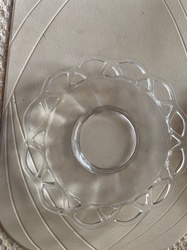
This is a spherical rose bowl crafted from high-quality heavy-lead cut crystal, likely dating from the mid to late 20th century. The piece features a classic globular or 'bubble' shape with a slightly flared, multi-faceted rim. The exterior is decorated with deep vertical miter cuts that create a series of structural ribs, interspersed with horizontal cross-cuts at the base to form a traditional starburst or radiant pattern. These deep wedge cuts are designed to maximize light refraction and brilliance. The crystal is clear with no immediate visible clouding or 'sickness,' suggesting proper maintenance. The craftsmanship indicates a European origin, possibly Irish or Bohemian, consistent with patterns from manufacturers like Waterford or Mikasa, though a specific acid-etched maker's mark is not clearly visible in the image. The bowl shows a bright, polished finish with sharp edges on the cuts, indicating a high level of manual or semi-manual polishing. There are no obvious large chips or cracks, although minor shelf wear on the base is expected for its age. Its substantial wall thickness and weight are typical of luxury crystal glassware used for floral arrangements or as a standalone decorative centerpiece.
AI-Generated Appraisal Disclaimer
Estimated Value
$45.00 - $75.00
Basic Information
Category
Antique and Decorative Glassware
Appraised On
April 1, 2026
Estimated Value
$45.00 - $75.00
Item Description
This is a spherical rose bowl crafted from high-quality heavy-lead cut crystal, likely dating from the mid to late 20th century. The piece features a classic globular or 'bubble' shape with a slightly flared, multi-faceted rim. The exterior is decorated with deep vertical miter cuts that create a series of structural ribs, interspersed with horizontal cross-cuts at the base to form a traditional starburst or radiant pattern. These deep wedge cuts are designed to maximize light refraction and brilliance. The crystal is clear with no immediate visible clouding or 'sickness,' suggesting proper maintenance. The craftsmanship indicates a European origin, possibly Irish or Bohemian, consistent with patterns from manufacturers like Waterford or Mikasa, though a specific acid-etched maker's mark is not clearly visible in the image. The bowl shows a bright, polished finish with sharp edges on the cuts, indicating a high level of manual or semi-manual polishing. There are no obvious large chips or cracks, although minor shelf wear on the base is expected for its age. Its substantial wall thickness and weight are typical of luxury crystal glassware used for floral arrangements or as a standalone decorative centerpiece.
Related Tags
Get Your Items Appraised
Instant estimates of your treasures with AI-powered instant appraisals