AI identification & appraisal estimate

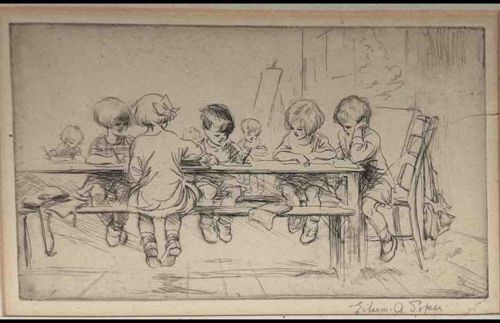
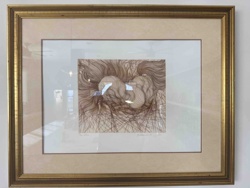
Eileen A. Soper Signed Etching of Children in a Classroom

This name is the AI's identification of the item — it may be incorrect.

Submitted photo of Eileen A. Soper Signed Etching of Children in a Classroom
Photo submitted by the user — not generated by AI

AI Estimated Value

Not an official valuation

$600 - $900

AI estimate as of January 29, 2026 · verify with a professional before acting

AI-Generated · Verify before acting

Everything on this page is generated by AI for informational purposes only. AI can make mistakes — the AI may misidentify items or misattribute them (artist, maker, brand, designer, origin, era). This is not an official valuation and should not be used for insurance, sale, tax, estate, legal, or lending purposes — or any decision requiring a certified appraisal. It is not an authoritative claim about any person, brand, or rights holder — do not share or rely on it as a factual statement about a third party. Always consult qualified professionals before making financial decisions.

Read the full disclaimer

AI Item Analysis

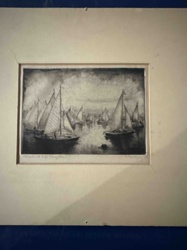
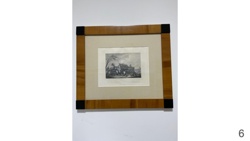
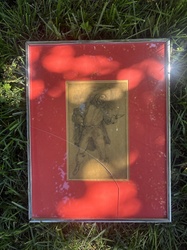
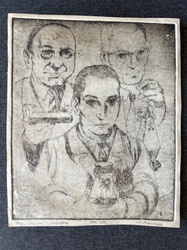
This item is an original drypoint etching by the renowned British artist and illustrator Eileen A. Soper (1905–1990). The artwork depicts a group of approximately seven children seated at a long wooden table in what appears to be a schoolroom or nursery setting. The piece is executed in a delicate, sketch-like style characteristic of Soper's early 20th-century work, utilizing fine, expressive line work to capture the focused postures and innocent expressions of the young subjects. The composition is horizontally oriented, focused on the central table and bench where the children are engaged in writing or drawing. Notable elements include the varying hairstyles of the children, from bobbed cuts to soft curls, and the detailed rendering of their period-specific clothing. The etching is hand-signed in pencil in the lower right margin as 'Eileen A. Soper'. The print is on a cream-colored or off-white wove paper, showing visible plate marks where the metal plate was pressed into the paper during the printing process. Condition-wise, the paper displays minor age-related toning and light foxing consistent with an early-to-mid 20th-century piece. There is a slight visible horizontal crease or scratch on the right side of the image area. Soper was the youngest person to exhibit at the Royal Academy at age 15, and this piece demonstrates the sophisticated draftsmanship and empathetic portrayal of childhood that made her famous. The craftsmanship is high, showing expert control of line weight to create depth and shadow without heavy cross-hatching.
AI Appraisal Report

I have conducted a visual examination of the drypoint etching attributed to Eileen A. Soper. The work exhibits the hallmarks of Soper’s early-to-mid 20th-century style, characterized by fluid, economical line work and a profound empathy for her young subjects. The composition successfully utilizes the drypoint technique’s 'burr' to create soft, atmospheric shadows. The pencil signature in the lower right margin appears consistent with known examples of the artist’s hand. The condition is fair to good for a period print. While the plate mark is distinct and the ink remains crisp, I observed minor foxing and light toning across the substrate. A horizontal crease on the right side of the image area is noted; this structural compromise slightly impacts the value, as collectors of Soper's printwork typically seek pristine sheets. The market for Soper remains steady, particularly for her childhood-themed etchings, which are highly collectible in the UK and North American markets. Comparables for signed, figurative drypoints of this size generally realize between $500 and $1,100 depending on subject complexity and paper condition. Critically, this appraisal is based on digital images alone, which limits a full assessment of authenticity. A physical inspection is required to verify the paper’s watermark, gauge the depth of the plate mark, and rule out modern photogravure reproductions. I would recommend reviewing provenance—such as a gallery label or bill of sale—and performing a UV light examination to detect any hidden repairs or chemical cleaning. Until such physical verification and historical documentation are provided, this valuation remains an estimate based on artistic merit and observed physical characteristics.

Keep exploring

More fine art prints & etchings appraisals

Get your items appraised

Instant AI-powered appraisal estimates from a photo

Browse More Appraisals