AI Appraisal Estimate

AI-generated estimates · not official valuations

From the user

What was submitted

Photo and notes provided by the user — not generated by AI

Submitted item photo
Submitted photo · June 15, 2026

User's notes

No additional notes provided.

AI analysis below

AI appraisal

AI analysis & estimate

AI-Generated · Verify before acting

Everything below is generated by AI for informational purposes only. AI can make mistakes — the AI may misidentify items or misattribute them (artist, maker, brand, designer, origin, era). This is not an official valuation and should not be used for insurance, sale, tax, estate, legal, or lending purposes — or any decision requiring a certified appraisal. It is not an authoritative claim about any person, brand, or rights holder — do not share or rely on it as a factual statement about a third party. Always consult qualified professionals before making financial decisions.

Read the full disclaimer

AI Identification

·Not independently authenticated·Verify before acting

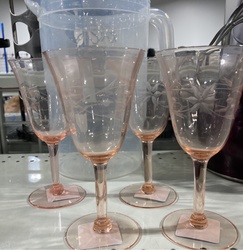
Etched Glass Dessert or Champagne Coupe

Glassware

AI Estimated Value

·Not an official valuation·Verify before acting

$10-$15 per glass

As of June 15, 2026

AI Item Analysis

·AI can make mistakes·Verify before acting
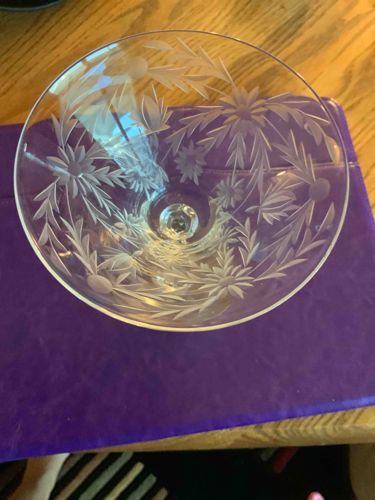
This item is a clear glass dessert bowl or champagne coupe, characterized by its wide, shallow bowl and a short stem. The material appears to be clear, colorless glass, consistent with typical tableware of the mid-20th century. The most prominent feature creating visual interest is the intricate etched decoration covering the interior surface of the bowl. The etching depicts a nature-inspired motif, specifically various floral and leafy patterns. There are distinct representations of chrysanthemum-like flowers, smaller blossoms, and fern-like foliage, arranged in a somewhat dense, overlapping design that radiates from the center base of the bowl outwards. The etching technique suggests a frosted or sandblasted appearance, typical of decorative glass from the early to mid-20th century. The stem appears to be solid and relatively robust, culminating in a small, stable foot (though the foot itself is not fully visible in the provided image). There are no visible chips, cracks, or significant wear evident from the image, suggesting good overall condition. The craftsmanship indicates a factory-produced item, likely from a set, with the etching applied in a consistent manner. Without specific maker's marks, it is challenging to pinpoint an exact manufacturer or date, but the style of engraving suggests an estimated age between the 1920s and 1950s, possibly Art Deco or Mid-Century Modern in style.

AI Appraisal Report

·AI can make mistakes·Verify before acting
Upon examining the provided image, I have assessed this item as a machine-produced, etched glass coupe, likely intended for dessert or champagne. The piece features a detailed, nature-inspired motif of florals and foliage, consistent with decorative styles from the early to mid-20th century, circa 1930s-1950s. The etching appears to be acid-etched or sandblasted, a common technique for mass-produced glassware of this era. Visually, the glass is in good condition, showing no apparent chips, cracks, or significant surface wear. It presents as one of many similar patterns produced by various American and European glass companies during this period. The market for this type of glassware is generally stable but modest. These pieces are not considered rare, as they were produced in large quantities. Comparable single coupes by unidentified makers typically sell for between $10 and $20, with value increasing when a complete set is available. The primary value driver is its decorative and functional use rather than its collectibility as a fine antique. The lack of a known maker's mark, such as Fostoria, Cambridge, or Tiffin, prevents it from commanding a higher price. It is important to note the limitations of this appraisal, as it is based solely on a digital image. A definitive authentication would require in-person examination to feel the weight and quality of the glass, inspect for any subtle maker's marks on the foot or stem, and use a loupe to analyze the etching technique more closely. Without physical inspection, I cannot rule out a more recent reproduction, though the style is consistent with the stated period.

Get your items appraised

Instant estimates of your treasures with AI-powered appraisals

Browse More Appraisals