AI Appraisal Estimate

AI-generated estimates · not official valuations

From the user

What was submitted

Photo and notes provided by the user — not generated by AI

Submitted item photo
Submitted photo · June 13, 2026

User's notes

No additional notes provided.

AI analysis below

AI appraisal

AI analysis & estimate

AI-Generated · Verify before acting

Everything below is generated by AI for informational purposes only. AI can make mistakes — the AI may misidentify items or misattribute them (artist, maker, brand, designer, origin, era). This is not an official valuation and should not be used for insurance, sale, tax, estate, legal, or lending purposes — or any decision requiring a certified appraisal. It is not an authoritative claim about any person, brand, or rights holder — do not share or rely on it as a factual statement about a third party. Always consult qualified professionals before making financial decisions.

Read the full disclaimer

AI Identification

·Not independently authenticated·Verify before acting

Mid-Century Costume Jewelry Rhinestone Foliate Brooch

Vintage Costume Jewelry

AI Estimated Value

·Not an official valuation·Verify before acting

$45.00 - $85.00

As of June 13, 2026

AI Item Analysis

·AI can make mistakes·Verify before acting
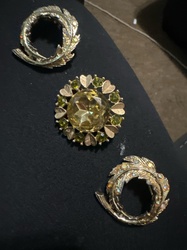
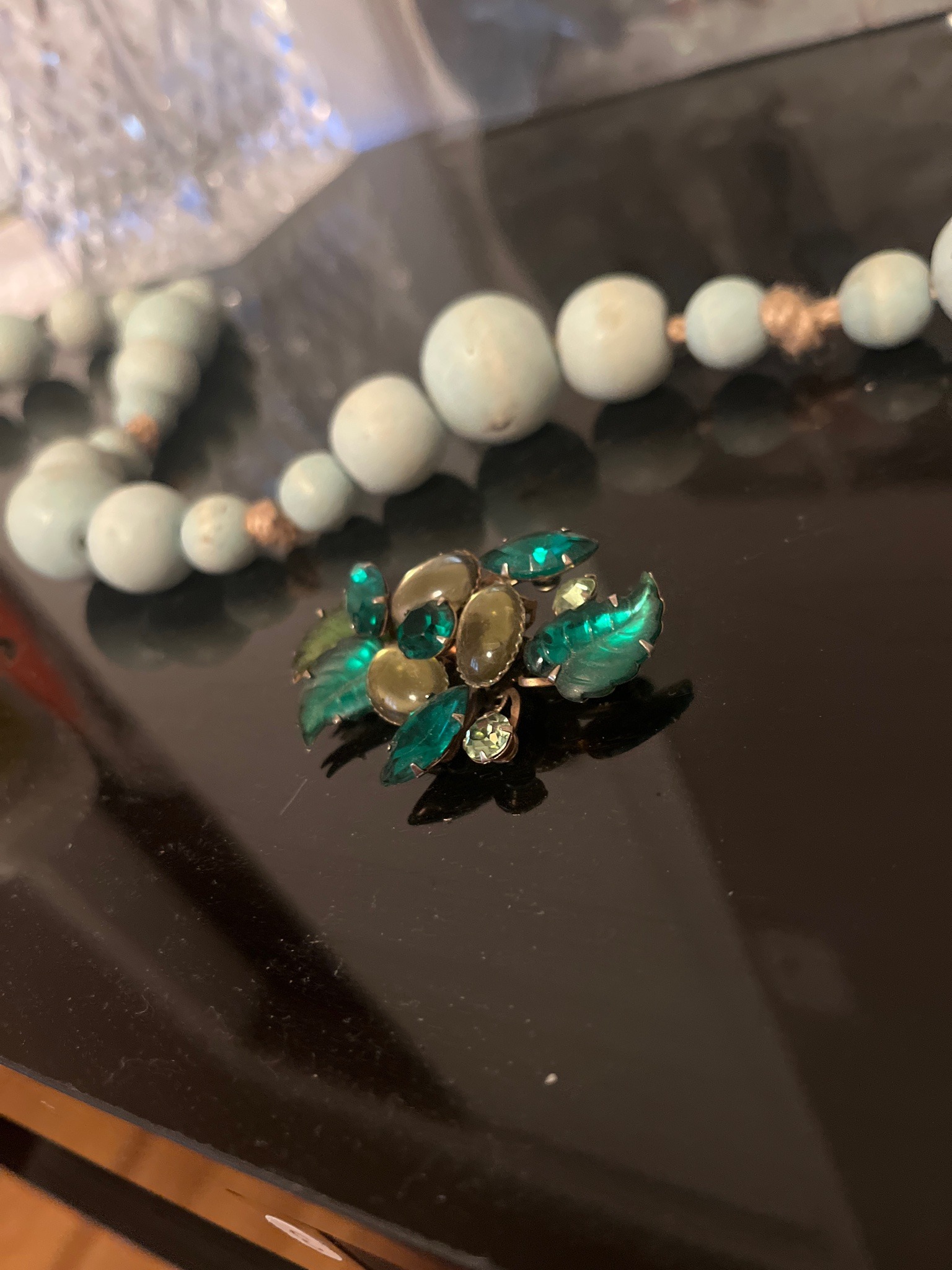
This is a vintage multi-tonal green costume jewelry brooch, likely dating from the mid-20th century (circa 1950s-1960s). The piece features a complex floral or foliate design constructed on a gold-tone metal base. It incorporates a variety of glass elements, including faceted emerald green marquise-cut rhinestones, pale olive green round cabochons, and molded green glass 'leaf' stones with visible veining textures. The stones are secured using various setting styles, including prong settings for the faceted stones and bezel-like settings for the cabochons. The color palette spans from deep forest green to light seafoam and peridot tones, creating a dimensional garden aesthetic. The construction appears sturdy, though some visible oxidation or patina is present on the metal prongs and base. One small light green rhinestone is noticeable in a lower position, showing a slight tilt in its setting. There are no immediately visible maker's marks on the front of the piece, though the high-level arrangement suggests it could be from a mid-market brand like Trifari, Lisner, or Coro. The condition is generally good for its age, with all primary glass components intact, though light surface scratches on the larger glass stones are consistent with vintage wear. The craftsmanship is typical of the high-quality costume jewelry industry of the era, utilizing layered settings to achieve a three-dimensional profile.
AI Appraisal Report

·AI can make mistakes·Verify before acting
I have examined the digital representation of this mid-century foliate brooch. This piece is a classic example of mass-market costume jewelry from the 1950s-1960s, a period defined by 'garden party' aesthetics and tiered metalwork. The design utilizes a successful blend of molded glass (fruit salad/leaf styles) and faceted rhinestones, which adds textual interest. I observe visible oxidation on the prongs and minor misalignment in a lower-tier stone; however, the focal glass elements appear free of major fractures. Authenticity is consistent with the era’s manufacturing techniques, such as the prong-set marquises and gold-tone plating. The current market for unsigned mid-century costume jewelry is stable but saturated. While the foliate design is attractive and the multi-tonal green palette is desirable, the lack of a visible maker's mark (e.g., Trifari or Schreiner) limits its ceiling. Comparables for unsigned pieces in this condition generally fall under $100. Demand is driven primarily by vintage enthusiasts and 'wearable art' collectors rather than high-stakes investors. Limitations: My assessment is based solely on high-resolution images. Without a physical inspection, I cannot verify the weight (which distinguishes cast metal from stamped tin), the security of the pin-back mechanism, or the presence of hidden signatures in the crevices of the tiered assembly. A full authentication would require macro-inspection of the metal’s finish for 'pitting' or lead content and a UV light test to check for glue repairs versus original solder. Documentation of the original box or a matching catalog entry from Lisner or Coro would be necessary to attribute this to a specific designer and potentially increase the valuation.

Get your items appraised

Instant estimates of your treasures with AI-powered appraisals

Browse More Appraisals