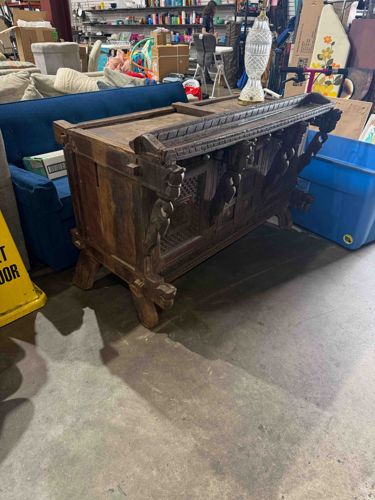
Antique Hand-Carved Indo-Portuguese or Indian Teak Damchiya (Dowry Chest)
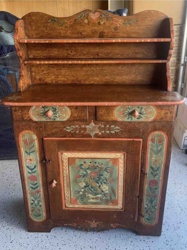
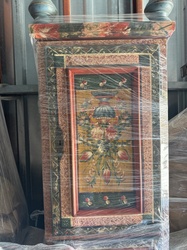
This is a substantial, antique hand-carved wooden dowry chest, commonly known as a Damchiya, likely originating from North India (Gujarat or Rajasthan) or exhibits Indo-Portuguese architectural influence. The piece is constructed from heavy, solid timber—likely teak or rosewood—characterized by its deep grain and weathered brown patina. The front facade is highly ornate, featuring intricate geometric and floral relief carvings, along with distinct architectural corbels and bird-like zoomorphic motifs flanking the sides. The construction utilizes traditional joinery techniques, including visible mortise and tenon joints and hand-forged iron hardware elements such as rings and clasps. The chest stands on stout, outward-angled legs that are integrated into the main frame. Condition-wise, the item shows significant signs of age and utility appropriate for an 18th or 19th-century piece, including surface abrasions, minor wood loss at the extremities, and a heavy accumulation of dust and incidental markings. There is a notable missing section or recessed area on the top surface where a lid or secondary compartment may have been. The overall craftsmanship is high, reflecting a folk-art aesthetic combined with robust structural integrity, intended for mobile storage of a bride's valuables and textiles.
AI-Generated Appraisal Disclaimer
Estimated Value
$1,800 - $2,600
Basic Information
Category
Antique Furniture / Folk Art
Appraised On
February 24, 2026
Estimated Value
$1,800 - $2,600
Item Description
This is a substantial, antique hand-carved wooden dowry chest, commonly known as a Damchiya, likely originating from North India (Gujarat or Rajasthan) or exhibits Indo-Portuguese architectural influence. The piece is constructed from heavy, solid timber—likely teak or rosewood—characterized by its deep grain and weathered brown patina. The front facade is highly ornate, featuring intricate geometric and floral relief carvings, along with distinct architectural corbels and bird-like zoomorphic motifs flanking the sides. The construction utilizes traditional joinery techniques, including visible mortise and tenon joints and hand-forged iron hardware elements such as rings and clasps. The chest stands on stout, outward-angled legs that are integrated into the main frame. Condition-wise, the item shows significant signs of age and utility appropriate for an 18th or 19th-century piece, including surface abrasions, minor wood loss at the extremities, and a heavy accumulation of dust and incidental markings. There is a notable missing section or recessed area on the top surface where a lid or secondary compartment may have been. The overall craftsmanship is high, reflecting a folk-art aesthetic combined with robust structural integrity, intended for mobile storage of a bride's valuables and textiles.
Related Tags
Explore similar items and categories:
Get Your Items Appraised
Instant estimates of your treasures with AI-powered instant appraisals