AI identification & appraisal estimate

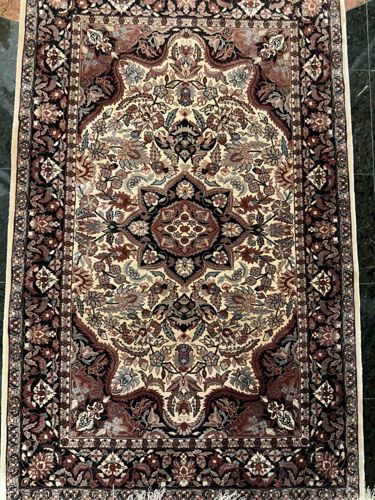
Traditional Hand-Knotted Persian Isfahan-Style Rug

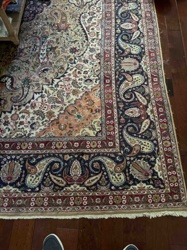
Submitted photo of Traditional Hand-Knotted Persian Isfahan-Style Rug
Photo submitted by the user — not generated by AI

AI Estimated Value

Not an official valuation

$3,500 - $5,000

AI estimate as of February 24, 2026 · verify with a professional before acting

AI-Generated · Verify before acting

Everything on this page is generated by AI for informational purposes only. AI can make mistakes — the AI may misidentify items or misattribute them (artist, maker, brand, designer, origin, era). This is not an official valuation and should not be used for insurance, sale, tax, estate, legal, or lending purposes — or any decision requiring a certified appraisal. It is not an authoritative claim about any person, brand, or rights holder — do not share or rely on it as a factual statement about a third party. Always consult qualified professionals before making financial decisions.

Read the full disclaimer

AI Item Analysis

This is a rectangular hand-knotted area rug featuring a classic Persian design, characteristic of the Isfahan or Tabriz traditions. The central composition consists of a concentrated eight-pointed star medallion anchored on a double-scalloped ivory cream field. This field is densely populated with intricate 'Shah Abbasi' floral motifs, intertwining vines, and palmettes. The color palette is sophisticated and muted, primarily utilizing cream, deep burgundy (oxblood), charcoal black, and accents of dusty blue or slate grey. The rug is framed by multiple border layers, including a wide primary border with repeating floral cartouches flanked by narrower decorative guard borders. Based on the tight knotting density visible in the clarity of the patterns, it appears to be of high quality, likely constructed from a fine wool pile on a cotton or silk foundation. The fringe is visible at the bottom edge, appearing intact and white. The overall condition looks excellent with no visible threadbare patches, significant fading, or staining. The symmetry and precision of the curvilinear patterns suggest mid-to-late 20th-century craftsmanship. The edges appear straight and well-bound, indicating it has been well-maintained without significant fraying or structural damage.
AI Appraisal Report

Upon my visual examination of this Persian Isfahan-style rug, I find it to be a high-quality example of mid-to-late 20th-century weaving. The tight knot density and the precision of the curvilinear Shah Abbasi motifs and eight-pointed star medallion suggest a high KPSI (knots per square inch), likely exceeding 400. The color palette of oxblood, charcoal, and ivory is classic and currently in high demand for traditional interior design projects. The condition appears exceptional; I observe no significant pile wear, moth damage, or fringe degradation. Authenticity is supported by the specific floral cartouches in the primary border, typical of Isfahan master workshops. However, image-based appraisal has limitations. To fully authenticate the piece, I would need to measure the KPSI physically and examine the foundation to determine if it is cotton or silk, the latter of which would significantly increase the value. I would also look for a weaver's signature (Kork) in the top border cartouche. Market demand for fine Persian rugs remains stable, though prices for mid-century examples are dependent on the verification of natural dyes versus synthetic. Comparable sales of similar size and origin at auction typically range between $3,000 and $6,000 depending on provenance. Full authentication would require a tactile inspection for wool quality (kork wool) and a burn test of the fringe to confirm material composition.

Keep exploring

More antique and vintage textiles / oriental rugs appraisals

Get your items appraised

Instant AI-powered appraisal estimates from a photo

Browse More Appraisals