Late Victorian Amethyst Gold Ring
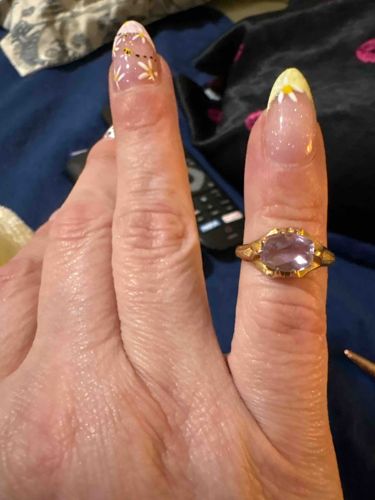
This late 19th-century Victorian ring features a horizontally set, cushion-cut or oval amethyst centerpiece with a soft lavender hue. The stone is secured by a low-profile, integrated mounting that flows into the shoulders of the band. The metal appears to be a warm-toned yellow gold, likely 10k or 14k based on typical jewelry of the period. A defining feature is the decorative hand-engraving or chasing on the shoulders, which shows a stylized foliate or geometric pattern characteristic of the Aesthetic Movement (circa 1880-1900). The construction is solid and substantial, designed for daily wear. Regarding condition, the metal shows a mild, aged patina and fine surface scratches consistent with antique usage. The amethyst exhibits slight softening of the facet edges and minor internal inclusions, though no major chips or cracks are immediately visible. The prongs appear secure and integrated into the design. No maker's marks are visible from this top-down perspective, but it exemplifies the mid-to-late Victorian transition into Art Nouveau with its organic-inspired metalwork. The quality of the stone cutting and the precise metal engraving indicate a high level of historical craftsmanship.
AI-Generated Appraisal Disclaimer
Estimated Value
$850 - $1,150
Basic Information
Category
Antique Jewelry
Appraised On
March 7, 2026
Estimated Value
$850 - $1,150
Additional Details Provided By Owner
User Provided Information
Diane Von Fursenberg
Item Description
This late 19th-century Victorian ring features a horizontally set, cushion-cut or oval amethyst centerpiece with a soft lavender hue. The stone is secured by a low-profile, integrated mounting that flows into the shoulders of the band. The metal appears to be a warm-toned yellow gold, likely 10k or 14k based on typical jewelry of the period. A defining feature is the decorative hand-engraving or chasing on the shoulders, which shows a stylized foliate or geometric pattern characteristic of the Aesthetic Movement (circa 1880-1900). The construction is solid and substantial, designed for daily wear. Regarding condition, the metal shows a mild, aged patina and fine surface scratches consistent with antique usage. The amethyst exhibits slight softening of the facet edges and minor internal inclusions, though no major chips or cracks are immediately visible. The prongs appear secure and integrated into the design. No maker's marks are visible from this top-down perspective, but it exemplifies the mid-to-late Victorian transition into Art Nouveau with its organic-inspired metalwork. The quality of the stone cutting and the precise metal engraving indicate a high level of historical craftsmanship.
Related Tags
Get Your Items Appraised
Instant estimates of your treasures with AI-powered instant appraisals