AI Appraisal Estimate

AI-generated estimates · not official valuations

From the user

What was submitted

Photo and notes provided by the user — not generated by AI

Submitted item photo
Submitted photo · May 19, 2026

User's notes

No additional notes provided.

AI analysis below

AI appraisal

AI analysis & estimate

AI-Generated · Verify before acting

Everything below is generated by AI for informational purposes only. AI can make mistakes — the AI may misidentify items or misattribute them (artist, maker, brand, designer, origin, era). This is not an official valuation and should not be used for insurance, sale, tax, estate, legal, or lending purposes — or any decision requiring a certified appraisal. It is not an authoritative claim about any person, brand, or rights holder — do not share or rely on it as a factual statement about a third party. Always consult qualified professionals before making financial decisions.

Read the full disclaimer

AI Identification

·Not independently authenticated·Verify before acting

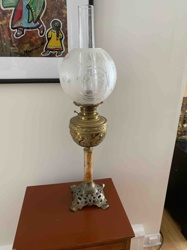
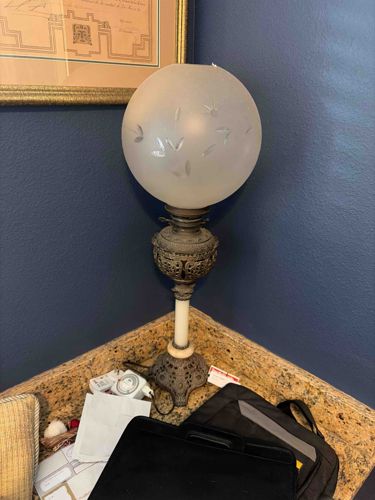
Victorian Era Banquet Lamp with Alabaster Column and Frosted Etched Globe

Antique Lighting & Lamps

AI Estimated Value

·Not an official valuation·Verify before acting

$450 - $650

As of May 19, 2026

AI Item Analysis

·AI can make mistakes·Verify before acting
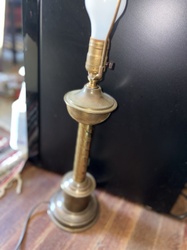
This is a multifaceted Victorian-style banquet lamp, likely dating from the late 19th to early 20th century, which has been converted for electrical use. The lamp features a large, spherical frosted glass globe decorated with wheel-etched or cut stylized floral or leaf motifs. Below the globe, a decorative cast-metal font holder displays intricate openwork and scrollwork patterns, consistent with late Victorian aesthetic preferences. The body is supported by a slender, cylindrical white alabaster or marble column, which is anchored by additional cast-metal collars and a heavily ornamented, pierced pedestal base. The metal components show a significant dark patina and some surface oxidation, suggesting an aged copper, brass, or spelter construction. The construction indicates a high level of craftsmanship, particularly in the delicate balance between the heavy neoclassical stone column and the ornate metal casting. Condition-wise, the lamp appears structurally intact, though there is visible surface wear to the metal finish and some dust accumulation. A modern cord is visible, indicating an electrical conversion from its original oil or kerosene state. The globe appears to sit securely on its gallery, though minor flea bites or chips may be present along the bottom rim hidden by the mount.
AI Appraisal Report

·AI can make mistakes·Verify before acting
Based on my visual analysis of this Victorian banquet lamp, I find it to be a representative example of late 19th-century domestic lighting. The lamp exhibits the hallmark eclectic mix of materials favored in the 1880s and 1890s, specifically the use of a neoclassical alabaster column paired with ornate cast-metal components. The frosted and etched globe appears period-correct, featuring a quality of wheel-cutting consistent with high-level craftsmanship of the era. The heavy oxidation and dark patina suggest the metal is likely spelter with a bronze or brass wash, which was common for the middle-to-upper-tier consumer market. The market for Victorian lighting remains stable for pieces with high decorative appeal, though value is tempered by the electrical conversion. While conversion increases functionality for modern interiors, any loss of original burner components slightly reduces value for purist collectors. Comparables for alabaster-stemmed banquet lamps typically range between $400 and $800 depending on the detail of the metalwork and the condition of the glass. The intricate pierced pedestal base adds significant 'eye appeal,' which drives demand. Limitations of this digital appraisal include the inability to inspect for 'flea bite' chips on the glass rim or hairline cracks in the alabaster, which could decrease value by 20-30%. Authenticity is assumed based on casting styles, though a physical inspection is required to confirm the metal composition (e.g., solid brass vs. plated spelter) and to examine any maker's marks or patents on the font holder. Full authentication would require disassembly to inspect internal threading and electrical components, along with provenance documentation to confirm the lamp's history.

Get your items appraised

Instant estimates of your treasures with AI-powered appraisals

Browse More Appraisals