AI estimate as of October 13, 2025 · verify with a professional before acting
AI-Generated · Verify before acting
Everything on this page is generated by AI for informational purposes only. AI can make mistakes — the AI may misidentify items or misattribute them (artist, maker, brand, designer, origin, era). This is not an official valuation and should not be used for insurance, sale, tax, estate, legal, or lending purposes — or any decision requiring a certified appraisal. It is not an authoritative claim about any person, brand, or rights holder — do not share or rely on it as a factual statement about a third party. Always consult qualified professionals before making financial decisions.
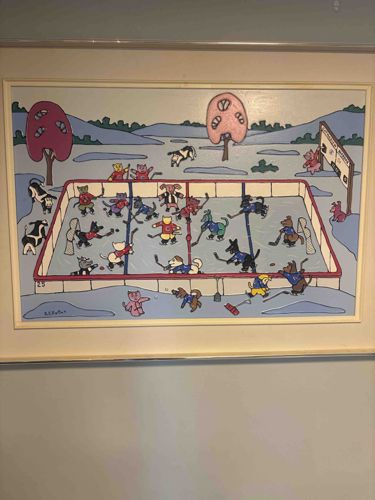
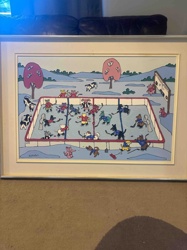
This item is a framed folk art painting depicting an animated ice hockey scene, created by an artist named E.B. Forsythe, as indicated by the signature in the lower left corner. The painting features various anthropomorphic animal figures, primarily dogs and cats, engaged in a lively ice hockey game on a rink. The background shows a winter landscape with pale blue snowy hills and stylized pink trees with visible leaf or fruit details. Two black and white cows are grazing in the upper left, while a pink pig observes the game from the upper right, and another smaller pink pig and a brown animal watch from outside the rink in the foreground. The animals are depicted wearing colorful jerseys and are equipped with hockey sticks and skates. The rink itself is delineated by red boards and a blue ice surface. A scoreboard with illegible text is visible behind the goal on the right. The style is distinctly naive or folk art, characterized by flattened perspectives, simplified forms, and vibrant, non-naturalistic colors. The lines are bold and clearly defined, suggesting a deliberate cartoon-like aesthetic. The painting is housed within a simple, light-colored, possibly wooden or composite, frame that appears to be in good condition with minor wear consistent with age. There are no obvious signs of significant damage, repairs, or discoloration on the painting itself, though the image resolution is not high enough to discern fine details of brushwork or texture. The overall impression is one of whimsical charm and playful narrative. The craftsmanship appears to be consistent with amateur or self-taught artistry, emphasizing storytelling over academic technique. The estimated age could range from the mid to late 20th century, a common period for this type of folk art.
AI Appraisal Report
Upon visual examination of the provided image, this folk art painting by E.B. Forsythe, depicting an animated animal ice hockey scene, appears to be in very good condition. The painting shows no obvious signs of significant damage, repairs, or discoloration. The colors retain their vibrancy, which is crucial for folk art. The frame itself also appears to be in good condition with only minor wear consistent with its likely age. Authenticity, based solely on the visible signature, seems plausible for a folk art piece, but full authentication would require an in-person examination.
The market for charming, whimsical folk art like this, particularly pieces featuring animals and narrative scenes, is steady. While not commanding extremely high prices, such works appeal to collectors of naive art and those seeking unique decorative pieces. Comparables, usually found in regional auctions or specialized folk art galleries, suggest a range for similar quality, well-preserved pieces by lesser-known folk artists. The distinct cartoon-like aesthetic, engaging subject matter, and clear storytelling contribute positively to its appeal. Rarity is difficult to assess without knowing the artist's output, but individual charming pieces often find enthusiastic buyers.
Factors impacting value positively include its excellent apparent condition and the delightful subject matter. The whimsical nature and clear execution of the folk art style are also strong points. Conversely, the artist, E.B. Forsythe, does not appear to be a widely recognized name, which limits value compared to established folk masters. The lack of detailed provenance also impacts its top-tier valuation.
Limitations in authenticity verification from images alone are significant. I cannot definitively verify the authenticity of the signature, the paint's age, or rule out subtle restorations. An in-person examination would allow for closer inspection of brushwork, paint stability, and frame construction. Proper provenance documentation, such as exhibition history or sales records, or even direct artist contacts, would be ideal for full authentication and establishing a more precise market value.