These notes were written by the person who submitted this item. Appraiser.AI has not verified them, and the AI's identification and estimate may rely on them.
AI Estimated Value
Not an official valuation
$350 - $450
AI estimate as of September 3, 2025 · verify with a professional before acting
AI-Generated · Verify before acting
Everything on this page is generated by AI for informational purposes only. AI can make mistakes — the AI may misidentify items or misattribute them (artist, maker, brand, designer, origin, era). This is not an official valuation and should not be used for insurance, sale, tax, estate, legal, or lending purposes — or any decision requiring a certified appraisal. It is not an authoritative claim about any person, brand, or rights holder — do not share or rely on it as a factual statement about a third party. Always consult qualified professionals before making financial decisions.
This analysis also relies on unverified notes provided by the user, which may be incomplete or inaccurate and could affect the result.
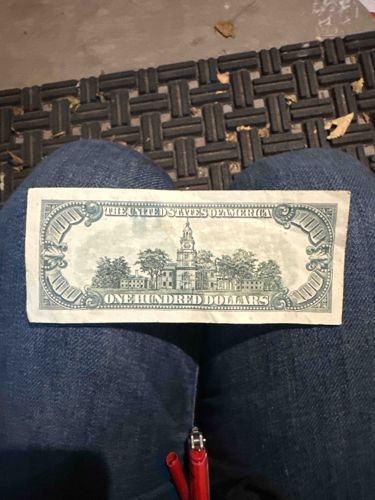
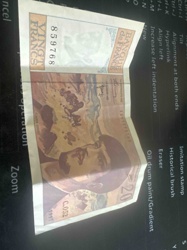
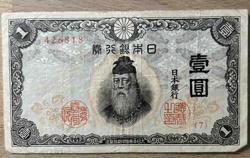
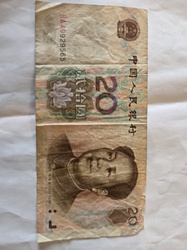
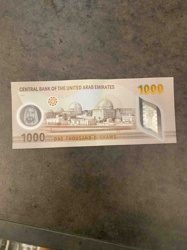
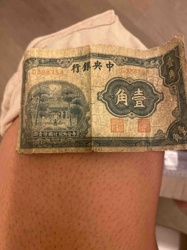
The item is a 1928 United States One Hundred Dollar Gold Certificate, specifically depicting the reverse side of the note. The primary color visible is a muted, light green or teal, typical of the reverse of U.S. currency of this era. The dimensions appear to be standard for U.S. small-size currency, approximately 6.14 inches by 2.61 inches. The note is made of a durable, interwoven paper and linen blend, designed for longevity in circulation. The central design element is an engraving of what appears to be Independence Hall in Philadelphia, complete with its distinctive clock tower, flanked by trees and additional architectural details. Above the building, the text "THE UNITED STATES OF AMERICA" is prominently displayed. Below the building, "ONE HUNDRED DOLLARS" is spelled out in a clear, sans-serif font. Decorative scrollwork and intricate patterns adorn the borders, characteristic of the engraving techniques used on early 20th-century U.S. banknotes. The visible condition shows signs of significant circulation and age, including creasing, folds, and a noticeable softening of the paper. There is a general discoloration or patina consistent with an item nearly a century old, along with what appears to be dirt or smudges, particularly on the right side. No major tears or repairs are immediately visible, but the overall crispness is diminished. The craftsmanship of the engraving is fine, with clear lines and detail, even with the wear. The note's age is confirmed by the '1928' date provided in the context, placing it firmly within the small-size currency period, which began in that year. This particular design for the reverse of a Gold Certificate with Independence Hall is a defining feature identifying it as a 1928 series note.
AI Appraisal Report
Upon examining the provided image of the 1928 United States One Hundred Dollar Gold Certificate (Reverse), I can confirm its authenticity as a genuine small-size U.S. banknote from that series. The design elements, including Independence Hall, the inscription 'THE UNITED STATES OF AMERICA', and 'ONE HUNDRED DOLLARS', are consistent with the known characteristics of this particular issue. The craftsmanship of the engraving, even with the visible wear, appears correct for the period.
From a condition standpoint, the note exhibits significant signs of circulation. I observe numerous folds, general softening of the paper, and a lack of crispness, indicating a grade in the Very Good (VG) to Fine (F) range on the numismatic scale. There is also discoloration and what appears to be dirt, particularly on the right side. While no major tears or repairs are immediately evident from the image, these cannot be definitively ruled out without a physical inspection. The wear significantly impacts the value.
In terms of market conditions, 1928 series Gold Certificates, especially the $100 denomination, are desirable due to their historical significance and the fact that they represent a direct claim to gold. However, their rarity is moderate, and demand is strongest for notes in higher grades. Comparables for notes in this circulated condition typically fall into the lower end of the market for this type. The primary factor diminishing its value is the heavily circulated state.
It is crucial to note that while the design appears authentic from the image, definitive authentication, especially regarding minute details of printing, paper composition, and the absence of alterations or counterfeiting, requires an in-person examination. Physical inspection would allow for tactile assessment of the paper's texture, direct measurement, close scrutiny under magnification for printing irregularities, and potential blacklight testing. Provenance documentation, if available, would further enhance confidence in its history.