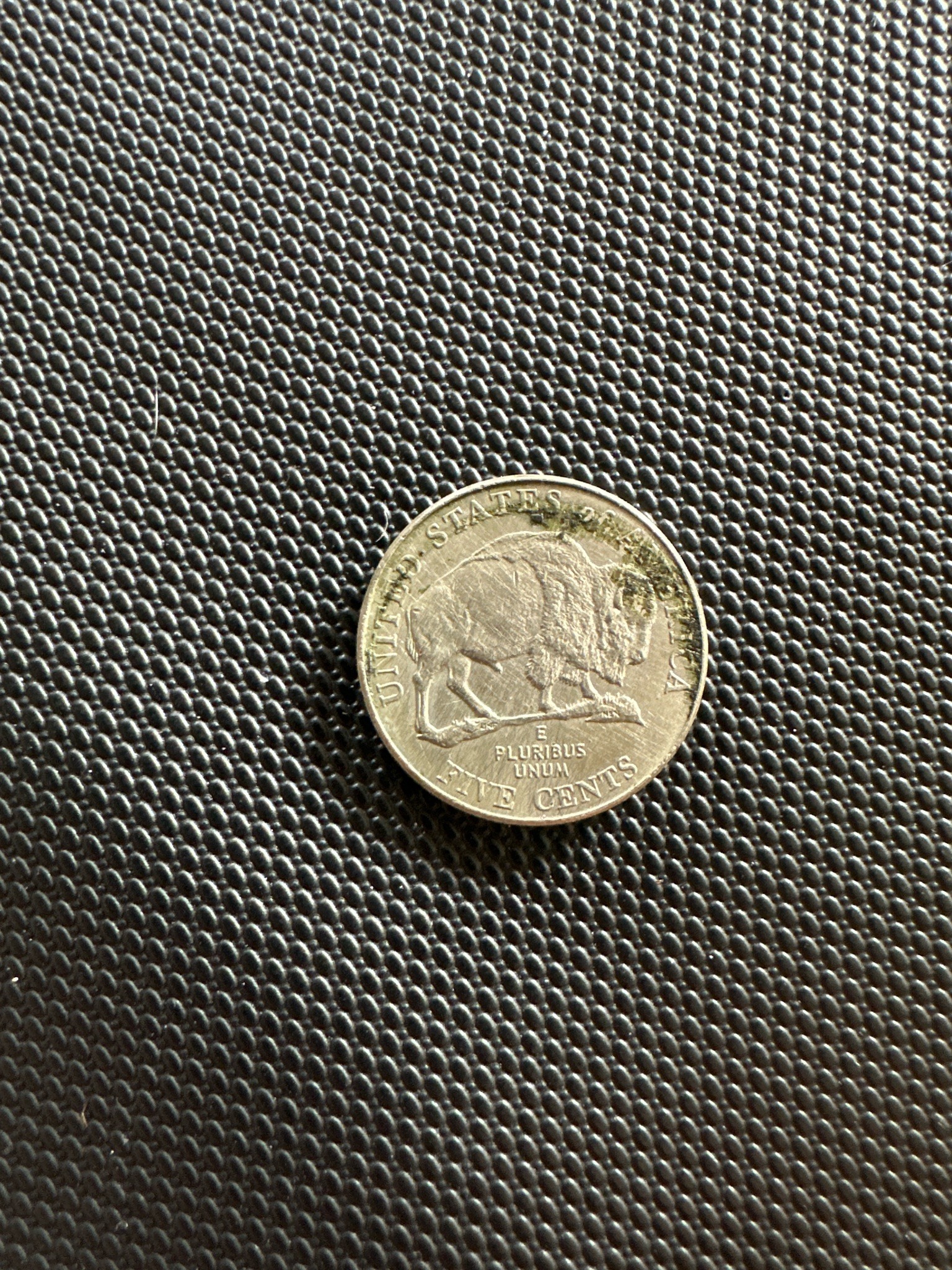
United States Buffalo Nickel (Reverse)
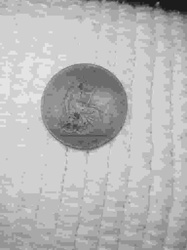
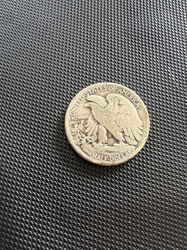
This is a United States five-cent coin, commonly known as a Buffalo Nickel or Indian Head Nickel, designed by sculptor James Earle Fraser. The image shows the reverse side of the coin, featuring an American bison (buffalo) standing on a raised mound. The coin is composed of a cupronickel alloy (75% copper and 25% nickel), exhibiting a dull silver-grey metallic color. Physical dimensions for this series are typically 21.21 mm in diameter with a weight of 5 grams. Notable inscriptions include 'UNITED STATES OF AMERICA' and 'E PLURIBUS UNUM' above the buffalo, and the denomination 'FIVE CENTS' along the bottom rim. Regarding condition, the specimen shows significant circulation wear; the buffalo's horn and hair texture are smoothed, and the rim and lettering show signs of flattening. There is a distinct yellowish/greenish discoloration or residue on the upper right quadrant of the buffalo, which could be environmental toning or a foreign adhesive substance. Based on the flat mound design (Type 2), this coin would have been minted between 1913 and 1938. The obverse is not visible to confirm the date, but the overall patina suggests a naturally aged, circulated piece of mid-grade quality.
AI-Generated Appraisal Disclaimer
Estimated Value
$1.50 - $4.00
Basic Information
Category
Numismatics / US Coins
Appraised On
April 17, 2026
Estimated Value
$1.50 - $4.00
Item Description
This is a United States five-cent coin, commonly known as a Buffalo Nickel or Indian Head Nickel, designed by sculptor James Earle Fraser. The image shows the reverse side of the coin, featuring an American bison (buffalo) standing on a raised mound. The coin is composed of a cupronickel alloy (75% copper and 25% nickel), exhibiting a dull silver-grey metallic color. Physical dimensions for this series are typically 21.21 mm in diameter with a weight of 5 grams. Notable inscriptions include 'UNITED STATES OF AMERICA' and 'E PLURIBUS UNUM' above the buffalo, and the denomination 'FIVE CENTS' along the bottom rim. Regarding condition, the specimen shows significant circulation wear; the buffalo's horn and hair texture are smoothed, and the rim and lettering show signs of flattening. There is a distinct yellowish/greenish discoloration or residue on the upper right quadrant of the buffalo, which could be environmental toning or a foreign adhesive substance. Based on the flat mound design (Type 2), this coin would have been minted between 1913 and 1938. The obverse is not visible to confirm the date, but the overall patina suggests a naturally aged, circulated piece of mid-grade quality.
Related Tags
Get Your Items Appraised
Instant estimates of your treasures with AI-powered instant appraisals