AI estimate as of June 21, 2025 · verify with a professional before acting
AI-Generated · Verify before acting
Everything on this page is generated by AI for informational purposes only. AI can make mistakes — the AI may misidentify items or misattribute them (artist, maker, brand, designer, origin, era). This is not an official valuation and should not be used for insurance, sale, tax, estate, legal, or lending purposes — or any decision requiring a certified appraisal. It is not an authoritative claim about any person, brand, or rights holder — do not share or rely on it as a factual statement about a third party. Always consult qualified professionals before making financial decisions.
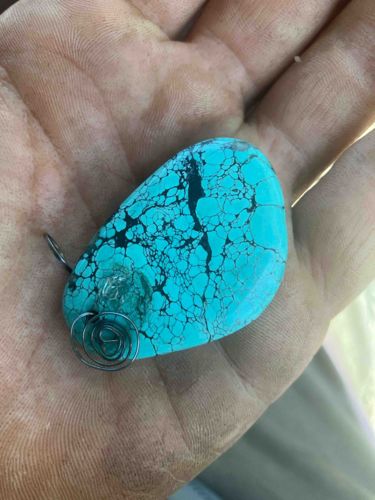
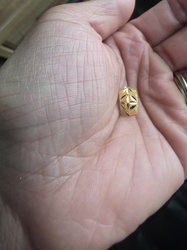
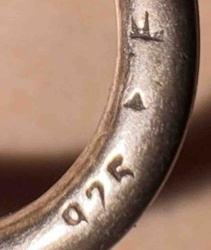
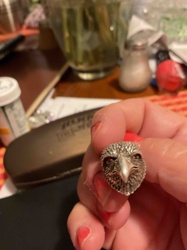
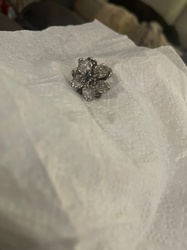
This item is a polished, irregularly shaped cabochon of turquoise, likely intended as a component for jewelry such as a pendant or bracelet. Its predominant color is a vibrant robin's egg blue, characteristic of high-quality turquoise. The stone exhibits significant black matrix veining, which creates a striking spiderweb pattern across its surface, indicative of natural, untreated turquoise. The matrix appears to be composed of host rock material or possibly limonite. The stone has a smooth, polished surface with a slightly reflective luster, suggesting it has been cut and buffed. At one end, there is a neatly crafted wire-wrapped bail, fashioned from what appears to be silver-toned metal, possibly sterling silver or a base metal. The wire is coiled into a small, decorative rosette shape, which adds a touch of artistic craftsmanship, and extends into a loop for attachment to a chain or cord. The overall size appears to be modest, fitting comfortably within the palm of a hand, suggesting it is a wearable piece. While the lighting complicates a precise assessment of condition, the stone appears to be intact with no visible major chips or cracks beyond the natural matrix. The wire wrapping seems secure. This piece likely dates from the late 20th to early 21st century given its contemporary wire-wrapping style.
AI Appraisal Report
I have examined the provided image of this Turquoise Cabochon Pendant with Wire-Wrapped Bail. This appears to be a natural turquoise cabochon, evident from its vibrant robin's egg blue color and pronounced black spiderweb matrix, characteristic of high-quality, untreated turquoise. The smooth polish and reflective luster indicate professional cutting and buffing. The wire-wrapped bail, fashioned from a silver-toned metal, possibly sterling silver, with its decorative rosette, showcases good craftsmanship. Visually, the piece appears to be in good condition, with no obvious chips or cracks beyond the natural matrix.
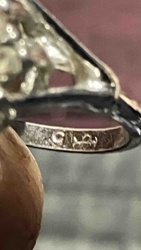
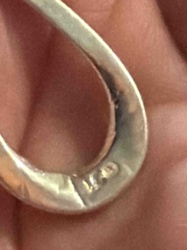
Authenticity of the turquoise as natural and untreated, while strongly suggested by the matrix, cannot be definitively confirmed without in-person examination and potential gemological testing to rule out treatments like stabilization or dyeing, or even имитация (imitation). The metal content of the bail would also require in-person testing (e.g., acid test) to confirm sterling silver. Given the contemporary wire-wrapping style, a late 20th to early 21st-century origin seems plausible.
In terms of market conditions, natural turquoise with desirable matrix patterns remains consistently popular. Pieces like this, which can be readily incorporated into existing jewelry, have a steady demand. Comparables for natural turquoise cabochons with similar size and matrix, coupled with artisan wire-wrapping, typically fall within a modest range. Rarity for this specific piece is limited as comparable cabochons and wire-wrapping exist. Factors impacting value include the natural, untreated status of the turquoise, the quality of the matrix, the craftsmanship of the bail, and the metal used in the bail. Without physical inspection to verify the stone's authenticity, its origin, and the metal quality, I am providing a conservative estimate.