AI Appraisal Estimate

AI-generated estimates · not official valuations

From the user

What was submitted

Photo and notes provided by the user — not generated by AI

Submitted item photo
Submitted photo · June 25, 2026

User's notes

No additional notes provided.

AI analysis below

AI appraisal

AI analysis & estimate

AI-Generated · Verify before acting

Everything below is generated by AI for informational purposes only. AI can make mistakes — the AI may misidentify items or misattribute them (artist, maker, brand, designer, origin, era). This is not an official valuation and should not be used for insurance, sale, tax, estate, legal, or lending purposes — or any decision requiring a certified appraisal. It is not an authoritative claim about any person, brand, or rights holder — do not share or rely on it as a factual statement about a third party. Always consult qualified professionals before making financial decisions.

Read the full disclaimer

AI Identification

·Not independently authenticated·Verify before acting

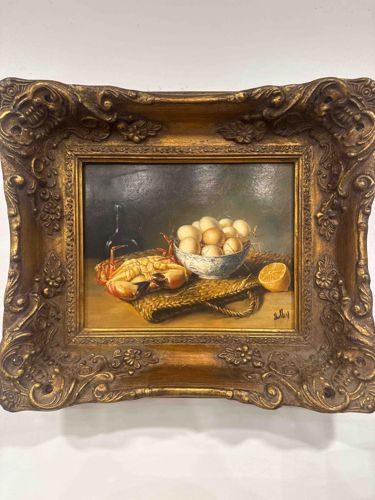
Late 19th/Early 20th Century Still Life Oil Painting of a Crab and Eggs

Fine Art - Painting

AI Estimated Value

·Not an official valuation·Verify before acting

$1,200 - $1,800

As of June 25, 2026

AI Item Analysis

·AI can make mistakes·Verify before acting
This item is an original oil painting on board or canvas, depicting a classic kitchen still life arrangement. The central composition features a cooked orange crab resting on a woven straw mat, positioned next to a decorated ceramic bowl overflowing with white eggs. In the background, a dark glass bottle is visible, while a sliced lemon sits to the right, adding a bright color contrast. The artist utilizes a chiaroscuro technique with a focused light source from the left, creating deep shadows and luminous highlights on the shells and egg surfaces. A signature is visible in the lower right corner, likely identifying a European school painter. The artwork is housed in a substantial and ornate Giltwood Rococo-style frame characterized by high-relief canti-curved corners, floral scrolls, and beaded inner borders. The framing shows signs of age-related wear including minor losses to the gilding and small surface cracks (craquelure) consistent with late 19th-century construction. The painting surface appears generally stable, though it exhibits a natural aged patina and minor surface dirt that could benefit from professional cleaning. The craftsmanship suggests a skilled hand with good attention to texture, particularly in the rendering of the woven mat and the translucency of the eggshells.

AI Appraisal Report

·AI can make mistakes·Verify before acting
Based on my visual examination of the digital images provided, I have assessed this late 19th to early 20th-century oil still life. The composition exhibits a high degree of technical skill, particularly in the rendering of texture on the crustacean shell and the subtle translucency of the eggs. The use of chiaroscuro suggests a European academic influence, possibly from the Dutch or French school. The ornate Giltwood Rococo-style frame appears period-appropriate and adds significant decorative value, despite minor age-related losses and craquelure. The painting surface shows a stable patina, though professional cleaning would likely enhance the vibrancy of the pigments. The market for classical still life remains steady, with high demand for subjects featuring culinary themes used in dining room decor. Value is bolstered by the presence of a signature, though the exact identity of the artist requires further research to determine if they are a listed master, which could significantly increase this valuation. My assessment is based solely on visual aesthetics and typical market performance for anonymous or minor-listed European works of this era. Limitations: This appraisal is for insurance or fair market value purposes and does not constitute a formal certificate of authenticity. Without a physical inspection, I cannot verify the substrate’s exact age, the chemical composition of the pigments, or the presence of overpainting under UV light. Full authentication would require a provenance check, examination of the pigments for anachronisms, and an analysis of the canvas weave and stretcher bars to confirm the late 19th-century origin.

Get your items appraised

Instant estimates of your treasures with AI-powered appraisals

Browse More Appraisals