AI Appraisal Estimate

AI-generated estimates · not official valuations

From the user

What was submitted

Photo and notes provided by the user — not generated by AI

Submitted item photo
Submitted photo · May 27, 2026

User's notes

No additional notes provided.

AI analysis below

AI appraisal

AI analysis & estimate

AI-Generated · Verify before acting

Everything below is generated by AI for informational purposes only. AI can make mistakes — the AI may misidentify items or misattribute them (artist, maker, brand, designer, origin, era). This is not an official valuation and should not be used for insurance, sale, tax, estate, legal, or lending purposes — or any decision requiring a certified appraisal. It is not an authoritative claim about any person, brand, or rights holder — do not share or rely on it as a factual statement about a third party. Always consult qualified professionals before making financial decisions.

Read the full disclaimer

AI Identification

·Not independently authenticated·Verify before acting

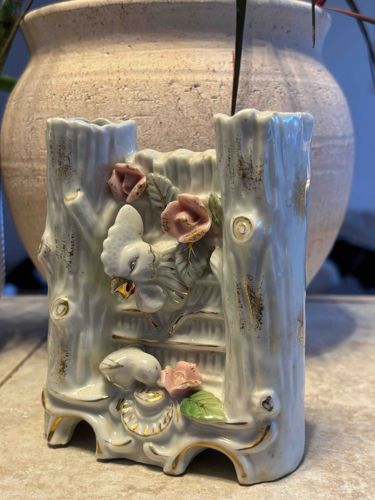
Vintage Japanese Ceramic Tree Trunk Double Bud Vase with Applied Birds and Roses

Vintage Collectible Ceramics / Decorative Vases

AI Estimated Value

·Not an official valuation·Verify before acting

$45.00 - $65.00

As of May 27, 2026

AI Item Analysis

·AI can make mistakes·Verify before acting
This is a decorative ceramic double bud vase designed with a rustic faux-bois or 'tree trunk' aesthetic. The piece is constructed from glazed porcelain or fine stoneware, featuring two vertical cylindrical hollows modeled to resemble textured tree bark with knots and branch stubs. Centered between the columns are two sculpted birds—a larger one positioned above a smaller nest-bound bird—adorned with applied three-dimensional porcelain roses in a tea-pink hue and green foliage. The color palette is predominantly a pale, misty gray with extensive hand-painted gold gilt accents highlighting the feathers, beak, petal edges, and bark texture. The craftsmanship indicates a mid-20th-century Japanese origin (Occupied Japan era or shortly after), characterized by the delicate molded 'spaghetti' style flower applications. Regarding condition, there is visible wear to the gold cold paint highlights (fading and rubbing), and potential minor flea bites on the thin porcelain petals, which are highly susceptible to chipping. The glaze appears bright, though there is some surface grime in the crevices. Such pieces were popular export items from Japan in the 1940s and 1950s, serving both as functional vases and ornamental kitsch objects.
AI Appraisal Report

·AI can make mistakes·Verify before acting
I have examined the digital representation of this vintage Japanese ceramic double bud vase. The piece is a classic example of post-war Japanese export ware, likely dating from the late 1940s to the mid-1950s. The 'faux-bois' styling combined with applied 'moriage' or 'spaghetti' porcelain florals is characteristic of manufacturers from the Seto or Nagoya regions during this era. Condition is the primary value driver for these items. I note significant rubbing and loss to the gold gilt highlights, particularly on the bird's breast and the bark ridges, which suggests frequent handling. While the glaze remains vibrant, the high vulnerability of the three-dimensional 'cold-paint' details often leads to unseen micro-chipping. Such wear is typical for utility-grade export pieces of this age but does limit the premium for a 'mint' specimen. The market for mid-century Japanese 'kitsch' is stable but niche. Comparables for dual-column vases with bird motifs typically sell in the $40 to $75 range at antique malls or online auctions. The lack of a visible backstamp (such as 'Made in Occupied Japan') prevents a higher valuation, as 'Occupied' marks carry a specific collector premium. Limitations: My assessment is based solely on the provided image. A physical inspection is required to check for hairline cracks hidden by the busy texture, professional restorations to the delicate petals, or to verify the presence of a maker's mark on the base. Authenticity is determined by clay weight and glaze translucency; modern reproductions exist, though the specific 'cold-paint' wear on this piece strongly suggests period authenticity. Full valuation would require tactile confirmation of the porcelain’s density and UV light testing to detect hidden repairs.

Get your items appraised

Instant estimates of your treasures with AI-powered appraisals

Browse More Appraisals