Raw Citrine or Iron-Stained Quartz Specimen
Minerals & Gemstones

Raw Citrine or Iron-Stained Quartz Specimen

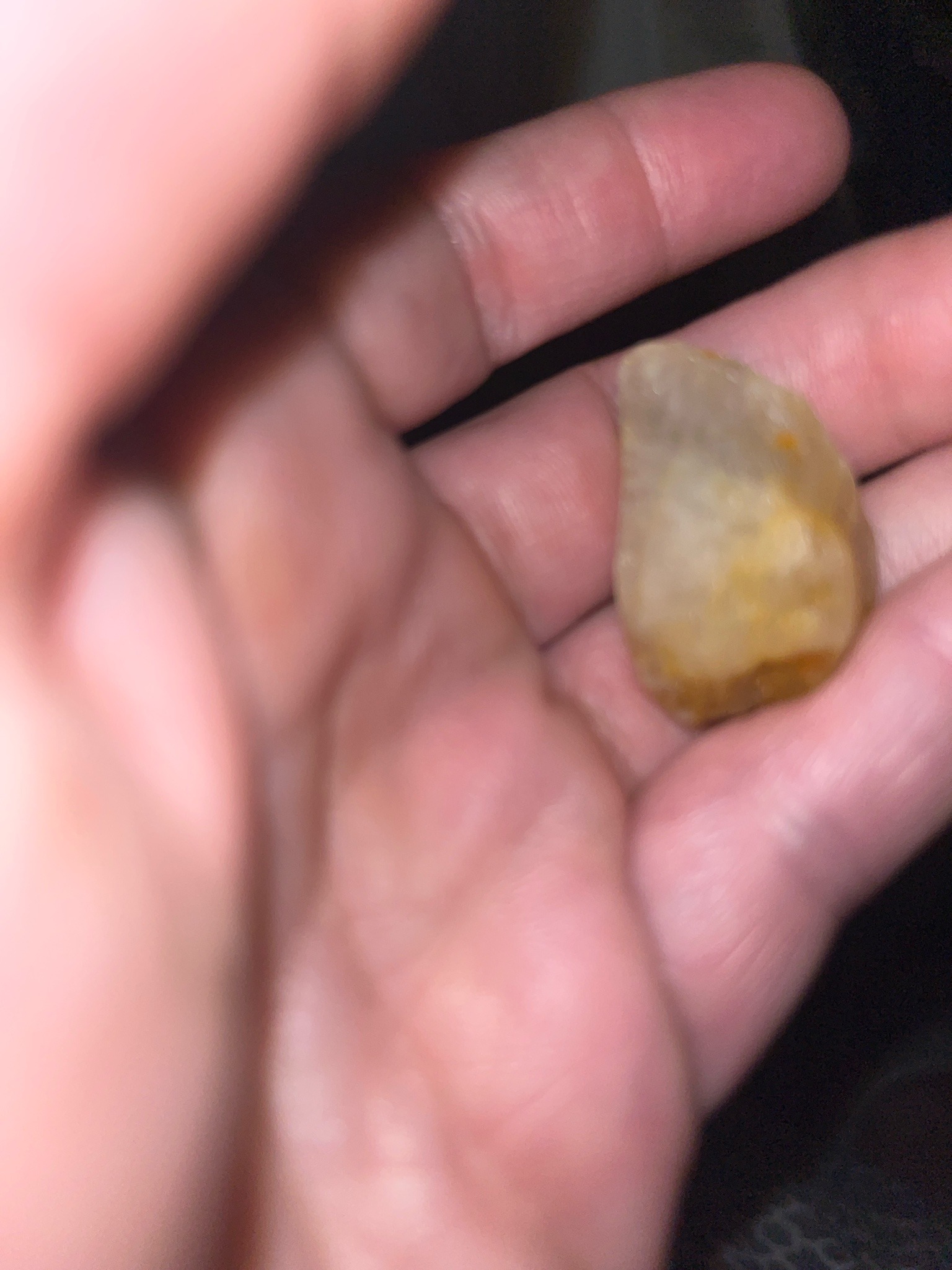
This is a small, unpolished mineral specimen, likely a variety of macrocrystalline quartz such as citrine or iron-stained milky quartz. The piece measures approximately 2-3 centimeters in length, fitting easily within the palm of a hand. Physically, the specimen exhibits a translucent to semi-opaque luster with colors transitioning from a pale, cloudy white at the top to a deeper honey-amber or yellowish-brown at the base. This coloration is characteristic of natural citrine or can be the result of secondary limonite or hematite staining within the crystal structure. The specimen appears to have a naturally rugged, irregular shape with several conchoidal fracture surfaces, indicating it may have been broken from a larger geode or vein rather than being water-worn. There are no visible maker's marks or human alterations, suggesting it is in its raw, natural state. Condition-wise, the stone shows sharp edges and a dusty surface texture typical of field-collected minerals. It does not appear to be heat-treated based on the earthy, uneven distribution of yellow tones, though definitive testing would be required. The craftsmanship is entirely geological, governed by hexagonal crystal systems common to quartz-family minerals.

Estimated Value

$5.00 - $12.00

Basic Information

Category

Minerals & Gemstones

Appraised On

April 15, 2026

Estimated Value

$5.00 - $12.00

Item Description

This is a small, unpolished mineral specimen, likely a variety of macrocrystalline quartz such as citrine or iron-stained milky quartz. The piece measures approximately 2-3 centimeters in length, fitting easily within the palm of a hand. Physically, the specimen exhibits a translucent to semi-opaque luster with colors transitioning from a pale, cloudy white at the top to a deeper honey-amber or yellowish-brown at the base. This coloration is characteristic of natural citrine or can be the result of secondary limonite or hematite staining within the crystal structure. The specimen appears to have a naturally rugged, irregular shape with several conchoidal fracture surfaces, indicating it may have been broken from a larger geode or vein rather than being water-worn. There are no visible maker's marks or human alterations, suggesting it is in its raw, natural state. Condition-wise, the stone shows sharp edges and a dusty surface texture typical of field-collected minerals. It does not appear to be heat-treated based on the earthy, uneven distribution of yellow tones, though definitive testing would be required. The craftsmanship is entirely geological, governed by hexagonal crystal systems common to quartz-family minerals.
Related Tags

Get Your Items Appraised

Instant estimates of your treasures with AI-powered instant appraisals

Browse More Appraisals