AI identification & appraisal estimate

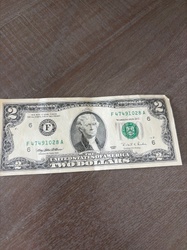
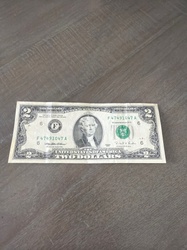
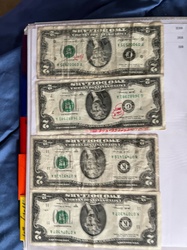
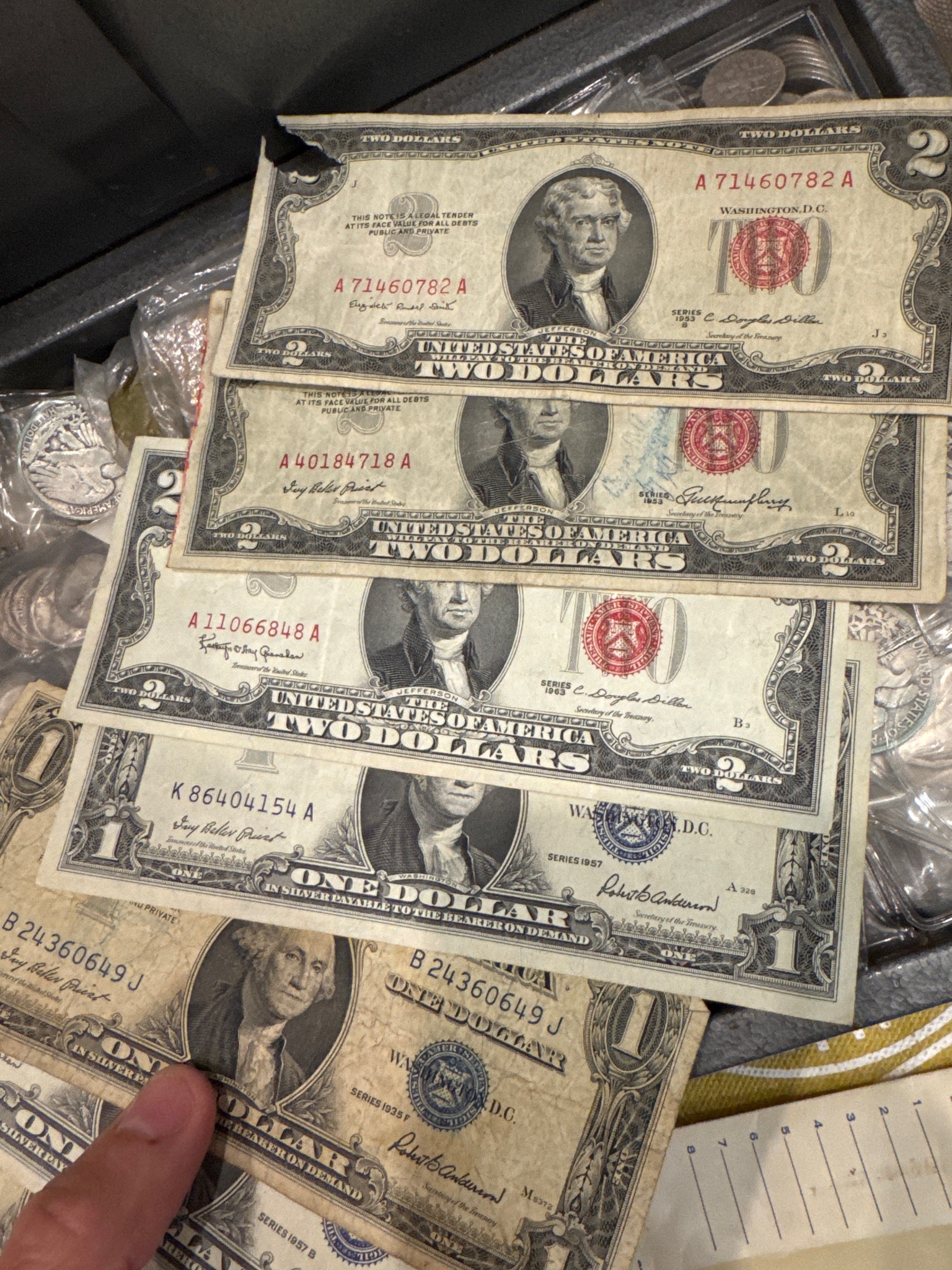
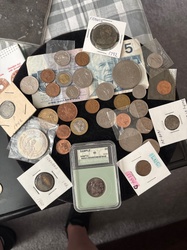
Collection of vintage United States currency including red-seal two-dollar notes and blue-seal silver certificates

This name is the AI's identification of the item — it may be incorrect.

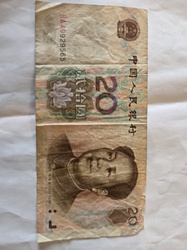
Submitted photo of Collection of vintage United States currency including red-seal two-dollar notes and blue-seal silver certificates
Photo submitted by the user — not generated by AI

AI Estimated Value

Not an official valuation

$15.00–$25.00

AI estimate as of June 14, 2026 · verify with a professional before acting

AI-Generated · Verify before acting

Everything on this page is generated by AI for informational purposes only. AI can make mistakes — the AI may misidentify items or misattribute them (artist, maker, brand, designer, origin, era). This is not an official valuation and should not be used for insurance, sale, tax, estate, legal, or lending purposes — or any decision requiring a certified appraisal. It is not an authoritative claim about any person, brand, or rights holder — do not share or rely on it as a factual statement about a third party. Always consult qualified professionals before making financial decisions.

Read the full disclaimer

AI Item Analysis

This collection features several specimens of vintage United States paper currency appearing in circulated condition. The group includes three $2 United States Notes, which bear the red treasury seals and serial numbers characteristic of this series. The top bill is marked as 'Series 1953 B' with serial number A71460782A; the second is a 'Series 1953' note with serial number A40184718A; and the third appears to be a 'Series 1963' note with serial number A11066848A. These notes feature Thomas Jefferson's portrait. Additionally, the collection contains at least two $1 Silver Certificates exhibiting blue treasury seals and serial numbers. One is visible as 'Series 1957' with serial number K86404154A, and another is marked 'Series 1935 F' with serial number B24360649J, featuring George Washington's portrait and the text 'IN SILVER PAYABLE TO THE BEARER ON DEMAND.' The bills show various states of wear consistent with age and circulation, including heavy creasing, edge fraying, significant staining (particularly on the 1935 bill), and a noticeable tear on the top 1953 note. The items are shown alongside other numismatic materials like silver coins in protective sleeves. Without physical inspection, the authenticity of these notes and their printing details cannot be verified, although their appearance is stylistically consistent with mid-20th-century U.S. treasury issues.
AI Appraisal Report

Based on my visual analysis of the provided image, this collection represents a small group of mid-20th-century United States currency. From what I can see, the notes appear to be circulating specimens of $1 Silver Certificates and $2 United States Notes. The identifiable serial numbers and series dates—such as the 1935F and 1957 Silver Certificates and the 1953 and 1963 Red Seals—are stylistically consistent with treasury issues from those eras. However, I cannot verify the physical composition or determine if these are later reproductions or counterfeits without a physical inspection. The condition of the notes is poor to fair; I observed significant heavy creasing, staining (notably on the 1935 specimen), and a visible tear on the 1953B note. Such wear significantly restricts the value to primarily the face value plus a small collector premium. Generally, items of this type in high circualted condition are common in the numismatic market and do not command the high prices seen for 'uncirculated' or 'star note' varieties. The estimated value assumes these are treasury-issued notes; if they were found to be modern replicas or facsimile prints, they would have no numismatic value. To confirm the authenticity of these pieces, an in-person examination by a professional to verify paper texture, fiber inclusions, and ink depth would be required. The current market for common-date circulated silver certificates and red seals remains steady but is saturated, meaning they are typically traded as entry-level collectibles.

Keep exploring

More paper currency appraisals

Get your items appraised

Instant AI-powered appraisal estimates from a photo

Browse More Appraisals