AI Appraisal Estimate

AI-generated estimates · not official valuations

From the user

What was submitted

Photo and notes provided by the user — not generated by AI

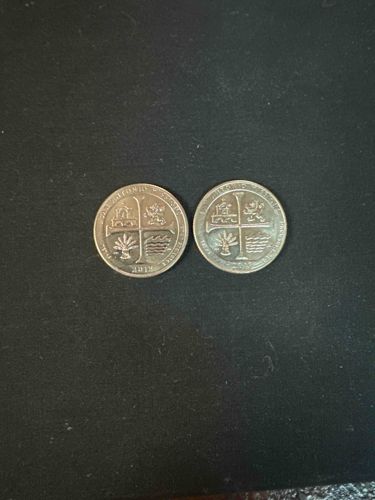
Submitted item photo
Submitted photo · June 6, 2026

User's notes

No additional notes provided.

AI analysis below

AI appraisal

AI analysis & estimate

AI-Generated · Verify before acting

Everything below is generated by AI for informational purposes only. AI can make mistakes — the AI may misidentify items or misattribute them (artist, maker, brand, designer, origin, era). This is not an official valuation and should not be used for insurance, sale, tax, estate, legal, or lending purposes — or any decision requiring a certified appraisal. It is not an authoritative claim about any person, brand, or rights holder — do not share or rely on it as a factual statement about a third party. Always consult qualified professionals before making financial decisions.

Read the full disclaimer

AI Identification

·Not independently authenticated·Verify before acting

Antigua and Barbuda 2011 2 Dollar Coins

Coins

AI Estimated Value

·Not an official valuation·Verify before acting

$2 - $4

As of June 6, 2026

AI Item Analysis

·AI can make mistakes·Verify before acting
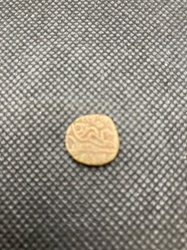
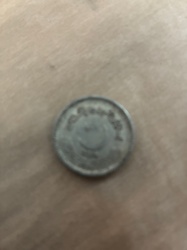
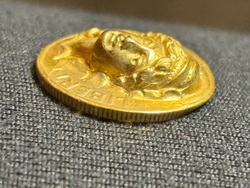
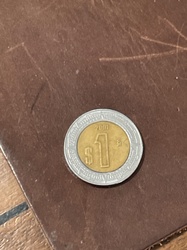
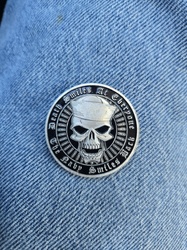
The image displays two identical coins, likely made of a base metal alloy, exhibiting a silver-gray color. Each coin features a detailed design divided into four quadrants, encircling a central, slightly raised element that appears to be a depiction of the national coat of arms or a similar emblem. The upper left quadrant shows a building or structure, possibly Parliament House or a historical landmark. The upper right quadrant contains what looks like a lion or other heraldic animal. The lower left quadrant displays a palm tree with foliage, while the lower right quadrant depicts wavy lines representing water or the sea. Below this central design, the year "2011" is clearly visible on both coins, indicating their date of mintage. Around the perimeter of the central design, there is text, with visible portions including words like "ANTIGUA AND BARBUDA" at the top, and likely "TWO DOLLARS" or a similar denomination at the bottom (partially obscured but suggested by the numeral '2'). The coins appear to be in good, circulated condition, showing some surface wear consistent with handling, but no significant damage like deep scratches or dents. The relief on the designs is still crisp, suggesting good strike quality. The edges of the coins are rounded and appear to have a reeded or milled finish, though this is not perfectly clear from the image. The overall craftsmanship suggests a standard national coinage production.
AI Appraisal Report

·AI can make mistakes·Verify before acting
I have examined the provided image of two Antigua and Barbuda 2011 2 Dollar coins. Based on my visual assessment, these coins appear to be authentic issues from Antigua and Barbuda, dated 2011, and are made of a base metal alloy. The design details, including the central emblem, various quadrant depictions, and inscriptions like "ANTIGUA AND BARBUDA," are consistent with known examples of this coinage. The condition of both coins can be described as good, circulated condition. There is clear evidence of surface wear and handling, but no significant damage such as deep scratches or dents that would severely impact their numismatic value. The relief remains crisp, indicating a good strike quality. Market conditions for modern circulating coinage, particularly from smaller island nations, generally do not support high values unless they are uncirculated or proof examples, or rare varieties. The 2011 mintage year is relatively recent, and these coins are common within the context of their intended use as currency. Demand for these specific circulating 2 dollar coins is primarily from world coin collectors seeking to fill country-specific sets. There is no indication from the images of any significant rarity factors; these are standard issue coins. Therefore, their value is largely tied to their face value with a slight premium for their collectibility in this condition. The primary limitation in this appraisal is the reliance on images alone. While visual characteristics strongly suggest authenticity, a definitive assessment would require in-person examination to verify metallic composition, weight, and edge characteristics precisely. Furthermore, without physical inspection, it is impossible to detect any potential alterations or counterfeiting techniques that might not be apparent in a photograph. Provenance documentation is not typically a factor for modern circulating coins of this type.

Get your items appraised

Instant estimates of your treasures with AI-powered appraisals

Browse More Appraisals