AI estimate as of November 11, 2025 · verify with a professional before acting
AI-Generated · Verify before acting
Everything on this page is generated by AI for informational purposes only. AI can make mistakes — the AI may misidentify items or misattribute them (artist, maker, brand, designer, origin, era). This is not an official valuation and should not be used for insurance, sale, tax, estate, legal, or lending purposes — or any decision requiring a certified appraisal. It is not an authoritative claim about any person, brand, or rights holder — do not share or rely on it as a factual statement about a third party. Always consult qualified professionals before making financial decisions.
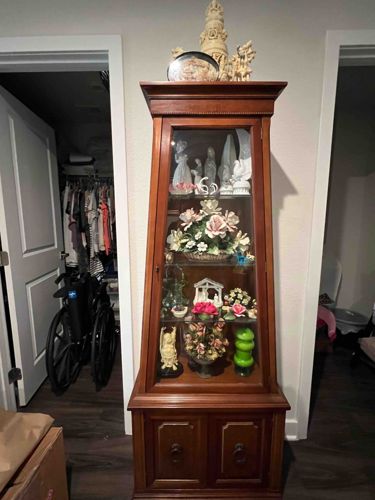
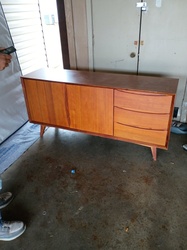
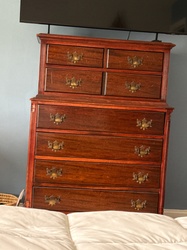
This is a freestanding wooden curio cabinet, likely constructed from a medium-toned hardwood such as cherry or mahogany, exhibiting a rich, warm finish. The cabinet features a classic, somewhat traditional design, with a tapered upper section housing a glass-fronted display area and a rectangular lower section providing enclosed storage. The overall height appears substantial, possibly ranging from 5 to 6 feet, with a width of approximately 2 to 3 feet. The top of the cabinet has a decorative cornice with some molding details, and it is currently adorned with several decorative objects, including what appears to be an intricately carved, light-colored statuette, possibly ivory or resin, and a dark, rounded object with a lighter design. The display section is enclosed by a single glass door, allowing visibility of the items within. Inside, there are multiple shelves, holding a variety of decorative figurines, floral arrangements (some appearing to be ceramic or porcelain and others artificial flowers), and unique glass or ceramic vases. The lower storage section consists of two cabinet doors, each featuring a raised panel design and ornate, possibly brass or dark metal, pull handles. The condition appears well-maintained with no obvious significant damage or wear visible from the image, although closer inspection would be needed to identify minor scratches, dings, or finish imperfections. The style suggests it could be from the mid-20th century to late 20th century, leaning towards a more traditional or classic aesthetic. The quality of craftsmanship seems decent, indicated by the joinery visible in the moldings and paneling, suggesting a sturdy construction.
AI Appraisal Report
This freestanding wooden curio cabinet, depicted in the provided image, appears to be constructed from a medium-toned hardwood, likely cherry or mahogany, and exhibits a classic traditional design. The overall condition appears good with no obvious major damage from the visual examination; however, a physical inspection would be necessary to identify minor scratches, dings, or finish imperfections. Authenticity, based on design and presumed construction methods, points to a mid-to-late 20th-century piece. I cannot definitively confirm wood species or construction solidity without in-person examination.
Market conditions for traditional curio cabinets are currently stable but not soaring. While there's a consistent demand for functional and decorative storage, the market isn't as robust as for antique or highly sought-after contemporary designs. Comparable sales for similar well-maintained, traditionally styled wooden curio cabinets with glass displays typically fall within the $500-$1000 range, depending heavily on manufacturer, actual wood quality, and condition. This piece falls squarely within that range.
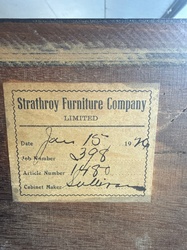
Factors impacting value include its good apparent condition, functional design, and decorative elements. The adornments visible inside and on top add to its visual appeal but do not impact the cabinet's intrinsic value. Rarity is not a significant factor here; similar pieces were mass-produced during its probable era. The primary limitation in this appraisal is the lack of physical inspection, which would allow for verification of wood type, assessment of joinery, and confirmation of internal condition (e.g., shelving stability). Provenance documentation would also clarify age and origin. Without these, authentication remains visual and the value is based on visual assessment alone.