AI Appraisal Estimate

AI-generated estimates · not official valuations

From the user

What was submitted

Photo and notes provided by the user — not generated by AI

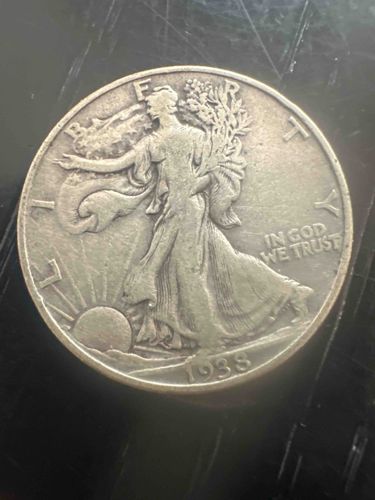
Submitted item photo
Submitted photo · June 6, 2026

User's notes

No additional notes provided.

AI analysis below

AI appraisal

AI analysis & estimate

AI-Generated · Verify before acting

Everything below is generated by AI for informational purposes only. AI can make mistakes — the AI may misidentify items or misattribute them (artist, maker, brand, designer, origin, era). This is not an official valuation and should not be used for insurance, sale, tax, estate, legal, or lending purposes — or any decision requiring a certified appraisal. It is not an authoritative claim about any person, brand, or rights holder — do not share or rely on it as a factual statement about a third party. Always consult qualified professionals before making financial decisions.

Read the full disclaimer

AI Identification

·Not independently authenticated·Verify before acting

United States Walking Liberty Half Dollar (1938)

Coin

AI Estimated Value

·Not an official valuation·Verify before acting

$15-25

As of June 6, 2026

AI Item Analysis

·AI can make mistakes·Verify before acting
The item is a United States Walking Liberty Half Dollar coin, specifically minted in the year 1938, as clearly visible on the lower right of the obverse. The coin's obverse features the iconic design by Adolph A. Weinman. Lady Liberty is depicted in full stride, gracefully draped in the American flag, with her right arm extended forward and her left arm carrying branches of laurel and oak, symbolizing civil and military glory. A large radiant sun rises behind her, with rays emanating upwards. The word "LIBERTY" is inscribed around the upper rim, partially obscured by Lady Liberty's head and the laurel branches. To the right of Liberty's draped figure, the motto "IN GOD WE TRUST" is distinctly visible. The coin appears to be made of silver, as is characteristic of Walking Liberty Half Dollars. Its physical condition shows notable wear consistent with circulation, particularly on the higher points of the design such as Liberty's arm, face, and the folds of her drapery. There is an overall dull-gray patina, which is typical for aged silver coinage and suggests it has not been harshly cleaned. No significant scratches, dents, or major surface abrasions are immediately apparent from the image, indicating moderate handling rather than severe damage. The rim appears mostly intact, though some areas may show minor flattening due to wear. The details of the rays and the sun are still discernible, as are the individual letters of the inscriptions, though they lack sharp definition.

AI Appraisal Report

·AI can make mistakes·Verify before acting
I have examined the provided image of the 1938 Walking Liberty Half Dollar. Based on the visual cues, the coin appears to be authentic, consistent with known Walking Liberty coinage from that era, particularly the inscription style and design elements by Adolph A. Weinman. The dull-gray patina and noticeable wear on high points like Liberty's arm, face, and drapery indicate extensive circulation, placing its condition in the Good (G) to Very Good (VG) range. It lacks sharp details but retains discernibility of major design elements and inscriptions. No obvious signs of harsh cleaning or damage are present, which is positive for its circulating longevity. From a market perspective, 1938 is not considered a key date for Walking Liberty Half Dollars, meaning its rarity is relatively low compared to earlier, lower-mintage years. Demand for common date Walking Liberty halves in this condition range is primarily driven by their silver melt value plus a slight numismatic premium. Comparables in similar circulated conditions typically trade in this range. The market for circulated silver coinage is generally stable, influenced by silver spot prices. Factors impacting its value negatively are its common date and circulated condition. Positively, the absence of severe damage or harsh cleaning helps maintain its numismatic integrity. Given the limitations of image-based appraisal, I cannot definitively confirm authenticity or specific grade without a direct physical examination. An in-person inspection would allow for tactile assessment, precise weight and diameter measurements, and detailed examination under magnification to verify authenticity, identify potential alterations, and assign a more precise grade. Checking for mint marks, which are not clearly visible or referenced, would also require physical inspection.

Get your items appraised

Instant estimates of your treasures with AI-powered appraisals

Browse More Appraisals