AI Appraisal Estimate

AI-generated estimates · not official valuations

From the user

What was submitted

Photo and notes provided by the user — not generated by AI

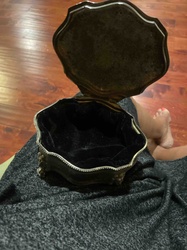
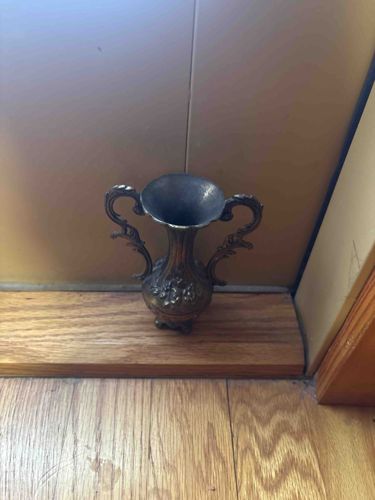
Submitted item photo
Submitted photo · June 8, 2026

User's notes

No additional notes provided.

AI analysis below

AI appraisal

AI analysis & estimate

AI-Generated · Verify before acting

Everything below is generated by AI for informational purposes only. AI can make mistakes — the AI may misidentify items or misattribute them (artist, maker, brand, designer, origin, era). This is not an official valuation and should not be used for insurance, sale, tax, estate, legal, or lending purposes — or any decision requiring a certified appraisal. It is not an authoritative claim about any person, brand, or rights holder — do not share or rely on it as a factual statement about a third party. Always consult qualified professionals before making financial decisions.

Read the full disclaimer

AI Identification

·Not independently authenticated·Verify before acting

Vintage Silver-Plated or Pewter Double-Handled Urn Vase

Antique and Vintage Decorative Arts

AI Estimated Value

·Not an official valuation·Verify before acting

$45.00 - $75.00

As of June 8, 2026

AI Item Analysis

·AI can make mistakes·Verify before acting
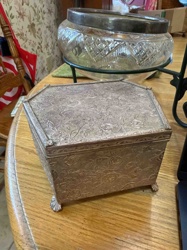
This item is a decorative metal urn-style vase, approximately 6 to 8 inches in height, featuring a bulbous body and a flared rim. It is constructed with two ornate, scrolling loop handles that exhibit Rococo-inspired leaf and shell flourishes. The body of the vase is decorated with a repoussé or cast floral pattern around the mid-section, transitioning into a fluted or ribbed neck. The base appears to be a tripod or four-footed design, matching the scrolled aesthetic of the handles. Chemically, the material appears to be a darkened silver plate over a base metal (likely spelter or brass) or a heavy pewter, indicated by the uneven gray-black tarnish known as patina. There is significant surface oxidation and darkening, particularly in the recessed areas of the ornate metalwork, which is typical for mid-20th-century decorative holloware. No specific maker’s marks are visible from this orientation, though such pieces often contain 'Japan' or 'Made in USA' stamps on the underside of the base. The overall craftsmanship suggests a mass-produced decorative object from the 1940s to 1960s, styled to mimic 18th-century European silver. Condition-wise, the item shows some age-related wear including surface grime and deep tarnish, but it appears structurally intact without major dents or fractures visible in the image.
AI Appraisal Report

·AI can make mistakes·Verify before acting
Based on my visual examination of this double-handled urn, I have identified it as a mid-20th-century decorative piece, likely cast from a non-precious white metal alloy (spelter) or silver-plated brass. The Rococo-inspired scrolling handles and repoussé floral motifs are characteristic of mass-produced Victorian-revival holloware popular between 1940 and 1960. The presence of heavy, uneven oxidation and 'cold' gray patina suggests a silver-plate finish rather than solid sterling silver. The condition is fair to good; while structurally sound, the heavy tarnish and surface grime indicate a need for professional cleaning, though potential 'pitting' in the plate may be present beneath the oxidation. The market for mid-century silver-plated decorative arts currently faces low demand due to shifting interior design trends and the high maintenance required for upkeep. Similar items found in estate sales and online marketplaces like eBay or Etsy typically sell within the $30 to $85 range. This piece is not considered rare; it was a common household accessory for the era. Limitations: This appraisal is based strictly on visual photographic evidence. I cannot definitively verify the base metal composition or identify the manufacturer without an in-person inspection of the underside for hallmarks or maker's marks. To confirm this value, I would need to test the metal for silver content using an acid scratch test or XRF spectrometer. Furthermore, provenance documentation would be required if the piece were claimed to be an authentic 18th or 19th-century European original rather than a 20th-century revival piece.

Get your items appraised

Instant estimates of your treasures with AI-powered appraisals

Browse More Appraisals