These notes were written by the person who submitted this item. Appraiser.AI has not verified them, and the AI's identification and estimate may rely on them.
AI Estimated Value
Not an official valuation
$150-250
AI estimate as of October 3, 2025 · verify with a professional before acting
AI-Generated · Verify before acting
Everything on this page is generated by AI for informational purposes only. AI can make mistakes — the AI may misidentify items or misattribute them (artist, maker, brand, designer, origin, era). This is not an official valuation and should not be used for insurance, sale, tax, estate, legal, or lending purposes — or any decision requiring a certified appraisal. It is not an authoritative claim about any person, brand, or rights holder — do not share or rely on it as a factual statement about a third party. Always consult qualified professionals before making financial decisions.
This analysis also relies on unverified notes provided by the user, which may be incomplete or inaccurate and could affect the result.
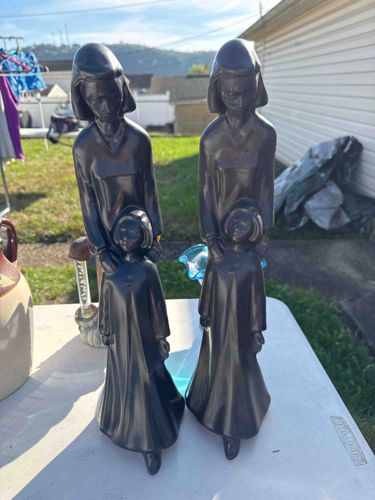
This is a pair of elegant figurines, each depicting a mother figure gracefully holding a child. They appear to be made from a dark, possibly glazed ceramic material, giving them a rich, uniform color that resembles a deep bronze or dark grey, with a subtle sheen that suggests a high-quality finish. The figures are stylized, characterized by smooth, clean lines and a minimalist approach to detail, particularly in the facial features which are subtly sculpted with downcast gazes, conveying a sense of serene contemplation or tenderness. Each mother figure is depicted with a bob-cut hairstyle and wearing a flowing, high-collared dress or gown that extends to the ground, completely enveloping the smaller child figure nestled closely in front of her. The children are also rendered in a simplified, yet endearing style, echoing the attire and posture of their mothers. The construction appears solid and well-balanced, indicating they are designed to stand independently. There are no immediately visible chips, cracks, or significant wear, suggesting good preservation. The style strongly evokes the mid-20th century, particularly pieces from German manufacturers like Goebel (known for their 'Mother's Love' series) or similar European porcelain and ceramic producers, which often featured such sentimental and graceful compositions. The craftsmanship is evident in the smooth transitions of form and the emotional resonance achieved through minimal detailing, indicative of fine art ceramics.
AI Appraisal Report
Based on my visual examination of the provided image, these two 'Mother and Child' figurines appear to be in excellent condition. The surface exhibits a consistent, rich dark tone with a subtle sheen, suggesting a glazed ceramic or similar material, free from any immediately visible chips, cracks, or significant abrasions. The minimalist styling, featuring smooth lines and understated facial expressions, is characteristic of mid-20th century decorative arts, strongly resembling pieces from manufacturers like Goebel, particularly their 'Mother's Love' series, or similar European ceramic producers. The integration of the child figure within the mother’s flowing gown is a classic and appealing motif from that era.
Market conditions for such sentimental, mass-produced decorative figurines are generally steady but not exceptionally high. While there's a consistent demand for vintage and aesthetically pleasing home decor, these items typically appeal to a niche market of collectors or individuals looking for specific aesthetic complements. Many similar pieces, often unmarked or from less prominent manufacturers, can be found. Rarity is not a significant factor here; while perhaps not ubiquitous, such stylized 'Mother and Child' groupings were quite popular. The lack of specific maker's marks or provenance information in the image significantly impacts the potential for higher valuation, as authenticated Goebel pieces generally command a premium.
Factors that enhance value include the apparent pristine condition and the timeless, emotive subject matter. However, the biggest limitation in this appraisal is the inability to verify authenticity without a physical examination. To fully authenticate, I would need to inspect the base of each figurine for manufacturer's marks, impressed numbers, or labels. An in-person examination would also allow for a tactile assessment of material, weight, and subtle surface imperfections not visible in photographs, which could indicate specific production methods or a higher quality of craftsmanship. Without these, I must value them as pleasing, well-preserved decorative figurines of the period, rather than authenticated pieces from a specific, highly collectible maker.