AI Appraisal Estimate

AI-generated estimates · not official valuations

From the user

What was submitted

Photo and notes provided by the user — not generated by AI

Submitted item photo
Submitted photo · July 3, 2026

User's notes

No additional notes provided.

AI analysis below

AI appraisal

AI analysis & estimate

AI-Generated · Verify before acting

Everything below is generated by AI for informational purposes only. AI can make mistakes — the AI may misidentify items or misattribute them (artist, maker, brand, designer, origin, era). This is not an official valuation and should not be used for insurance, sale, tax, estate, legal, or lending purposes — or any decision requiring a certified appraisal. It is not an authoritative claim about any person, brand, or rights holder — do not share or rely on it as a factual statement about a third party. Always consult qualified professionals before making financial decisions.

Read the full disclaimer

AI Identification

·Not independently authenticated·Verify before acting

Selection of three solitaire-style stone-set jewelry pieces

Jewelry

AI Estimated Value

·Not an official valuation·Verify before acting

$50 - $2,500

As of July 3, 2026

AI Item Analysis

·AI can make mistakes·Verify before acting
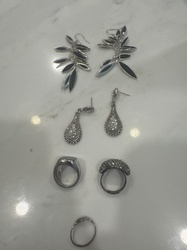
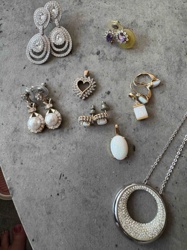
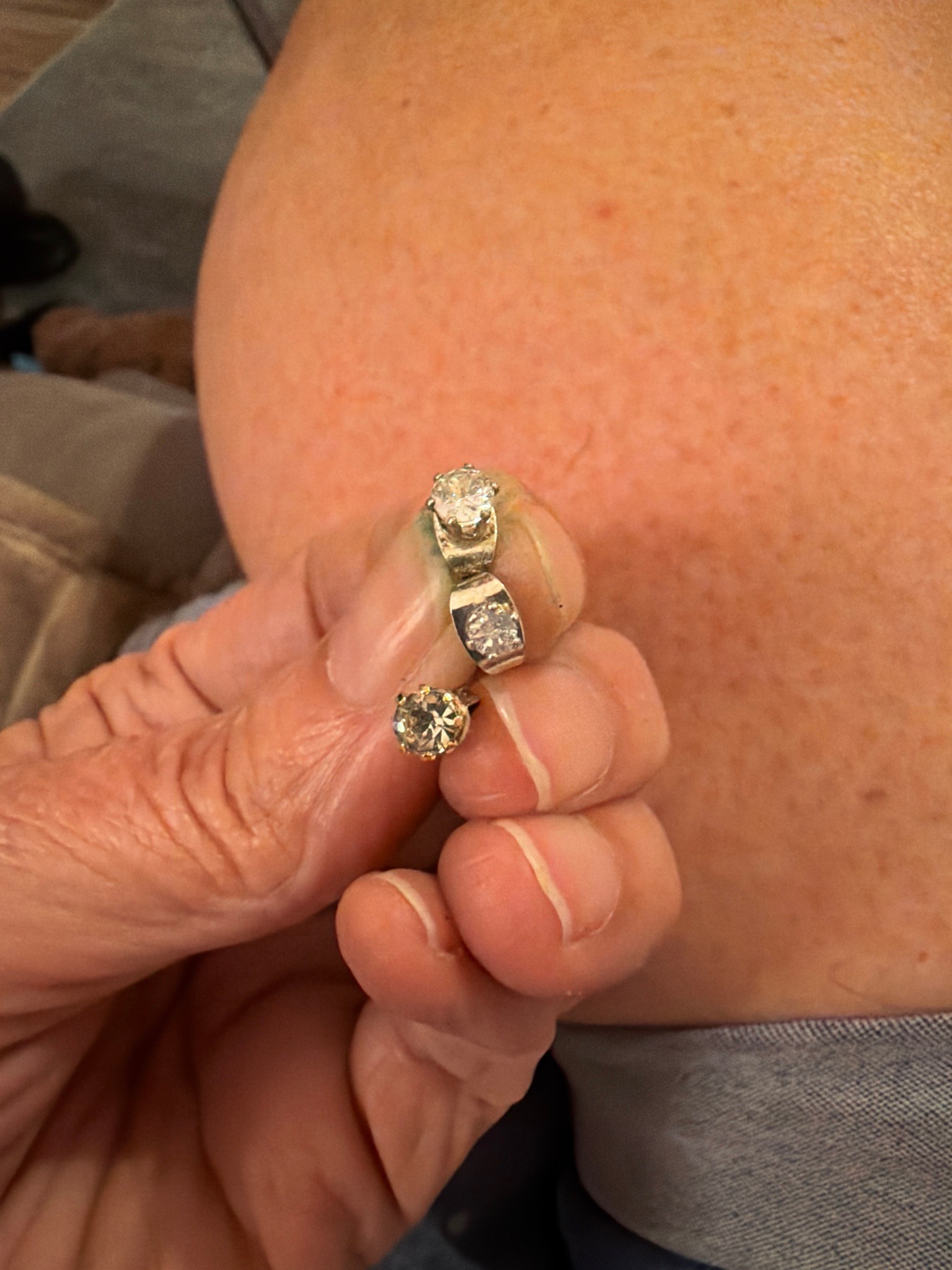
This image features three distinct jewelry items held in a hand for scale, each appearing to be a solitaire-style piece with a clear, faceted central stone. The top item appears to be a ring with a white-metal band, possibly white gold or silver-toned, featuring a round brilliant-cut stone held in a traditional multi-prong setting. The middle item is consistent with a band or ring featuring a stone in a partial bezel or tension-style setting with thick metal shoulders. The bottom item appears to be a stud earring or a loose setting featuring a round faceted stone in a multi-prong basket. The metal of the bottom piece appears slightly more yellow or rose-toned than the others, suggesting a different alloy or possibly surface patina. From the image, it is impossible to determine the identity of the gemstones, which could range from diamond to white sapphire, cubic zirconia, or glass. No hallmarks, maker's marks, or carat weights are visible in the photograph, meaning any identification of materials, such as gold or platinum, is purely hypothetical and subject to professional in-person testing. The pieces show some signs of wear and surface buildup consistent with prior use. A notable green discoloration appears on the finger holding the items, which is often stylistically consistent with a chemical reaction between skin oils and copper-based alloys, though this does not provide proof of the items' composition.

AI Appraisal Report

·AI can make mistakes·Verify before acting
I have examined the image provided, which displays three solitaire-style jewelry pieces. Based on what I can see, I am unable to determine the specific metal composition or the identity of the gemstones, as photographic evidence cannot replace physical material testing. The items appear to be mass-produced styles, but without visible hallmarks, any attribution to precious metals like gold or platinum remains a hypothesis. I note a green discoloration on the wearer's skin, which is often an indicator of base-metal alloys reacting to skin acidity, suggesting these may be fashion or costume jewelry. If these pieces are composed of base metals and cubic zirconia or glass, the value would reside at the lower end of my estimate, likely between $50 and $150. However, if they are composed of 14k gold and natural diamonds of average quality, the value for the group could reach $2,500. This estimate is highly speculative and is based on a hypothetical identification of materials. Condition-wise, the pieces show evidence of wear and buildup, which typically lowers the secondary market value unless professionally cleaned. The market for solitaire jewelry is generally strong, though demand for unbranded, unverified pieces is significantly lower than for pieces with documented provenance or recognized laboratory grading. To confirm a more precise value, an in-person examination by a GIA-certified gemologist is required to test for thermal conductivity and specific gravity, and a jeweler must verify metal purity via acid testing or XRF analysis. If these items are found to be replicas or silver-plated base metals, the resale value would be nominal, primarily for their decorative appeal rather than intrinsic material worth.

Related Tags

Explore similar items and categories

Get your items appraised

Instant estimates of your treasures with AI-powered appraisals

Browse More Appraisals