AI Appraisal Estimate

AI-generated estimates · not official valuations

From the user

What was submitted

Photo and notes provided by the user — not generated by AI

Submitted item photo
Submitted photo · June 17, 2026

User's notes

1963

AI analysis below

AI appraisal

AI analysis & estimate

AI-Generated · Verify before acting

Everything below is generated by AI for informational purposes only. AI can make mistakes — the AI may misidentify items or misattribute them (artist, maker, brand, designer, origin, era). This is not an official valuation and should not be used for insurance, sale, tax, estate, legal, or lending purposes — or any decision requiring a certified appraisal. It is not an authoritative claim about any person, brand, or rights holder — do not share or rely on it as a factual statement about a third party. Always consult qualified professionals before making financial decisions.

Note

This analysis also relies on unverified notes provided by the user, which may be incomplete or inaccurate and could affect the result.

Read the full disclaimer

AI Identification

·Not independently authenticated·Verify before acting

United States Ten Dollar Bill (Series 1963 or earlier, back)

Paper Currency

AI Estimated Value

·Not an official valuation·Verify before acting

$10-15

As of June 17, 2026

AI Item Analysis

·AI can make mistakes·Verify before acting
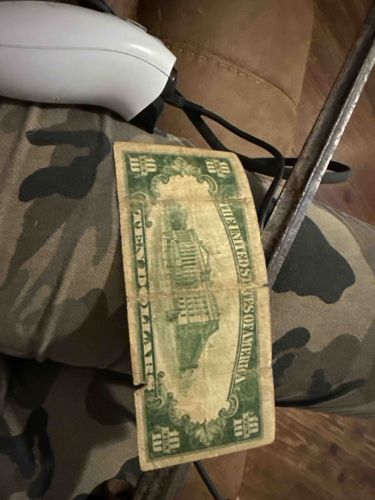
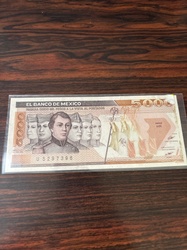
The item is a partial view of the reverse side of a United States Ten Dollar Federal Reserve Note. The primary color visible is the characteristic green ink on a faded cream-colored paper background. The central vignette, depicting the U.S. Treasury Building, is clearly discernible, though somewhat obscured by wear and dirt. Along the left and right borders, the numerical value '10' is visible within ornate scrollwork. The text "THE UNITED STATES OF AMERICA" is prominently displayed across the top, above the Treasury Building image. On the left side, the word "TEN DOLLARS" runs vertically. The bill exhibits significant signs of wear, including multiple creases, folds, and what appears to be a notable tear or cut on the left edge, below the 'N' in 'TEN'. The paper is discolored and grimy, suggesting prolonged circulation and handling. The overall condition is poor, with softness to the paper and a lack of crispness typical of heavily used currency. While no specific series year is fully visible, the design strongly suggests a series from 1963 or earlier, as later series introduced different design elements to the reverse. The craftsmanship is typical of U.S. currency printing, demonstrating intricate engraving, though the details are now softened by age and wear. No specific maker's marks or signatures are visible on this side of the bill, as these are typically found on the obverse.
AI Appraisal Report

·AI can make mistakes·Verify before acting
I have examined the provided image of a partial reverse side of a United States Ten Dollar Federal Reserve Note, identified by the owner as a 1963 series. The central vignette of the U.S. Treasury Building and the prominent 'THE UNITED STATES OF AMERICA' text are consistent with this identification. My assessment of its condition is poor. The bill shows significant creasing, multiple folds, and discolored, grimy paper, indicative of heavy circulation. A notable tear or cut is visible on the left edge. This level of wear greatly diminishes its collector appeal. The craftsmanship is typical for U.S. currency of its era, with intricate engraving, though details are now softened by age and wear. In terms of market conditions, common circulating notes from 1963, especially in poor condition, do not typically command a significant premium above face value. While specific 1963 series like "star notes" or certain district issues can be more valuable, this standard note, given its condition, faces very low demand from collectors. Collectors generally seek notes in much higher grades for their collections. Comparables for notes in this condition typically sell for their face value or a small premium. Factors significantly impacting its value are overwhelmingly negative: the poor physical condition, including the tear and discoloration. There are no rare plate numbers or other features visible that would elevate its value. A limitation in full authenticity verification from an image alone is the inability to physically inspect the paper for security features, watermarks, or to analyze the printing process. For full authentication and to rule out counterfeiting (though unlikely for a common note in this condition), an in-person examination by a numismatic expert to check paper quality, ink, and security threads (if applicable for the series) would be ideal. Also, verifying the serial number and other characteristics on the obverse would be necessary.

Get your items appraised

Instant estimates of your treasures with AI-powered appraisals

Browse More Appraisals