AI estimate as of September 22, 2025 · verify with a professional before acting
AI-Generated · Verify before acting
Everything on this page is generated by AI for informational purposes only. AI can make mistakes — the AI may misidentify items or misattribute them (artist, maker, brand, designer, origin, era). This is not an official valuation and should not be used for insurance, sale, tax, estate, legal, or lending purposes — or any decision requiring a certified appraisal. It is not an authoritative claim about any person, brand, or rights holder — do not share or rely on it as a factual statement about a third party. Always consult qualified professionals before making financial decisions.
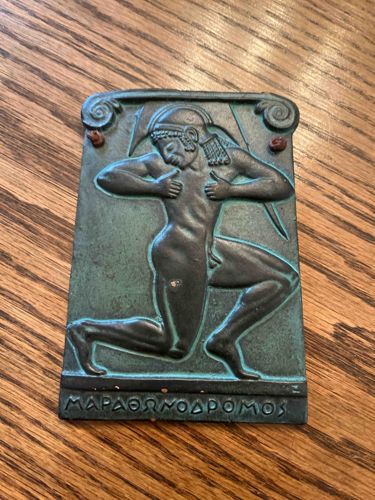
This item is a rectangular bronze plaque or relief, depicting a kneeling or crouching male figure, presumably a classical Greek runner. The figure is nude, rendered with prominent musculature, and wears a laurel wreath or headband, along with armbands or epaulets on his upper arms. His posture suggests exhaustion or readiness for a sprint, with both hands clutching his chest. The background features stylized architectural elements, specifically an Ionic capital on the upper left and right corners, framing the figure. The overall color of the plaque is a deep verdigris green, characteristic of aged bronze, with darker, almost black, raised areas where the original metal or a darker patina is visible. This contrast highlights the relief details. The surface shows some minor wear, particularly on the raised portions of the figure and the architectural elements, suggesting age and handling. There are small reddish-brown spots visible, particularly near the upper corners, which could indicate remnants of mounting hardware or oxidation. Along the bottom edge, in raised Greek lettering, the word "ΜΑΡΑΘΩΝΟΔΡΟΜΟΣ" is clearly visible, which translates to 'Marathon Runner' or 'Marathondromos'. This inscription strongly identifies the figure as Pheidippides, the legendary messenger who ran from Marathon to Athens. The craftsmanship suggests a cast bronze piece, likely from the early to mid-20th century, given its classical revival aesthetic and patination. The detail in the musculature and the clear inscription indicate a piece of reasonable quality, likely intended for decorative or commemorative purposes.
AI Appraisal Report
Based on my visual examination of the provided image, this bronze plaque, depicting a Marathon Runner identified by the 'ΜΑΡΑΘΩΝΟΔΡΟΜΟΣ' inscription, presents as a well-executed decorative piece. The deep verdigris patina and contrasting darker raised areas are consistent with aged bronze, suggesting a likely early to mid-20th century production, fitting with a classical revival aesthetic. The craftsmanship, particularly the detailed musculature and clear lettering, indicates a good quality cast. The wear visible on raised portions is minor and expected for an item of its presumed age and handling, contributing to its authentic appearance rather than detracting significantly. The reddish-brown spots might be residual mounting material or further oxidation, which does not negatively impact its decorative appeal.
Market conditions for such classical-themed decorative bronzes are generally stable but not exceptionally strong for pieces without significant artistic attribution or provenance. Comparable items, often unsigned, typically sell in the low to mid-hundreds at auction or through antique dealers. Demand is steady among collectors of classical art reproductions or those seeking unique decorative accents. Rarity is limited as such pieces were produced in some quantity.
Factors impacting value positively include its clear inscription, good patination, and detailed rendering. Negatively, the lack of a known artist or foundry mark limits its ceiling. While visually authentic in terms of its period styling and material characteristics, a full authentication would require in-person examination to assess casting quality, weight, and detect any potential repairs or alterations. Elemental analysis of the bronze composition could confirm period authenticity. Without these, the appraisal remains based on visual indicators.