AI estimate as of October 6, 2025 · verify with a professional before acting
AI-Generated · Verify before acting
Everything on this page is generated by AI for informational purposes only. AI can make mistakes — the AI may misidentify items or misattribute them (artist, maker, brand, designer, origin, era). This is not an official valuation and should not be used for insurance, sale, tax, estate, legal, or lending purposes — or any decision requiring a certified appraisal. It is not an authoritative claim about any person, brand, or rights holder — do not share or rely on it as a factual statement about a third party. Always consult qualified professionals before making financial decisions.
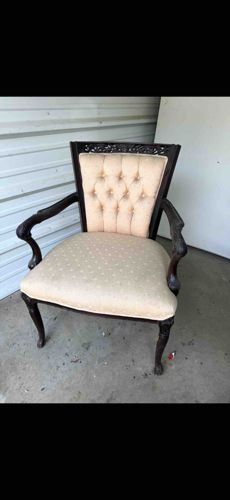
This is a vintage armchair featuring a dark-stained carved hardwood frame and upholstered seating. The chair's frame appears to be constructed from a dark wood, possibly mahogany or a similar dark-grained timber, showcasing intricate carving details along the top rail of the backrest. These carvings suggest an ornate, possibly Rococo Revival or Victorian aesthetic, characterized by scrolling motifs and perhaps floral or foliate elements, though specific patterns are difficult to discern clearly from the image provided. The backrest is upholstered in a light, possibly cream or pale yellow, fabric with deep button tufting, creating a classic, luxurious look. The seat cushion is upholstered in a coordinating light-colored fabric, which appears to have a subtle dotted or small geometric pattern, adding texture and visual interest. The arms are gracefully curved, extending forward from the backrest and appearing to have a sculpted or carved quality, possibly resembling animalistic forms or elaborate scrollwork at their ends. The chair stands on four carved legs, which exhibit a 'cabriole' style, terminating in what appears to be a stylized foot, though details are not perfectly clear. The overall construction suggests a solid, well-built piece of furniture. Visible condition issues include potential wear on the dark wood finish, particularly on the arms and legs, consistent with age and use. The upholstery appears relatively clean but may show minor signs of discoloration or wear upon closer inspection. The deep tufting is intact, maintaining the chair's classic form. This style of chair is typically associated with the late 19th to early 20th century, suggesting an age of 80 to 120 years or more. The craftsmanship, particularly the carving and upholstery work, indicates a piece of good quality, likely intended for a formal living space.
AI Appraisal Report
Upon visual examination of this vintage carved wood armchair, I observe a piece exhibiting characteristics consistent with late 19th to early 20th-century European or American craftsmanship, likely in the Rococo Revival or Victorian style. The dark-stained hardwood frame, possibly mahogany, displays intricate carving, particularly along the top rail and on the cabriole legs, indicating quality construction. The deep button-tufted backrest, upholstered in a light fabric, and the coordinating patterned seat cushion suggest a luxurious aesthetic fitting for a formal setting. The overall condition appears fair to good for its age. I note visible wear on the wood finish, especially on the arms and legs, consistent with an item over 80 years old. The upholstery seems relatively clean, though minor discoloration or wear could be present upon closer inspection. The tufting is intact, which is a positive sign.
Market conditions for vintage upholstered armchairs of this style are stable but not currently experiencing a surge in demand. While well-made, the aesthetic may appeal to a niche market. Comparables for similarly styled and conditioned chairs typically fall within the $400-$800 range, depending on provenance and specific quality of carving and fabric. Factors impacting value include the solid construction, intricate carving, and the overall completeness of the piece. Rarity is moderate, as many similar pieces were produced during the era.
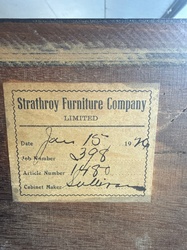
It is crucial to state that this appraisal is based solely on the provided image. Limitations in authenticity verification are significant without physical inspection. To fully authenticate the wood species, confirm construction techniques, and thoroughly assess upholstery condition and any hidden damages, an in-person examination would be necessary. Furthermore, provenance documentation would be invaluable to confirm origin or historical significance, which could significantly impact value beyond this estimate.