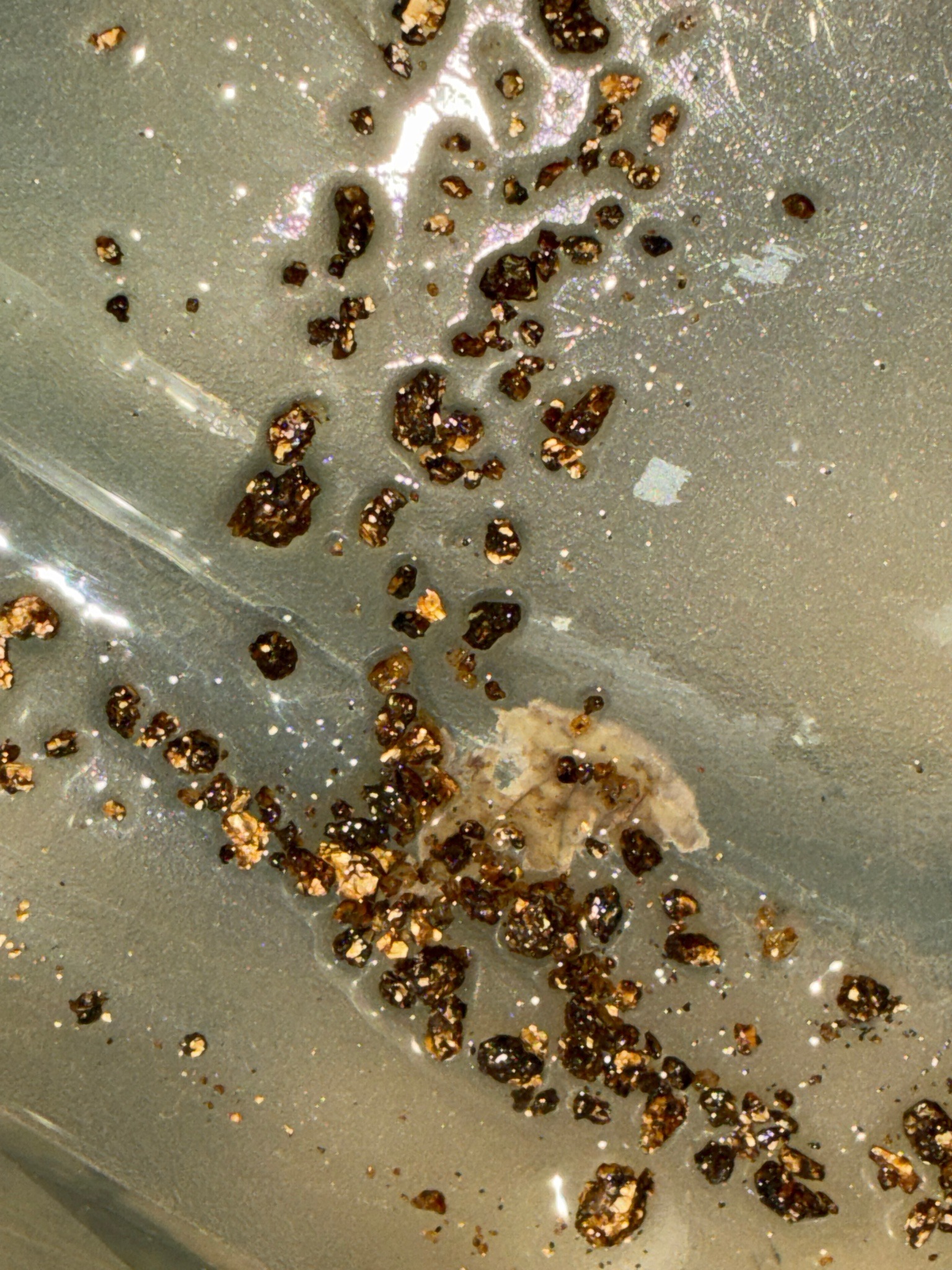
Macro-photographic analysis of particulate debris on a metallic or synthetic surface
The image presents a collection of irregularly shaped particulate matter scattered across a reflective, iridescent, and semi-translucent substrate. The particles vary in color from deep, obsidian black to a toasted amber-brown, with some exhibiting a glitter-like, gold-toned shimmer that suggests crystalline inclusions or metallic flake. Physically, the particles lack internal symmetry, appearing as brittle, crushed fragments or granular aggregates with rough, porous surface textures. The sizes appear microscopic or near-microscopic, given the depth of field and the visibility of surface scratches on the background. The substrate features a distinct diagonal ridge and shows signs of mechanical wear, indicated by fine linear scratches and abrasions. A yellowish, calcified or waxy residue is visible near the center-right clusters, which may act as a binding agent or indicate biological or chemical degradation. These particles could represent mineral specimens like vermiculite or mica, organic residue such as dried resin, or industrial byproducts like metallic slag. The overall condition suggests environmental exposure or mechanical disintegration of a larger solid structure. No maker's marks or signatures are present, as this appears to be naturally occurring or incidentally created debris rather than a manufactured object.

AI-Generated Appraisal Disclaimer
Estimated Value
$50 - $150
Basic Information
Category
Microscopic Material Samples / Forensic Debris
Appraised On
April 14, 2026
Estimated Value
$50 - $150
Item Description
The image presents a collection of irregularly shaped particulate matter scattered across a reflective, iridescent, and semi-translucent substrate. The particles vary in color from deep, obsidian black to a toasted amber-brown, with some exhibiting a glitter-like, gold-toned shimmer that suggests crystalline inclusions or metallic flake. Physically, the particles lack internal symmetry, appearing as brittle, crushed fragments or granular aggregates with rough, porous surface textures. The sizes appear microscopic or near-microscopic, given the depth of field and the visibility of surface scratches on the background. The substrate features a distinct diagonal ridge and shows signs of mechanical wear, indicated by fine linear scratches and abrasions. A yellowish, calcified or waxy residue is visible near the center-right clusters, which may act as a binding agent or indicate biological or chemical degradation. These particles could represent mineral specimens like vermiculite or mica, organic residue such as dried resin, or industrial byproducts like metallic slag. The overall condition suggests environmental exposure or mechanical disintegration of a larger solid structure. No maker's marks or signatures are present, as this appears to be naturally occurring or incidentally created debris rather than a manufactured object.
Related Tags
Explore similar items and categories:
Get Your Items Appraised
Instant estimates of your treasures with AI-powered instant appraisals