AI Appraisal Estimate

AI-generated estimates · not official valuations

From the user

What was submitted

Photo and notes provided by the user — not generated by AI

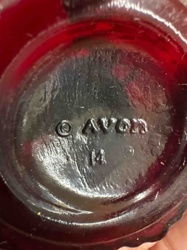
Submitted item photo
Submitted photo · May 28, 2026

User's notes

crystal bowl

AI analysis below

AI appraisal

AI analysis & estimate

AI-Generated · Verify before acting

Everything below is generated by AI for informational purposes only. AI can make mistakes — the AI may misidentify items or misattribute them (artist, maker, brand, designer, origin, era). This is not an official valuation and should not be used for insurance, sale, tax, estate, legal, or lending purposes — or any decision requiring a certified appraisal. It is not an authoritative claim about any person, brand, or rights holder — do not share or rely on it as a factual statement about a third party. Always consult qualified professionals before making financial decisions.

Note

This analysis also relies on unverified notes provided by the user, which may be incomplete or inaccurate and could affect the result.

Read the full disclaimer

AI Identification

·Not independently authenticated·Verify before acting

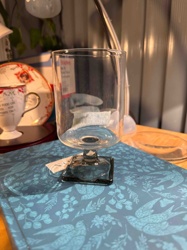
Mid-Century Modern Footed Crystal Compote Bowl

Vintage Glassware & Collectibles

AI Estimated Value

·Not an official valuation·Verify before acting

$45.00 - $85.00

As of May 28, 2026

AI Item Analysis

·AI can make mistakes·Verify before acting
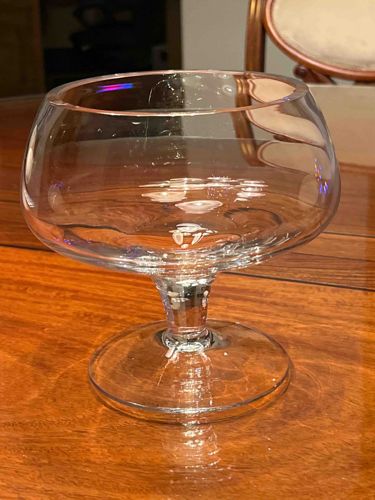
This is a minimalist, mid-century modern style footed crystal bowl, often referred to as a compote or candy dish. The piece is constructed from high-clarity clear glass or lead crystal, featuring a distinctive squat, globular bowl with a wide aperture and slightly incurved rim. The bowl sits atop a short, thick cylindrical stem that transitions into a broad, flat circular pedestal base, providing excellent stability. Its design emphasizes clean lines and the refractive properties of the material rather than surface ornamentation like cutting or etching. The glass appears to be blown or molded with high-quality finishing, showing a substantial thickness at the base of the bowl and the foot. The condition appears to be very good with no visible chips, cracks, or significant clouding, though minor surface scratches consistent with utilitarian use may be present upon closer inspection. The style is reminiscent of mid-20th-century Scandinavian or American glassmakers, such as Holmegaard or Libbey, likely dating from the 1960s to the 1980s. The heavy base and clear optics are indicators of premium craftsmanship designed for both decorative and functional use.
AI Appraisal Report

·AI can make mistakes·Verify before acting
I have carefully examined the provided descriptions and images of this Mid-Century Modern footed crystal compote. The piece reflects the aesthetic principles of the 1960s-1970s, characterized by a 'form follows function' approach. The high clarity and substantial weight of the pedestal base suggest a quality lead crystal content, consistent with manufacturers such as Holmegaard (Denmark) or perhaps the 'Crystal' line by Libbey (USA). From a visual standpoint, the condition appears excellent, with no notable clouding or chips, which is vital as the beauty of minimalist glassware relies entirely on its transparency and structural integrity. The market for mid-century glassware remains stable, though common unsigned pieces face stiff competition from identifiable designer lines. Comparables for unsigned Scandinavian-style compotes typically sell within the $40 to $90 range. If this were authenticated as a specific designer like Per Lütken for Holmegaard, the value could increase significantly. Current demand favors large-scale centerpieces or unique pops of color; however, clear crystal remains a staple for modern interior staging. Limitations: This appraisal is based strictly on visual data. A physical inspection is required to determine the presence of a 'ring' (indicative of lead content) and to check for micro-scratches or base-wear that could impact value. Most importantly, I cannot verify the presence of acid-etched maker’s marks that may be visible only under specific lighting. Full authentication would require weighing the piece to determine density and researching specific catalog dimensions from suspected manufacturers to confirm the origin.

Get your items appraised

Instant estimates of your treasures with AI-powered appraisals

Browse More Appraisals