AI estimate as of October 17, 2025 · verify with a professional before acting
AI-Generated · Verify before acting
Everything on this page is generated by AI for informational purposes only. AI can make mistakes — the AI may misidentify items or misattribute them (artist, maker, brand, designer, origin, era). This is not an official valuation and should not be used for insurance, sale, tax, estate, legal, or lending purposes — or any decision requiring a certified appraisal. It is not an authoritative claim about any person, brand, or rights holder — do not share or rely on it as a factual statement about a third party. Always consult qualified professionals before making financial decisions.
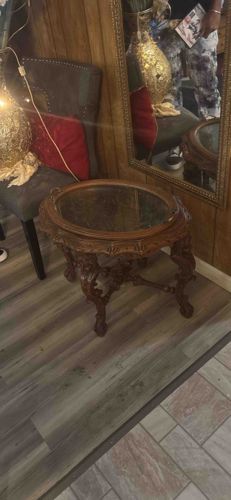
This is a round end or occasional table, likely crafted from a dark, possibly stained hardwood such as mahogany or walnut, given its rich, deep brown color. The table features an ornate, heavily carved design characteristic of Victorian or possibly Rococo Revival styles. The tabletop consists of a circular glass insert, providing a smooth, clear surface, set within a robust, carved wooden frame. The rim of the table displays intricate scrolling foliage patterns, indicating a high level of craftsmanship. The base of the table is supported by three or four elaborately carved legs (three are clearly visible, with a fourth implied by the triangular arrangement of the stretcher), which curve outwards and feature detailed acanthus leaf motifs, possibly terminating in claw feet, although these are not clearly visible. The legs are joined by a lower stretcher or platform, also carved, adding stability and further decorative elements. The overall construction appears solid and well-made, suggesting durability. There are no obvious signs of significant damage like cracks or breaks, but some superficial wear, consistent with age and use, such as minor scratches on the glass or slight dulling of the wood's finish, is to be expected of an item of this type and age. The precise age is difficult to pinpoint without closer inspection of joinery and specific design nuances, but it likely dates from the late 19th to early 20th century. The carving work is detailed and consistent, denoting quality craftsmanship rather than mass production. The table appears to be in good, used condition.
AI Appraisal Report
I have virtually examined this Carved Wood and Glass Top Round End Table. This piece exhibits ornate carving consistent with late 19th or early 20th-century Rococo Revival or Victorian styles, likely crafted from a dark stained hardwood such as mahogany or walnut. The glass top, set within a carved wooden frame with intricate scrolling foliage, is a standard feature for such tables, offering both surface utility and decorative appeal. The elaborately carved legs with acanthus leaf motifs, joined by a carved stretcher, suggest quality craftsmanship over mass production. The overall condition appears to be good, used condition based on the visual evidence, with expected superficial wear like minor scratches to the glass and some dulling of the wood's finish, consistent with its age. I see no obvious signs of significant damage that would severely impact value.
Market conditions for antique revival furniture of this type are steady. Comparables for well-carved, smaller occasional tables with glass tops from this period typically fetch in the mid to upper hundreds. While there isn't extreme rarity, the detailed carving ensures a consistent demand among collectors and interior designers seeking period accent pieces. Factors impacting value include the intricate detail of the carving, the apparent solidity of construction, and the overall design aesthetic.
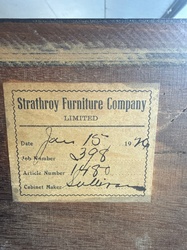
Limitations in authenticity verification from images alone are significant. I cannot definitively confirm wood species, joinery methods, or the presence of repairs. An in-person examination would be critical to assess the quality of the carving firsthand, confirm wood type, inspect joinery for originality, and thoroughly document any repairs or condition issues. Provenance documentation, though not evident, would add significantly to value, especially if a reputable maker could be identified. Scientific testing could verify wood age and type if necessary.