AI Appraisal Estimate

AI-generated estimates · not official valuations

From the user

What was submitted

Photo and notes provided by the user — not generated by AI

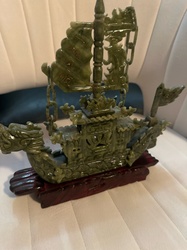
Submitted item photo
Submitted photo · June 30, 2026

User's notes

No additional notes provided.

AI analysis below

AI appraisal

AI analysis & estimate

AI-Generated · Verify before acting

Everything below is generated by AI for informational purposes only. AI can make mistakes — the AI may misidentify items or misattribute them (artist, maker, brand, designer, origin, era). This is not an official valuation and should not be used for insurance, sale, tax, estate, legal, or lending purposes — or any decision requiring a certified appraisal. It is not an authoritative claim about any person, brand, or rights holder — do not share or rely on it as a factual statement about a third party. Always consult qualified professionals before making financial decisions.

Read the full disclaimer

AI Identification

·Not independently authenticated·Verify before acting

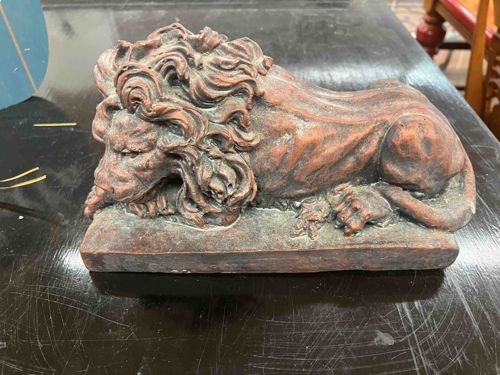
Terracotta-Style Recumbent Lion Sculpture

Decorative Arts and Sculptures

AI Estimated Value

·Not an official valuation·Verify before acting

$150 - $250

As of June 30, 2026

AI Item Analysis

·AI can make mistakes·Verify before acting
This item is a decorative sculpture depicting a recumbent lion, resting on an integral rectangular plinth. The piece appears to be made from a heavy composite material or fired clay, specifically designed with a reddish-brown terracotta-colored finish that features a dark, oil-based or antiqued wash applied to the recesses. This technique highlights the detailed, swirling mane and the muscular physiology of the animal. The lion is portrayed in a relaxed, prone position with its head slightly lowered, reminiscent of the 19th-century 'Lion of Lucerne' or similar Neoclassical funeral monuments. The texture of the mane is particularly stylized with deep, fluid carvings and high-relief curls that suggest a Romantic or late Victorian influence. In terms of condition, there is visible surface wear along the sharp edges of the base and on some of the higher points of the mane, where the original finish has paled slightly, possibly from handling or atmospheric exposure. There are no immediate signs of significant structural cracks or repairs, though some minor pitting and a light dusty patina are present in the deeper crevices. The underside is not visible, so maker's marks remain unidentified, but the overall craftsmanship suggests a mid-20th-century mass-produced casting or a high-quality historical reproduction. The heavy base provides stability, indicating it was intended as a shelf piece, bookend, or desk ornament.
AI Appraisal Report

·AI can make mistakes·Verify before acting
Based on my visual examination of this recumbent lion sculpture, I have assessed it as a mid-20th-century decorative reproduction, likely a resin-composite or cast terracotta piece intended for interior decor. The stylized, fluid mane and structural physiology draw heavily from 19th-century Neoclassical motifs, specifically echoing the mourning aesthetic of the Lion of Lucerne. The condition is fair to good; while the core structure remains sound, there is notable surface abrasion on the plinth edges and high-relief points of the mane. This wear reveals a lighter substrate beneath the dark, antiqued wash, confirming it is a finished casting rather than a solid carved stone. The market for such historical reproductions is currently stable but saturated. Comparables found in specialty decor auctions and estate sales typically realize prices within the $150 to $250 range, depending on weight and finish quality. Its value is primarily decorative rather than as a fine art investment, as it lacks a verifiable artist signature or foundry mark. Final authentication is limited by the digital nature of this inspection. A physical examination under UV light would be required to rule out composite repairs, and inspection of the underside is necessary to identify any obscured maker's marks or mold numbers. Scientific testing of the material density would further confirm if the piece is true fired clay or a modern polymer resin. Without provenance documentation or a confirmed manufacturer, the item is valued as a high-quality vintage decorative object.

Get your items appraised

Instant estimates of your treasures with AI-powered appraisals

Browse More Appraisals