AI estimate as of August 2, 2025 · verify with a professional before acting
AI-Generated · Verify before acting
Everything on this page is generated by AI for informational purposes only. AI can make mistakes — the AI may misidentify items or misattribute them (artist, maker, brand, designer, origin, era). This is not an official valuation and should not be used for insurance, sale, tax, estate, legal, or lending purposes — or any decision requiring a certified appraisal. It is not an authoritative claim about any person, brand, or rights holder — do not share or rely on it as a factual statement about a third party. Always consult qualified professionals before making financial decisions.
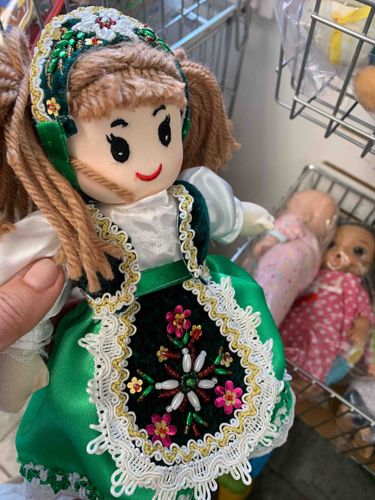
This item is a folk art rag doll, likely representing a figure in traditional attire. The doll features a soft, fabric head with embroidered facial features including black eyes, arched eyebrows, and a red smiling mouth. Its hair is made of light brown yarn, styled into two thick pigtails that frame the face, with bangs visible on the forehead. The doll is wearing a multi-layered outfit. The base appears to be a white long-sleeved blouse with puffed shoulders. Over this, there is a dark green velvet-like vest, bordered with gold and white trim. The most prominent part of the costume is a vibrant emerald green satin-like skirt, which is adorned with an elaborately embroidered apron. This apron features a darker green background, richly decorated with floral motifs in pink, red, and yellow, along with white and green beaded accents that form a central starburst or snowflake pattern. The edges of the apron are also finished with white intricate lace and gold braided trim, matching the vest. A matching green headpiece, possibly velvet, embellished with white floral embroidery and small red and gold beads, covers the top of the doll's head. The overall craftsmanship suggests a homemade or artisanal quality, emphasizing decorative elements and cultural representation. No obvious condition issues like tears or significant staining are visible, though the precise age and origin are not immediately discernible without further markings. It appears to be relatively clean and well-maintained, suggesting it was either kept as a decorative piece or handled gently.
AI Appraisal Report
Upon visual examination of the provided images, this folk art rag doll presents as a charming, handcrafted item in excellent condition. It appears to be a decorative piece, likely representing a figure in traditional Eastern or Northern European folk attire. The craftsmanship is detailed and deliberate, particularly in the hand-embroidered apron, beaded accents, and multi-layered costume. The materials, including velvet, satin, and yarn, seem clean and well-preserved with no visible tears, stains, or significant signs of wear. The homemade, artisanal quality is a primary value driver, appealing to collectors of folk art and handmade dolls.
Market comparables for similar unsigned, handcrafted dolls from the mid-to-late 20th century typically range from $40 to $100. The value is highly dependent on the quality of craftsmanship, the intricacy of the costume, and the doll's overall decorative appeal. This piece is on the higher end of that spectrum due to its elaborate and well-executed attire. However, the value is significantly limited by its unknown origin and lack of maker identification.
It is crucial to note that this appraisal is based solely on images. A definitive assessment of age, origin, and materials requires physical inspection. An in-person examination would allow for tactile analysis of fabrics, stitching techniques, and any potential hidden maker's marks. Without provenance or documentation, I cannot authenticate it as a specific antique or a product of a known artisan, which prevents it from reaching a higher valuation tier. Full authentication would require identifying its specific cultural origin and potentially comparing it to documented examples from that region.